







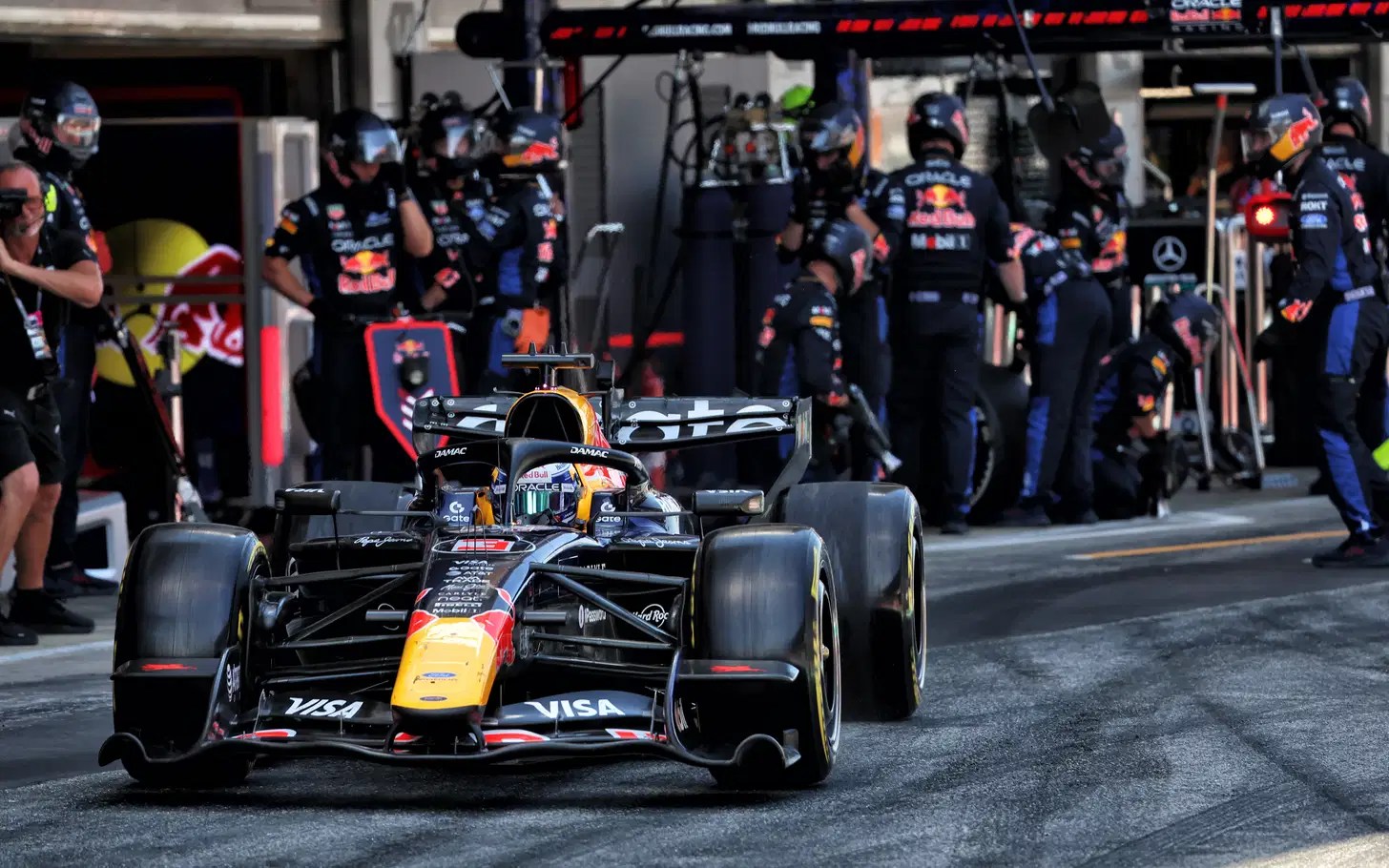

Formula 1, Sportrik Media - Red Bull Racing is seeking further talks with the FIA after its internal combustion engine was reportedly assessed as the strongest under Formula 1’s initial 2026 ADUO evaluation. The Milton Keynes operation has questioned the basis of that conclusion because its own data does not indicate a consistent advantage over Mercedes.
ADUO, or Additional Development and Upgrade Opportunities, was introduced to help power-unit manufacturers accelerate development if they fall behind during the new regulatory cycle. The system evaluates the performance of the internal combustion engine rather than the complete power unit, which also includes electrical deployment, energy storage and control systems.
The first assessment used information collected across the opening five rounds of the season. The FIA has not publicly announced its findings because the measurement process remains under review to ensure that comparisons between manufacturers are sufficiently accurate. Several drivers and senior team figures have nevertheless indicated that Red Bull’s engine was placed at the top of the provisional order.

Should that reported status remain unchanged, Red Bull would not receive additional development opportunities through ADUO during the relevant period. Manufacturers assessed below the defined performance threshold could instead receive permission for specification changes, increased dyno running and broader development allowances.
Team principal Laurent Mekies stressed that Red Bull does not object to the principle behind the regulation. The teams agreed that the assessment should focus on combustion-engine power and accepted the system’s purpose of preventing one manufacturer from falling too far behind during the opening phase of the regulations.
“We are completely okay with the fact that the rule states that you should only try to estimate the pecking order of the ICE power,” Mekies said.
“We have all agreed to that, and we don’t think that is the issue.”
Red Bull’s concern centres on the suggestion that its engine holds an advantage. According to Mekies, the team has not identified a single data sample demonstrating that its combustion engine operates consistently above Mercedes. The distinction is important because the ADUO classification can determine the amount of development available throughout the remainder of the season.
“Where we would certainly like to have a deeper conversation is because we do not see one single data sample that indicates we would have an advantage over our friends at Mercedes,” Mekies said.
Red Bull has used its relative performance at three different types of circuit to support its position. At the Canadian Grand Prix, where long straights create a high sensitivity to engine power, the team qualified sixth. A similar result followed in Barcelona, another venue where power and power-unit efficiency have a significant influence on lap time.
Red Bull was considerably more competitive in Monaco, where internal combustion power has a smaller impact because the circuit is dominated by slow corners and contains no extended straight. The team qualified approximately four hundredths of a second away from pole position, suggesting its performance improved as the contribution of engine power decreased.
“You go to Canada, with high ICE power sensitivity, and we qualified sixth,” Mekies explained.
“You go to Monaco, with low ICE power sensitivity, and we qualified approximately four hundredths from pole. You go to Barcelona, with high sensitivity again, and you qualify sixth again.”
Those comparisons do not automatically establish that Red Bull has a weaker engine. Lap time is also shaped by drag levels, aerodynamic efficiency, vehicle weight, electrical energy deployment, traction and setup characteristics. Mekies nevertheless believes the circuit-to-circuit pattern does not support the conclusion that Red Bull’s ICE should be treated as the performance benchmark.
The measurement methodology is central to the dispute because the FIA must isolate engine output from the influence of the car around it. GPS traces, acceleration rates, straight-line speed, aerodynamic drag and electrical deployment must be analysed together to estimate genuine ICE power. A small error in estimating drag or energy usage could alter the resulting performance order.
“You need to have extreme certainty in the way you are assessing the ICE pecking order in order to have the right confidence to give opportunities to the team chasing the dominant manufacturer,” Mekies said.
Red Bull also has a major competitive interest in the outcome because 2026 is the first season of its internal power-unit project. The team has already faced reliability and overall car-performance problems, while access to additional ICE development could influence its ability to close the gap to Mercedes and Ferrari during the next phase of the championship.
The requested discussion with the FIA therefore concerns more than the symbolic status of having the strongest engine. The assessment determines access to development resources capable of changing the competitive balance. The governing body must ensure its methodology is sufficiently robust before deciding which manufacturers qualify for further upgrades.
Red Bull will use its technical analysis and circuit-performance pattern during those discussions. Until the FIA completes its review and publishes a decision, the reported classification of Red Bull as the ADUO benchmark cannot be treated as an official result. Regulatory clarity will be important before the Austrian Grand Prix, where power delivery and acceleration will again form major performance factors.
Read Also

Mercedes outclass Ferrari, and it's not just about the engine. Ferrari's issues run deeper, while Mercedes and Antonelli eye titles. McLaren wary in Baku, Red Bull seek opportunity.
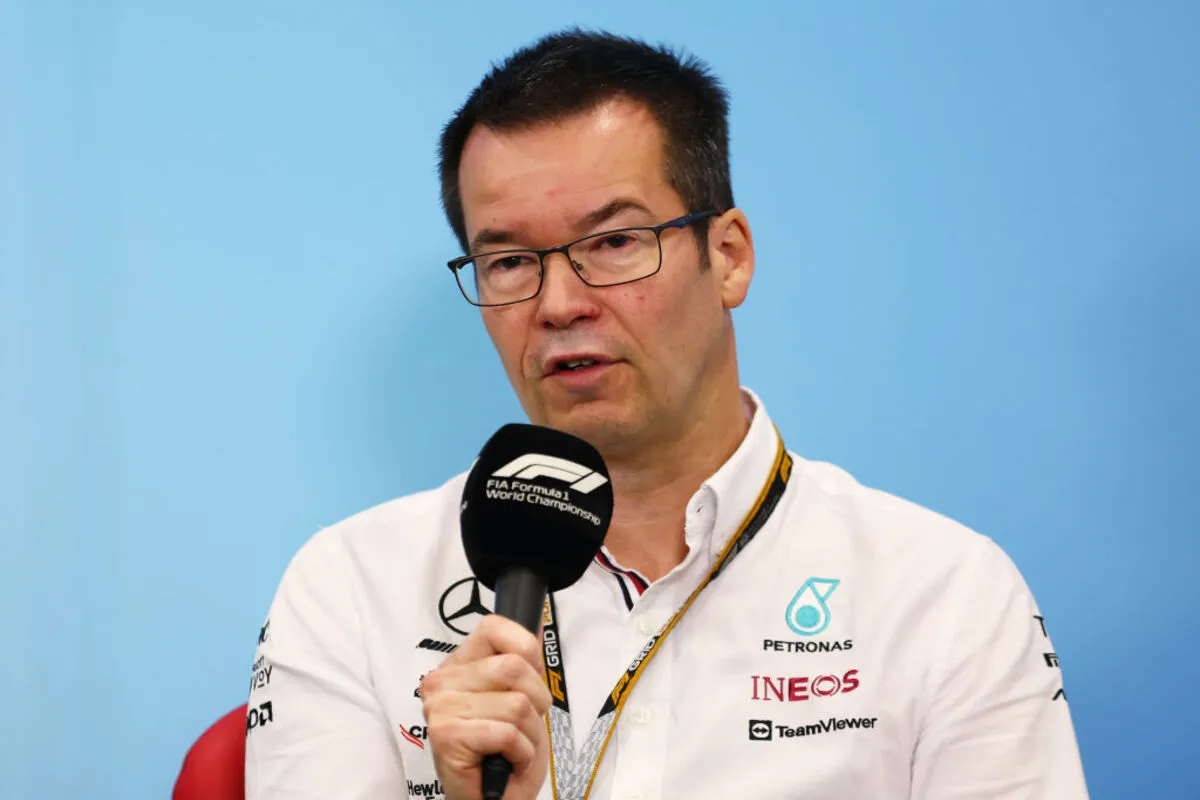
Alpine officially appoints Mike Elliott as Chief Technical Officer. Returning to Enstone after 14 years, Elliott brings successful experience from Mercedes.

Lewis Hamilton signs multi-year production deal with Skydance Sports via Dawn Apollo Studios. Get details and impact on Hamilton's career.
 Continue with Google
Discussion (0)
Join the Discussion!
Sign in easily to start commenting, replying, and interacting with other readers.
Latest Comments
No comments yet. Be the first!