






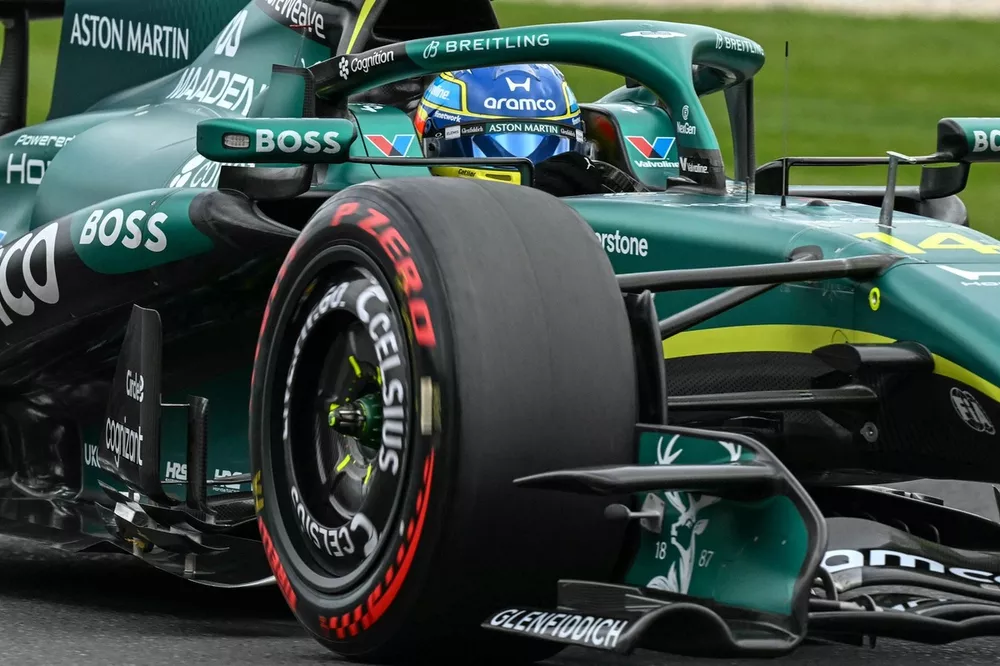

Aston Martin’s major upgrade package for the 2026 Hungarian Formula 1 Grand Prix is estimated to have delivered an improvement of approximately 1.8 seconds in one-lap performance, based on the percentage deficit before and after the new components were introduced.
The first visible result came when Fernando Alonso progressed into Q2 at the Hungaroring. Before the Hungarian weekend, Aston Martin had been eliminated in Q1 at each of the opening 10 Grand Prix qualifying sessions of the 2026 season.
The team delayed its aerodynamic development programme until Hungary after reliability problems disrupted the opening part of the campaign. The new package featured a major front-end redesign, revised sidepods, an updated floor and substantial changes around the rear of the car.
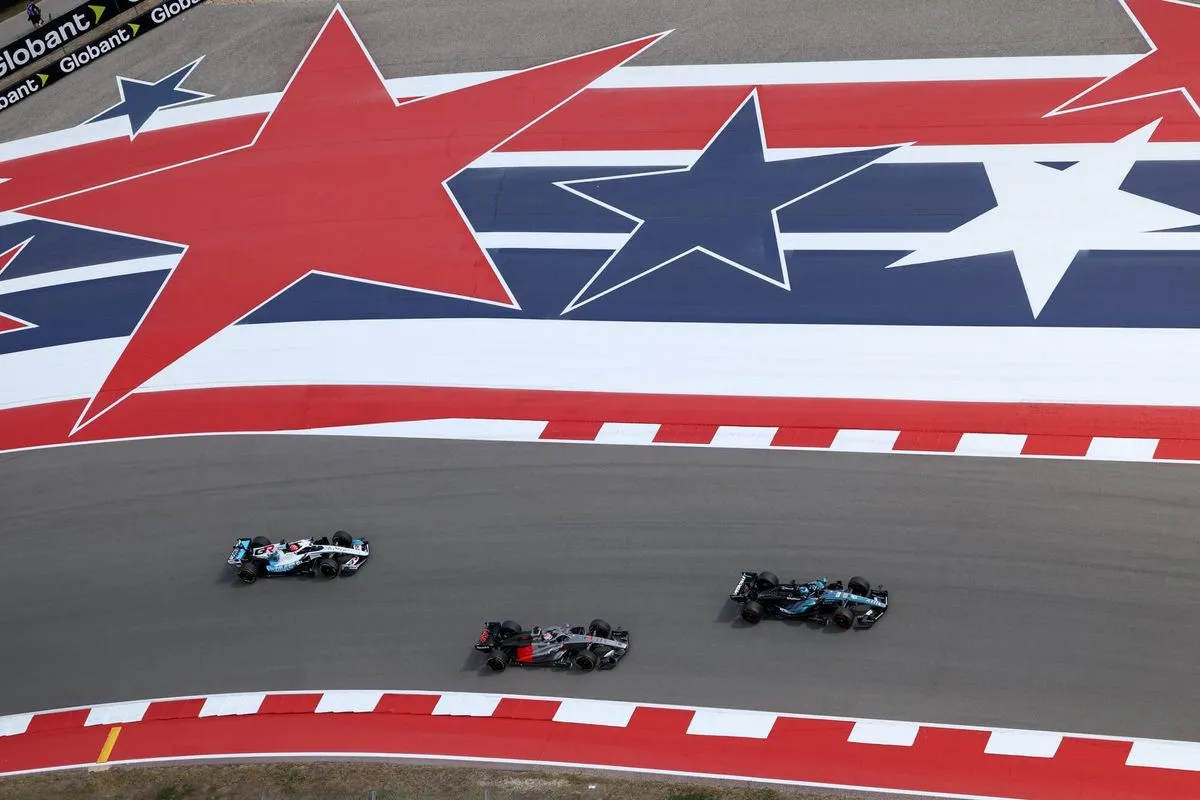
Before the upgrade arrived, Aston Martin’s relative performance had continued to decline as rival teams introduced incremental improvements. Across the opening five rounds, its fastest car was an average of 4.028% slower than the theoretical best lap of each weekend.
That deficit increased to 5.311% during the following five races. The figures do not necessarily indicate that the Aston Martin became slower in absolute terms, but they demonstrate that the team’s development rate had fallen behind its competitors.
At the Belgian Grand Prix, Aston Martin was 5.405% behind the benchmark set by Mercedes. Alonso recorded a 1m50.002s lap compared with Kimi Antonelli’s 1m44.361s, producing an actual deficit of 5.641 seconds.
With the upgraded car in Hungary, Alonso’s Q2 time was only 3.369% slower than Lando Norris’ eventual pole lap. Comparing the percentage gaps from the two most recent qualifying sessions suggests Aston Martin produced a relative gain of 2.036%.
Spa-Francorchamps and the Hungaroring cannot be compared directly because their layouts and lap lengths are significantly different. However, applying the percentages to a representative 90-second lap provides a more consistent indication of the upgrade’s value.
At a 5.405% deficit, Aston Martin would theoretically complete the reference lap in 1m34.864s. Reducing that deficit to 3.369% produces a theoretical time of 1m33.032s.
The difference is 1.832 seconds per lap. That figure represents the most useful estimate for a medium-length circuit, although the precise gain will vary depending on track length and aerodynamic requirements.
If Aston Martin’s Hungarian performance level were applied to the fastest lap from Belgium, the car would theoretically produce a 1m47.877s. That would still not have been enough to escape Q1, but it represents a 2.125-second improvement over Alonso’s actual qualifying time.
Conversely, if Aston Martin had delayed the upgrade until after the summer break, its theoretical maximum at the Hungaroring would have been approximately 1m21.380s. Such a time would likely have placed the cars on the back row.
That comparison suggests the package delivered a theoretical gain of 1.572 seconds at the Hungaroring. Applying the same performance improvement to Spa produces a larger estimate of approximately 2.125 seconds.
The resulting range of 1.5 to 2.1 seconds demonstrates why the upgrade cannot be assigned one fixed value. Its effectiveness changes according to lap length, downforce requirements, track conditions and the team’s ability to operate the car within its optimum set-up window.
Alonso’s progression into Q2 nevertheless provides the first clear evidence that Aston Martin’s new development direction has produced a meaningful result. The team has not eliminated its deficit to the leading group, and it must still prove that the improvement can be reproduced at circuits with different characteristics.
The Hungarian package represents the opening stage of Aston Martin’s recovery effort after it lost ground during the first half of the season. The following events will determine whether the estimated 1.8-second gain establishes a sustainable development platform or delivers its strongest benefit only under conditions that suit the car.
Read Also
Max Verstappen usulkan bongkar total trek Austin demi atasi gundukan ekstrem. Baca analisis mendalam dan update lengkap Formula 1 di sini!
Simak analisis lengkap CEO Aprilia Massimo Rivola mengenai dampak pembatalan GP Australia bagi Jorge Martin. Baca berita terbaru dan update poin di sini.
Simak analisis lengkap perjuangan Charles Leclerc di GP Austin, masalah temperatur ban Ferrari, dan strategi balapan. Baca selengkapnya di sini!
 Continue with Google
Discussion (0)
Join the Discussion!
Sign in easily to start commenting, replying, and interacting with other readers.
Latest Comments
No comments yet. Be the first!