







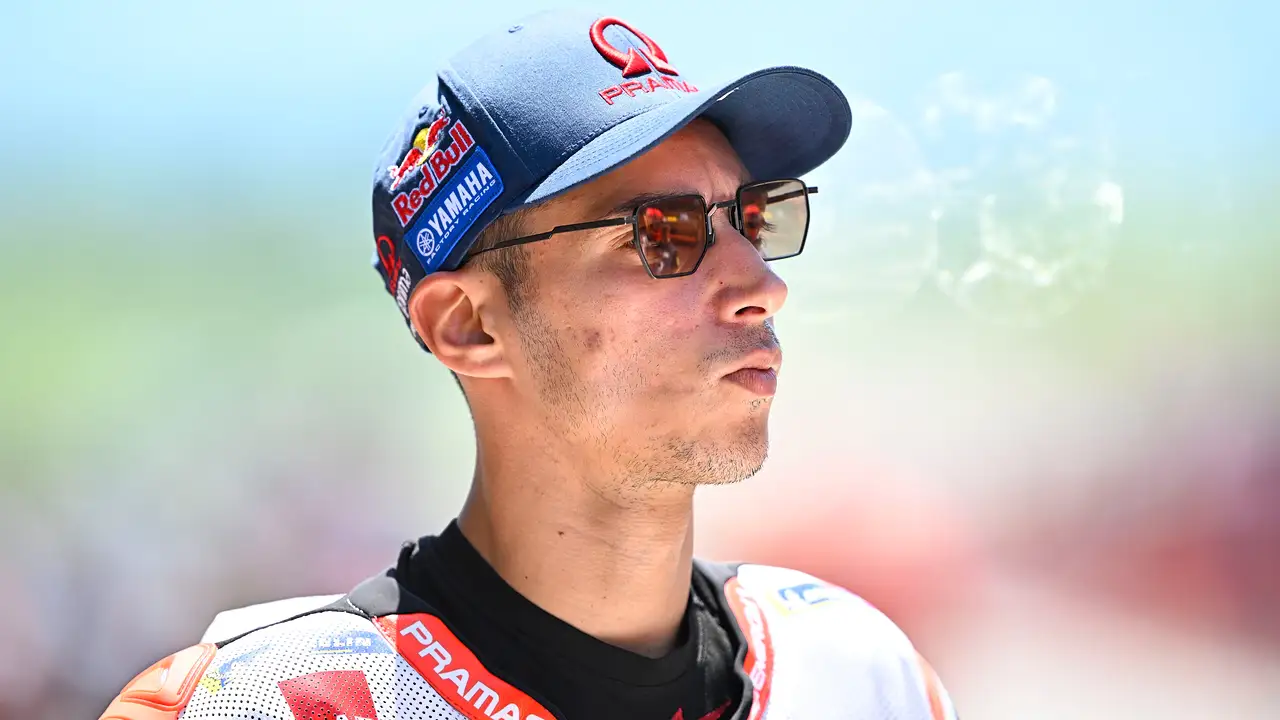

Pramac Racing primary driver Toprak Razgatlioglu has expressed deep analytical disappointment despite securing his most competitive premier-class feature finish at the 2026 Hungarian Grand Prix. The three-time WorldSBK champion crossed the timing beam in eleventh position at the Balaton Park Circuit after launching his campaign from the eighteenth grid slot. Although executing an impressive tracking recovery loop, Razgatlioglu openly regretted a critical software setup miscalculation executed by his engineering department on his Yamaha V4 package immediately prior to the green-flag race start.
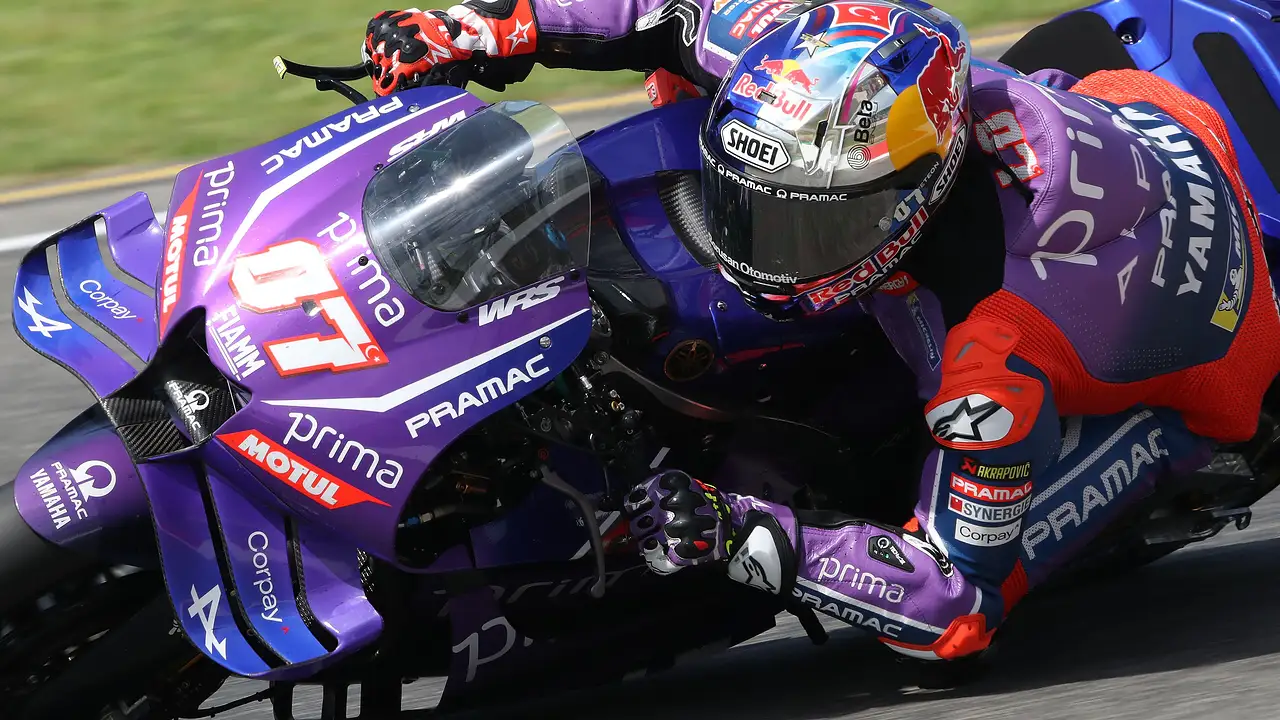
Razgatlioglu’s pure velocity tracking parameters remained highly competitive throughout the Hungarian event, validated by an initial progression to thirteenth during Saturday's Sprint format. Approaching Sunday's full-distance distance, a clean window to penetrate the top-ten classification emerged after a chaotic Turn 1 multi-bike collision triggered by Jorge Martin's Aprilia chassis eliminated several front-running entries. However, a radical technical adjustment authorized by Razgatlioglu during his official sighting lap functioned as a severe tactical backfire, disrupting chassis rotation geometry across heavy deceleration parameters.
According to on-site qualifying telemetry data, the Turkish rider suffered from acute rear wheel locking anomalies that threatened terminal Michelin tire compound degradation. To preserve long-term tire life, his technical crew altered the electronic engine braking mapping curves to lessen corner-entry friction. Unfortunately, this software modification generated a secondary handling defect at Turn 5, where the sudden depletion of engine drag caused the rear axle to generate a continuous forward-pushing force (*rear pushing*), overloading front-end suspension load parameters asymmetrically.
"It looks like we did a mistake, because in the race, at corner five, I’m not feeling the engine braking; I’m just feeling the rear pushing, I lose the front, and many times I did a mistake at that corner," Razgatlioglu analytically detailed to on-site media representatives, isolating the mechanical handling discrepancies of his aerodynamic package.
Beyond electronic deceleration inconsistencies, the Pramac-operated Yamaha V4 chassis demonstrated a distinct performance deficit across peak velocity straight-line tracking parameters. Telemetry metrics confirm that Razgatlioglu lacked the top-speed capacity to successfully execute an aerodynamic tow or clean overtaking maneuver against the KTM factory machinery driven by Jack Miller. Although he consistently clawed back time-deltas utilizing superior mechanical corner speed through the technical sectors, getting trapped within a high-density pack layout neutralized his capability to progress past rival machinery under green-flag conditions.
The latent velocity threshold of the Yamaha V4 configuration was heavily verified during the final stint of the grand prix, where Razgatlioglu registered a blistering 1m 39.6s benchmark on the absolute final lap while operating within a clean air corridor. This pure tracking rhythm was only matched by front-running assets such as Iker Lecuona, whereas the midfield consensus had dropped into the 1m 40s domain due to severe rear-tire thermal wear. This performance data mandates that the Pramac engineering team execute thorough chassis weight-distribution overhauls to optimize their operational window ahead of the next competitive round.
Read Also
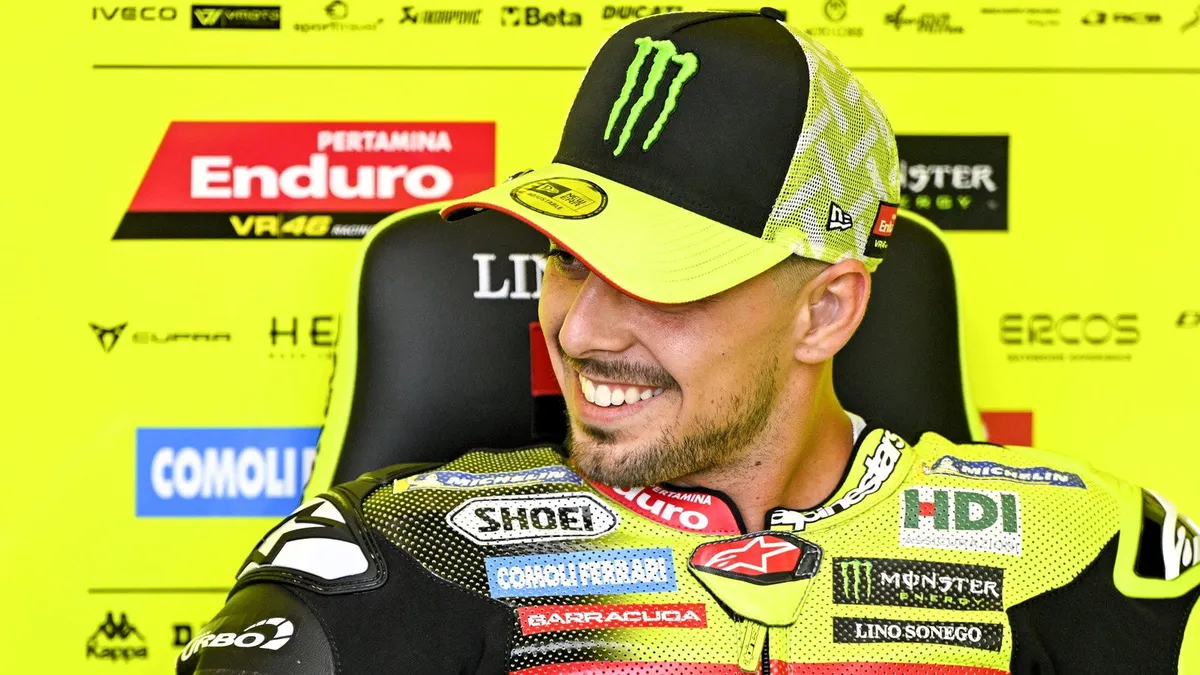
Fabio di Giannantonio is fired up for the Misano MotoGP, his final home race with VR46 before joining KTM. Can he break his slump?
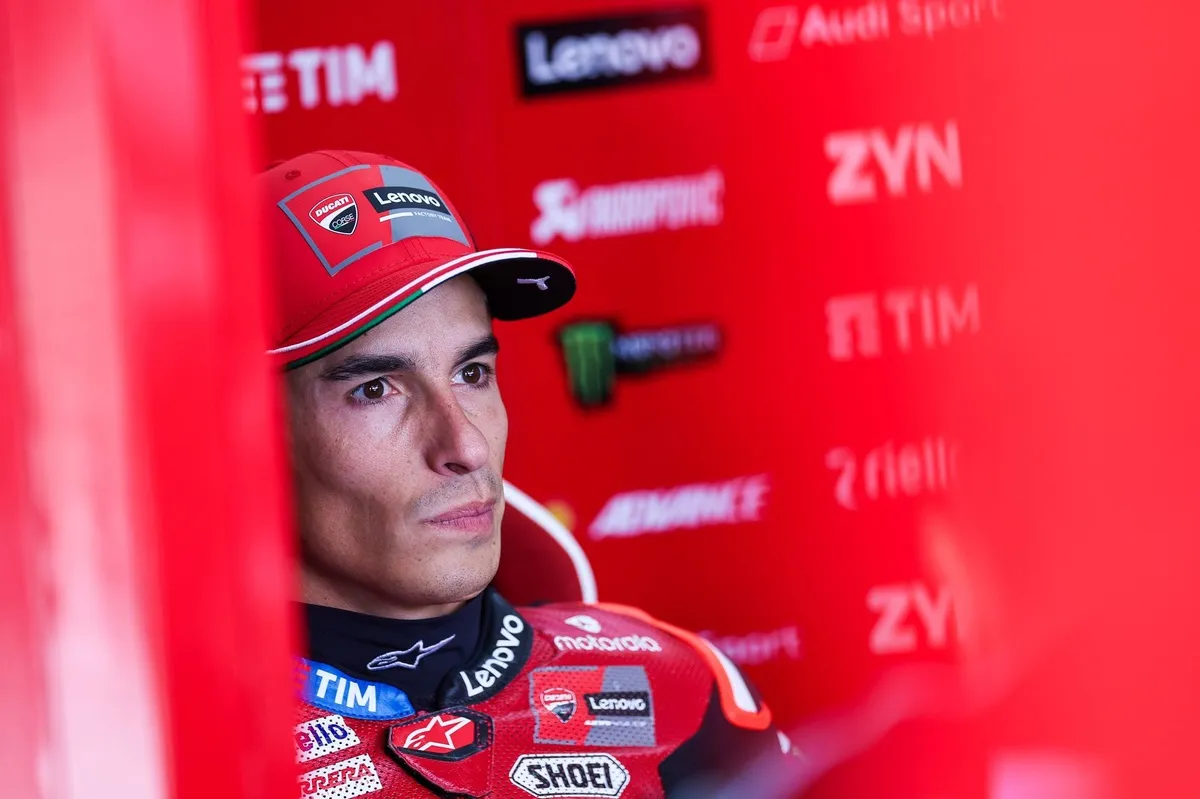
Marc Marquez posts photo of his swollen shoulder, signaling a communication strategy shift after a tough Silverstone weekend.
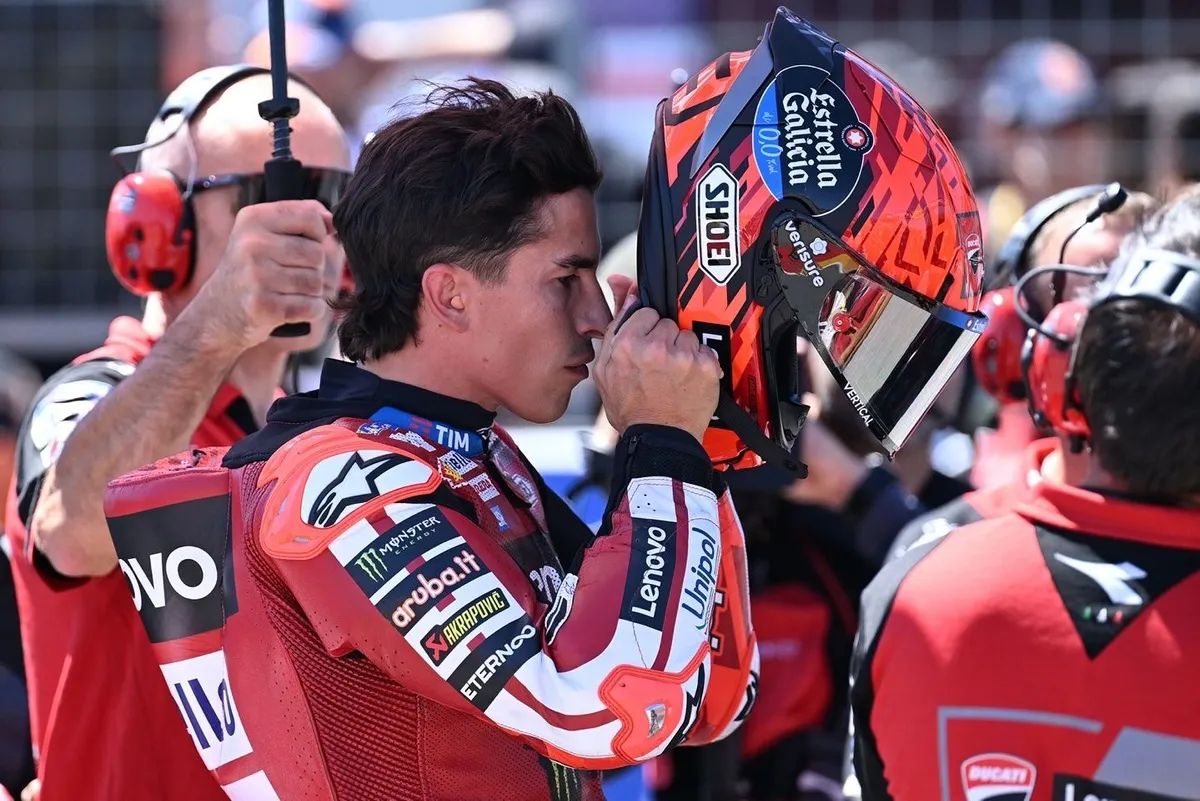
Marc Marquez posts a revealing photo of his injured shoulder, a strategic move that highlights the physical challenges affecting his MotoGP performance.
 Continue with Google
Discussion (0)
Join the Discussion!
Sign in easily to start commenting, replying, and interacting with other readers.
Latest Comments
No comments yet. Be the first!