






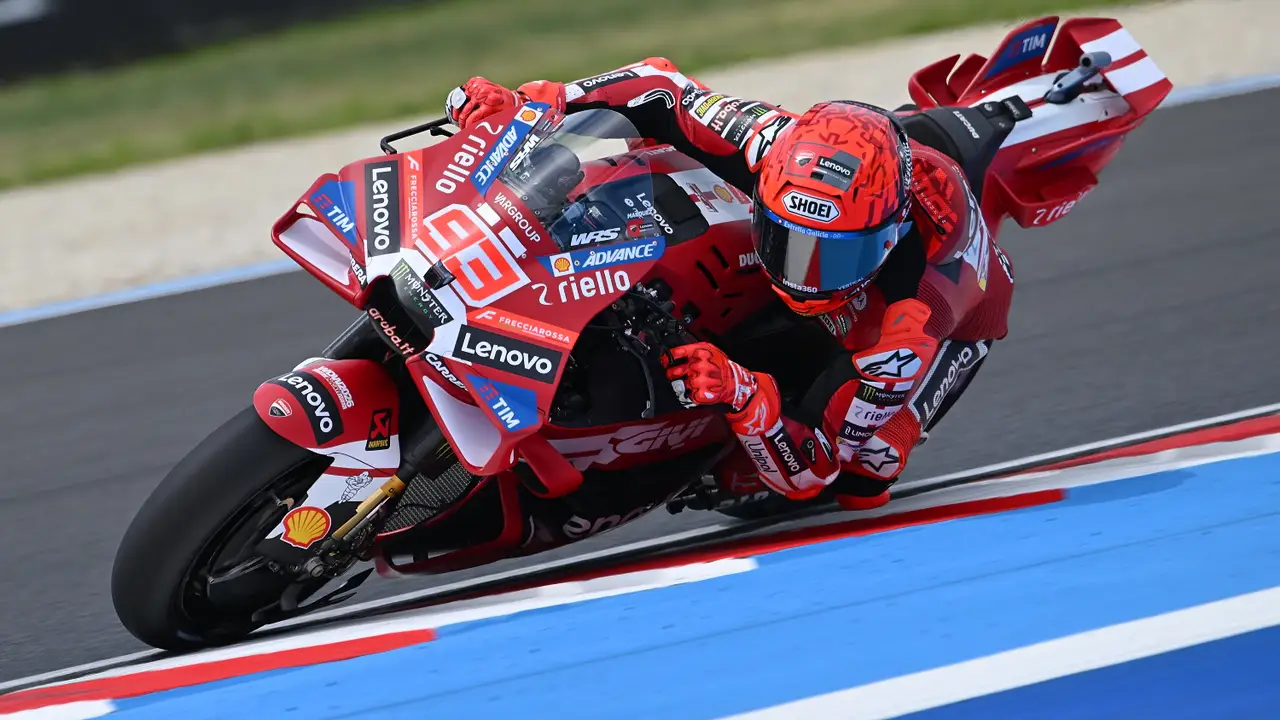

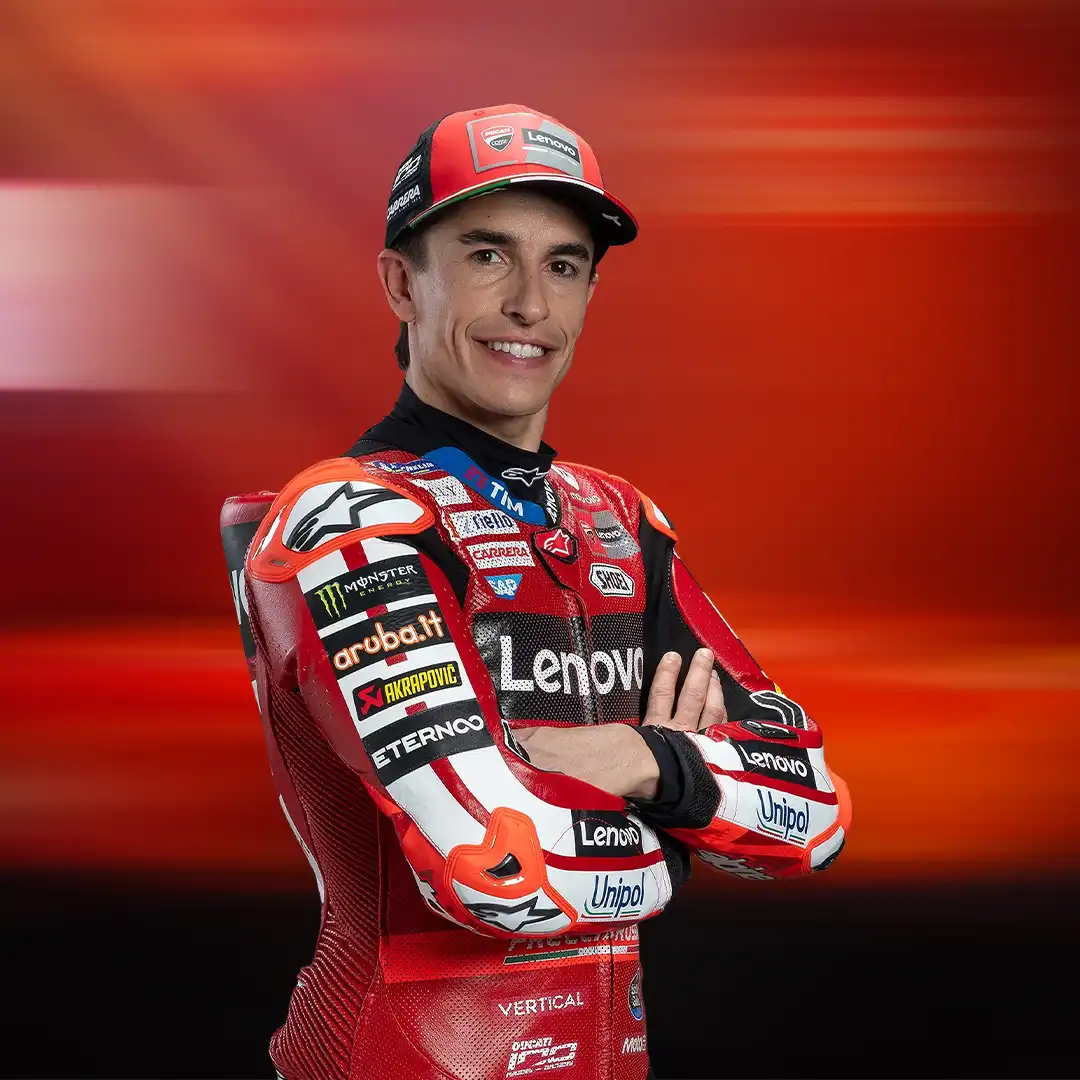
The qualifying hour for the eighth round of the premier class world championship at the Balaton Park Circuit delivered top-tier psychological tension and extreme mechanical limits. As reported by Crash.net, Ducati Lenovo factory driver Marc Marquez executed a masterful recovery to secure the definitive pole position for the Hungarian Grand Prix. This high-profile operational milestone was achieved after the reigning world champion washed out at the start of the session, falling victim to the low-grip characteristics of a freshly resurfaced Turn 1 complex.
The early infrastructure failure at Turn 1 triggered immediate operational chaos inside the Borgo Panigale garages, as Marquez and Pertamina VR46's Fabio Di Giannantonio suffered synchronized low-side accidents. Despite their Desmosedici GP26 chassis sliding heavily into the track parameters, technical crews managed an immediate bike-to-bike transition cycle. Returning to live track conditions on his secondary machinery, Marquez produced a blistering final sector sequence to deny KTM star Pedro Acosta, who had previously pulled 0.354s clear of the field. Marquez clinched the top spot with a pure lap-time delta of 1m 36.785s.
Bagnaia's Q1 Progression and Aprilia's Hard Compound Experiments
The front-row grid composition was rounded out by a highly promising operational display from Gresini Ducati rookie Fermin Aldeguer, who claimed third with a 0.340s deficit to the top flight. Meanwhile, a convoluted developmental path was managed by Francesco Bagnaia, who was forced to claw his way out of the Qualifying 1 (Q1) bracket following optimization errors on Friday. Bagnaia advanced alongside Luca Marini, capitalising on a secondary crash suffered by KTM's Brad Binder. In the definitive Q2 shootout, Bagnaia salvaged fifth on the grid, splitting Di Giannantonio in fourth and championship leader Marco Bezzecchi in sixth.
Telemetry verifications from the final Saturday morning practice illustrated sharp tactical divisions across the paddock operations. While the majority of Ducati and KTM engineers immediately deployed soft rear tyre specifications to fine-tune high-stress sprint parameters, the Aprilia Racing entries of Bezzecchi, Jorge Martin, and Raul Fernandez initiated their runs on medium compounds. This structural direction aimed to replicate their Mugello tire management superiority, though Martin ultimately encountered handling resistance, restricting him to eighth on the grid.
Midfield Telemetry Disparities Ahead of the Saturday Sprint
Chassis compliance disparities became increasingly transparent across the lower midfield parameters, where LCR Honda rookie Diogo Moreira excelled to claim 11th on his RC213V package, outqualifying Pramac Yamaha's Jack Miller in 12th. Conversely, Monster Yamaha’s Fabio Quartararo and WorldSBK fill-in rider Iker Lecuona faced technical barriers, failing to escape the opening knockout segment. Sidelined veteran Cal Crutchlow, wrestling with ongoing physical inflammation from his severe shoulder tissue damage, rounded out the grid, finishing 2.5 seconds adrift of the leading benchmark pace.
Following the formal conclusion of the grid-determination phase, the entire operational focus of the technical departments shifted directly toward the upcoming 13-lap Saturday Sprint race. Given that Balaton Park's narrow, barrier-lined layout is dominated by sharp acceleration zones that heavily penalize overtaking attempts, Saturday's front-row allocations dictate 90 percent of race-execution strategy. Should Ducati’s electronics engineers successfully dial in Marquez's launch control and engine mapping configurations, his prospects of transforming pole position into maximum championship points remain uncompromised.
Read Also
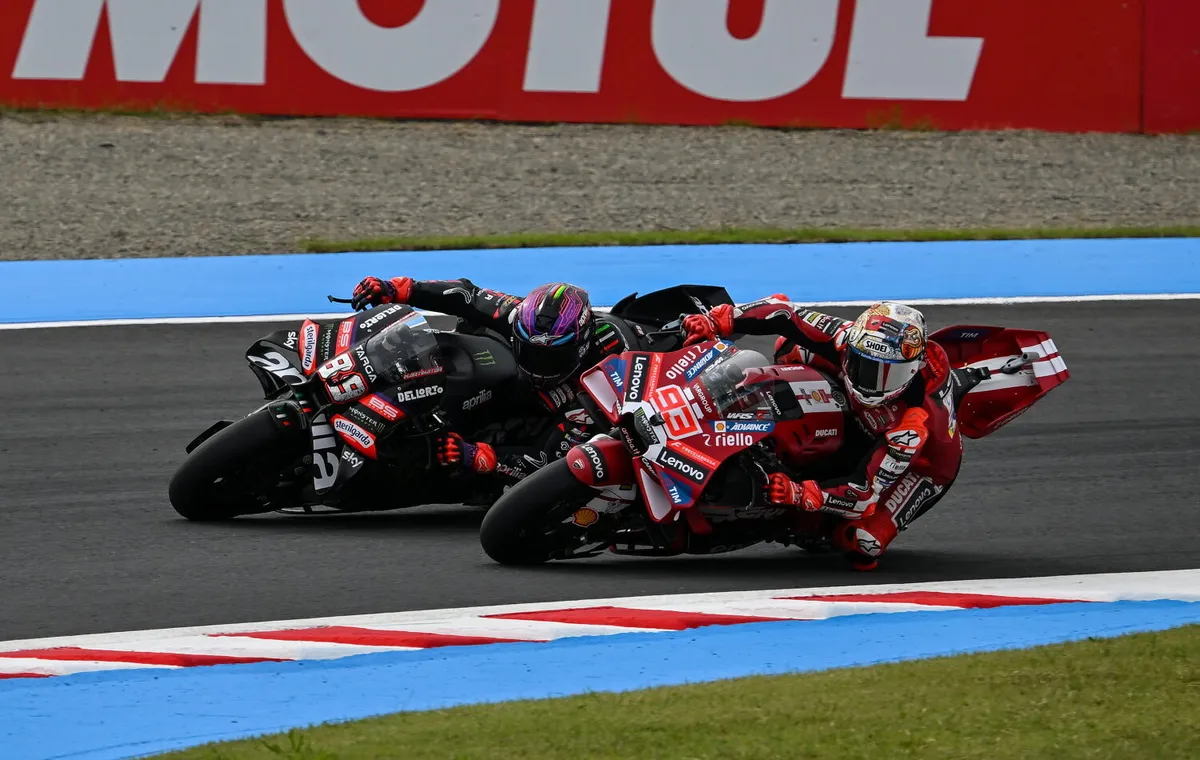
Simak analisis mendalam pujian Marc Marquez dan Jorge Martin jelang duel penentuan gelar juara dunia MotoGP di Phillip Island. Baca selengkapnya di sini!
Simak persiapan Marc Marquez jelang GP Australia di MotoGP 2026. Baca analisis mendalam mengenai latihan dan liburannya di sini.
Simak analisis lengkap mengapa Alex Marquez kesulitan ulangi performa terbaiknya di MotoGP 2026. Baca analisis mendalam dan update poin di sini!
 Continue with Google
Discussion (0)
Join the Discussion!
Sign in easily to start commenting, replying, and interacting with other readers.
Latest Comments
No comments yet. Be the first!