






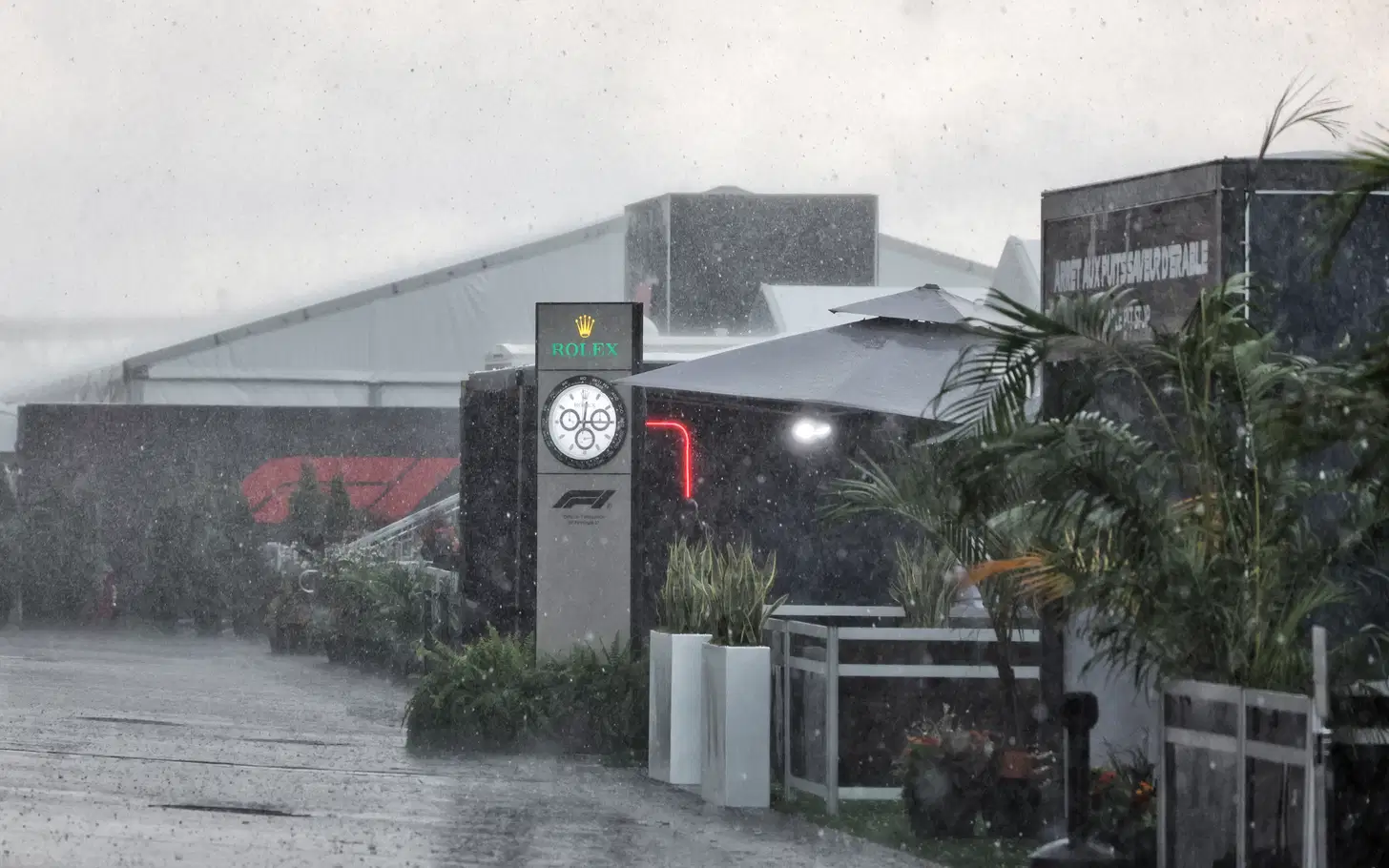

Formula 1 is preparing for potential major weather disruption at the 2026 Canadian Grand Prix after the latest forecasts indicated a significant probability of rain on race day at Circuit Gilles Villeneuve. The conditions could heavily influence tyre strategy, energy management and the overall fight for victory during the fifth round of the season.
The Montreal circuit has long carried a reputation as one of Formula 1's most unpredictable venues. Located on an island in the St. Lawrence River, weather conditions can shift rapidly throughout the weekend. In modern Formula 1 history, the Canadian Grand Prix has repeatedly delivered chaotic wet-weather races, including the famous four-hour 2011 event and hail-disrupted sessions during 2024.
Friday is expected to provide relatively stable conditions. Temperatures should remain around 19 degrees Celsius with light west-northwest winds near 13 km/h and virtually no rain threat. The calm weather will be particularly valuable because the sprint weekend format allows teams only a single free practice session before sprint qualifying begins.

Saturday is also forecast to remain dry with rain probability sitting at just one percent. Temperatures are again expected to hover near 19 degrees Celsius alongside gentle east-northeast winds. The stable environment should allow teams to focus entirely on optimising low-downforce setups and braking efficiency, two critical performance areas around Circuit Gilles-Villeneuve.
However, conditions are expected to change dramatically on Sunday. Rain probability rises to 60 percent while temperatures are forecast to drop to approximately 17 degrees Celsius. Winds from the south-southeast are also expected to strengthen towards 19 km/h with more aggressive gusts across several braking zones.
The evolving weather could create major technical challenges because Montreal is a stop-and-go circuit featuring heavy braking areas and traction zones highly sensitive to grip changes. Even small reductions in track temperature can significantly alter tyre behaviour, particularly during the warm-up phase of the medium and soft compounds.
Pit-stop strategy is expected to become the defining factor if rain arrives during the grand prix itself. Teams may face difficult decisions balancing intermediate or full wet tyres against the timing of switching back to slicks on a constantly evolving circuit. Safety cars and potential red flags could also become major variables given Canada's long history of wet-weather incidents.
For teams such as Mercedes, McLaren, and Red Bull Racing, changing weather conditions will additionally influence aerodynamic setup philosophy. Wet conditions typically force compromises between straight-line speed and the additional downforce required for stability through Montreal's fast chicanes.
With rain threats increasing ahead of Sunday, Formula 1 teams are already preparing alternative strategy scenarios from the start of the weekend. If Circuit Gilles-Villeneuve once again delivers its traditional weather unpredictability, the 2026 Canadian Grand Prix could become one of the most chaotic races of the season.
Baca Juga

Andrea Kimi Antonelli siap uji paket upgrade Mercedes W17 di Singapura demi jawaban teknis dan perkokoh kepemimpinan klasemen F1.
GP Singapura F1 2026 menghadirkan tantangan ekstrem lewat format sprint baru dan perbedaan suhu antara sore dan malam hari di Marina Bay.

Valtteri Bottas ungkap pengalaman mental mistis saat bersepeda sejauh 420 km dari Malaysia ke Singapura demi menyegarkan pikiran di F1.
 Lanjutkan dengan Google
Diskusi & Komentar (0)
Mari Bergabung dalam Diskusi!
Masuk dengan mudah untuk mulai memberikan komentar, membalas, dan berinteraksi dengan pembaca lainnya.
Komentar Terbaru
Belum ada komentar. Jadilah yang pertama!