








The massive surge in popularity that Formula 1 currently enjoys in the United States, largely catalyzed by Netflix, stands in stark contrast to a decades-long history plagued by financial failures, logistical nightmares, and bizarre makeshift circuits. Long before modern race weekends in Texas began drawing massive crowds, the pinnacle of motorsport struggled profoundly to capture the American mainstream market.
The journey began when the legendary Indianapolis 500 formed part of the F1 World Championship from 1950 to 1960, though it always remained an anomaly due to entirely different machinery and a lack of crossover between regular championship drivers and the oval specialists. Subsequent single-appearance events in Sebring in 1959 and Riverside in 1960 flopped miserably due to poor organization, weak funding, and inadequate marketing strategies.
A semblance of a permanent home was finally found at Watkins Glen running from 1961 through 1980, but when state funding for track modernization failed to materialize, the Formula 1 circus packed its bags. Attempts to conquer street circuits in Long Beach, Detroit, Dallas, and Phoenix during the 1970s and 1980s similarly suffered from organizational chaos, financial deficits, and ultimately permanent cancellation.
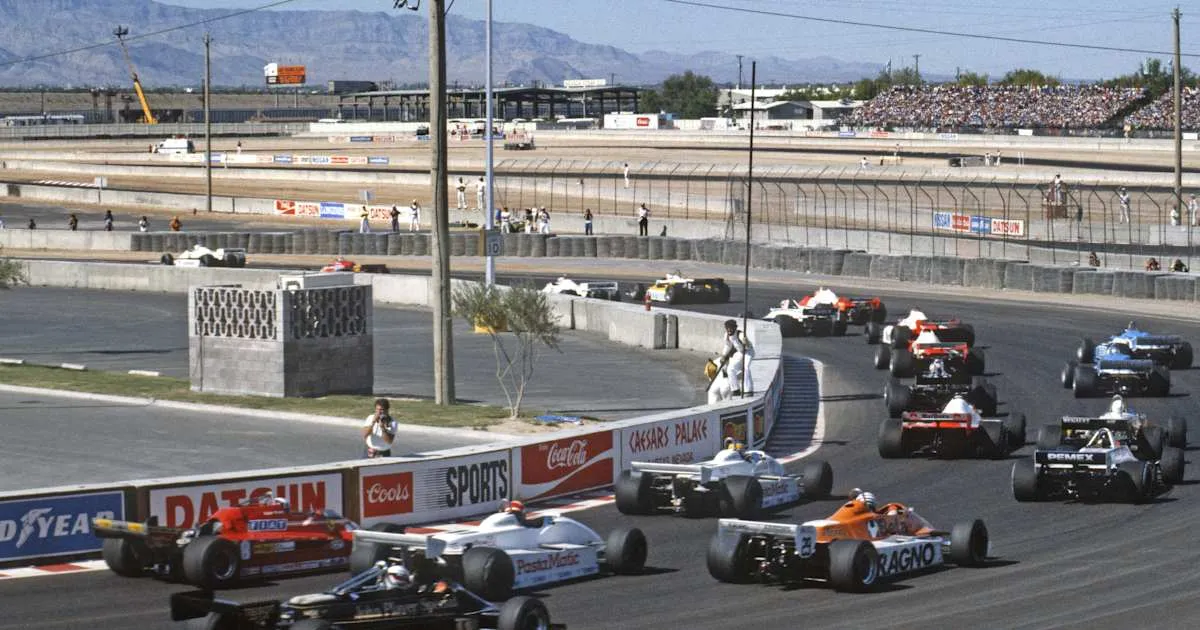
One of the most farcical chapters unfolded during the 1981 season finale in Las Vegas, where a Mickey Mouse layout was hastily carved out of the sprawling parking lot belonging to Caesars Palace. The temporary anti-clockwise circuit subjected drivers to extreme physical dures under unseasonably high temperatures, forcing title contenders like Nelson Piquet to seek physical therapy treatments usually reserved for professional boxers.
Ultimately, after decades of failed venues and awkward experiments involving figures like Carlos Reutemann, Formula One Management learned vital lessons. The establishment of the Circuit of the Americas in Austin back in 2012 finally provided a genuine, beloved home for the championship before modern street races in Miami and Las Vegas cemented the current American boom.
Read Also
IndyCar siap menggelar balapan di Barcelona mulai musim 2027 dalam kontrak multi-musim. Simak analisis lengkap ekspansi internasional di sini.
IndyCar dikabarkan bersiap gelar balapan di Catalunya mulai 2027 atau 2028. Simak analisis lengkap ekspansi internasional di sini!
Simak analisis lengkap peluang Yuki Tsunoda jajal mobil IndyCar bersama Meyer Shank Racing demi masa depan karier balapnya. Baca selengkapnya di sini!
 Continue with Google
Discussion (0)
Join the Discussion!
Sign in easily to start commenting, replying, and interacting with other readers.
Latest Comments
No comments yet. Be the first!