







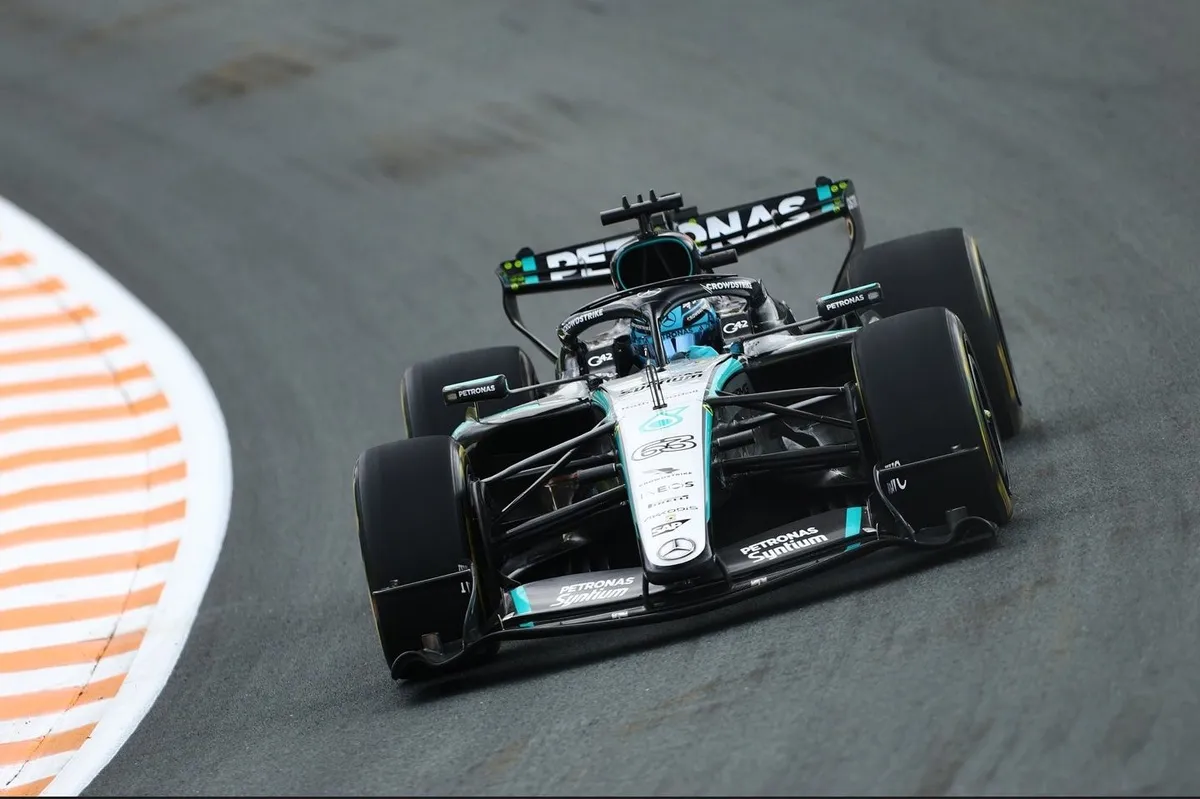

Zandvoort, Netherlands — Mercedes is still searching for answers after a disappointing performance through high-speed corners at Zandvoort, as well as puzzling inconsistency in pace between stints and between its two drivers during the Dutch Grand Prix.
Mercedes' trackside engineering director, Andrew Shovlin, bluntly described the team's pace through the high-speed corners as "rubbish" and admitted they are investigating the cause of the inconsistency, both across different stints and between drivers.
The weekend started promisingly for Mercedes, with George Russell taking pole and winning the sprint race. However, in the main race, Mercedes had to concede to McLaren's dominance, with Lando Norris securing pole and victory.
Despite still locking out positions 2-3 in qualifying and the race, with Kimi Antonelli finishing ahead of Russell and extending his championship lead to 59 points, the team remains puzzled as to why their early pace did not carry through the weekend relative to their main rivals.
"We've got a few things on the performance side to try and dig into," Shovlin said on Mercedes' Nu Silver Arrows Radio Show. "We're going to be getting on with that this week and see what we learn."
Shovlin highlighted the combination of Turns 7, 8, and 9 as a particular weakness. "There were a few corners where we were pretty rubbish, like that combination of 7, 8, 9. You could see it in the faster-speed curves. And it also gives the tyres on the left-hand side of the car a tough time. We don't really understand yet fully what's causing that," he explained.
Adding to the confusion was the fact that minimal changes were made to the cars between the sprint race and the grand prix, as well as during the race itself. Shovlin acknowledges some expected pace variation due to tyre compounds and life, but seeing each driver struggle at different times left Mercedes uncertain about the root cause.
"We didn't change the car. We obviously had different compounds at different stages. But again, we need to understand a bit," Shovlin said. "George's first stint was a bit lacklustre compared to his later ones. And then with Kimi, first stint was good, then dropped a bit on the second, dropped a bit more on the third, a bit came back on the third. It wasn't like we were playing around with electronic settings or up and down on flap angles. And for him, the balance of the car was quite different stint on stint."
Shovlin also noted the contrasting balance perceptions between the two drivers. "The two drivers, normally they report similar things with a car at the end of the race. But both of them, their perception of the balance, and probably the reality is George had a more understeery car, Kimi had a more oversteery car. If we look at how they were set up, we don't yet know quite why we got such a difference."
With the Dutch GP now behind them, Mercedes must quickly find answers before facing more circuits with similar high-speed characteristics. If not, catching McLaren in the constructors' standings could become even more challenging.
Read Also
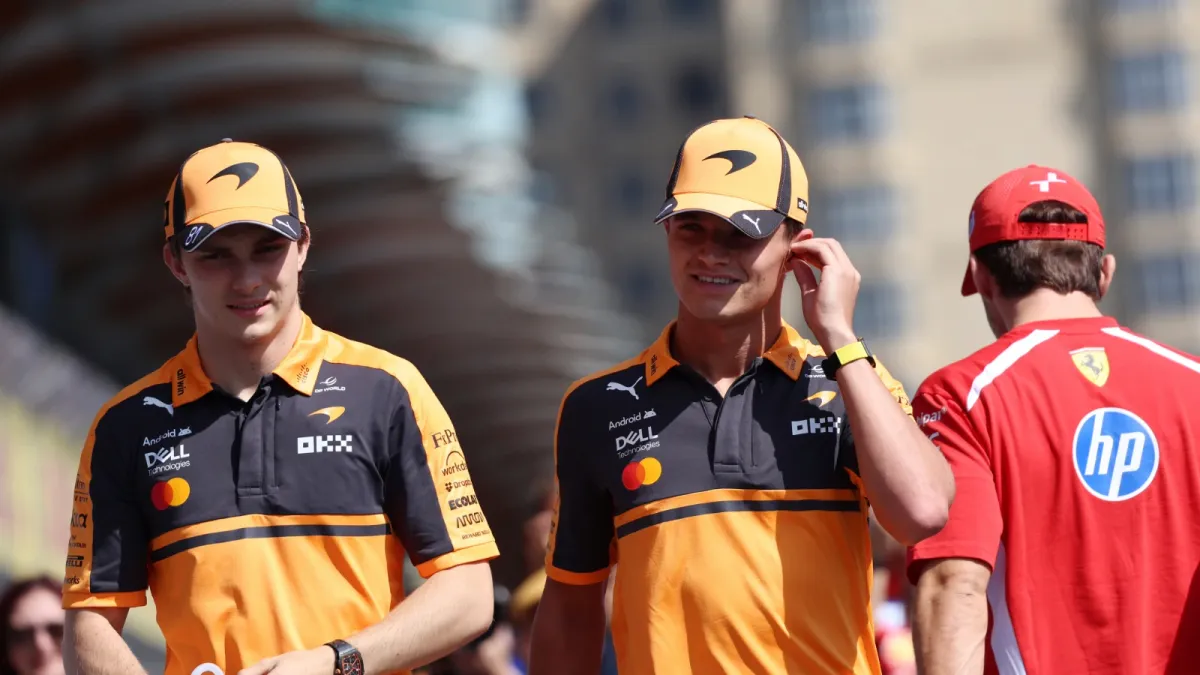
Simak analisis lengkap peringatan keras McLaren untuk Lando Norris dan Oscar Piastri usai insiden di Singapura. Baca selengkapnya di sini!
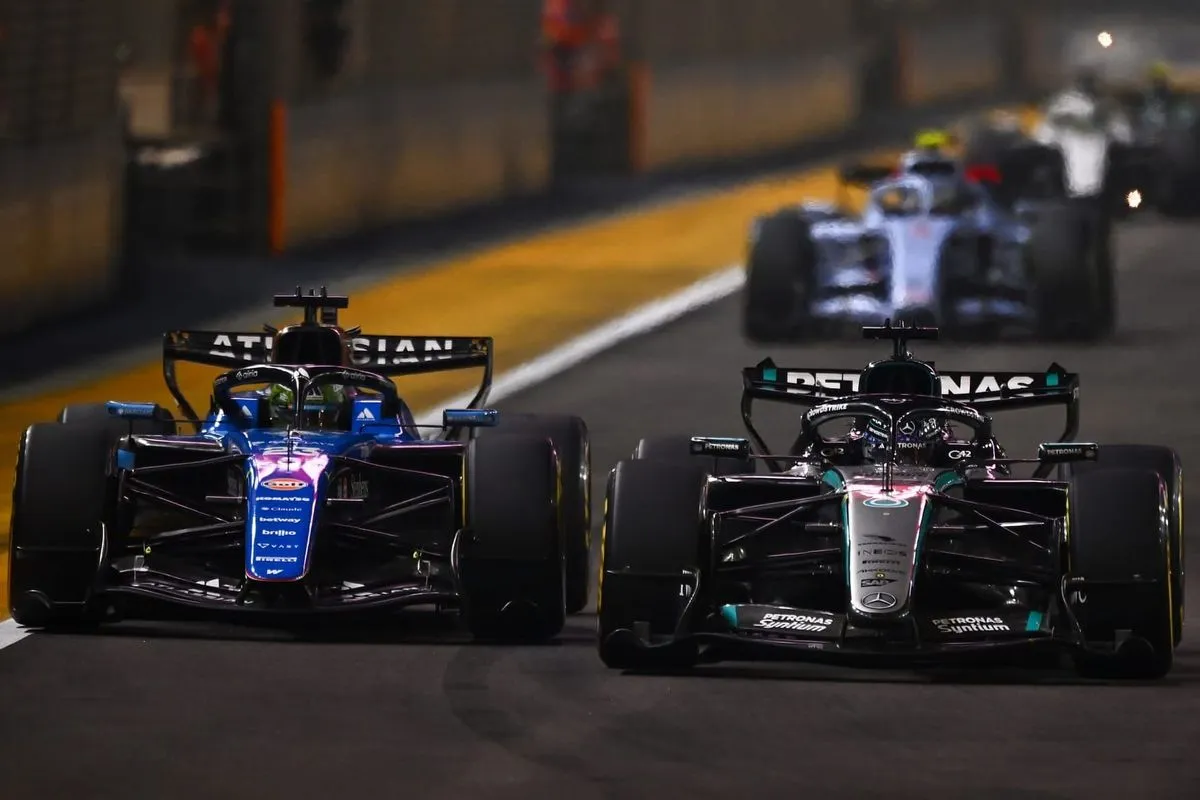
Simak analisis lengkap performa George Russell dan strategi Mercedes F1 di sini. Baca ulasan mendalam dan temukan update berita terbaru sekarang!
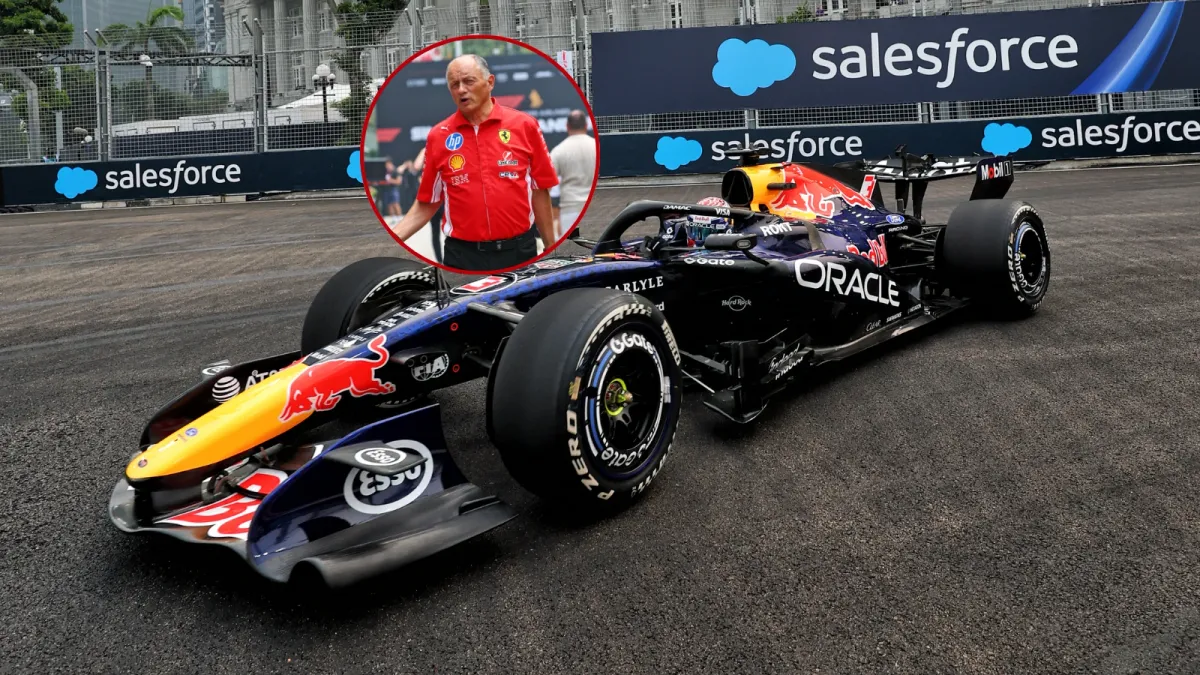
Fred Vasseur ragu Red Bull kuasai F1 sepenuhnya. Simak analisis mendalam persaingan ketat papan atas dan update strategi Ferrari di sini!
 Continue with Google
Discussion (0)
Join the Discussion!
Sign in easily to start commenting, replying, and interacting with other readers.
Latest Comments
No comments yet. Be the first!