








Formula 1’s meteoric rise in popularity under Liberty Media ownership has triggered a massive wave of aspirants as other sports try to match the same exponential growth. However, a critical question remains regarding whether those competing sports are spending too much energy following F1's exact footsteps instead of playing directly to their own unique strengths in the global arena.
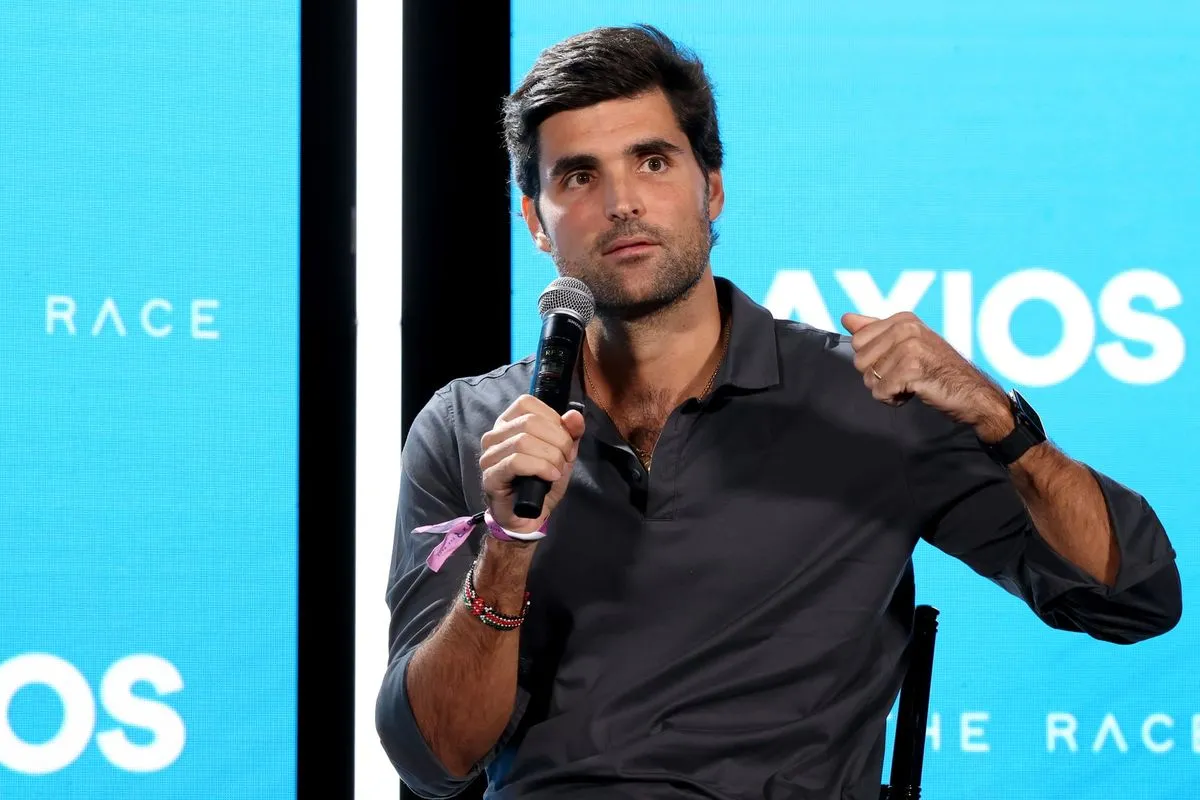
That important hypothesis was delivered by Antonio Cacorino, CEO and founder of APEX, during a discussion with Darren Cox at 'Formula One's Premium Playbook', an exclusive event hosted jointly by The Race and Axios. APEX itself is a prominent sports-focused investment firm backed by more than 100 elite athletes, including F1 stars Lando Norris, Carlos Sainz, and Valtteri Bottas, alongside holding a minority equity stake in the Alpine F1 team.
Cacorino explained that the unprecedented growth experienced by the pinnacle of motorsport is fundamentally down to a precise combination of different factors that all clicked together at the exact right moment. The most frequently cited catalyst remains the unprecedented cultural impact generated by Netflix’s hit reality docuseries, Drive to Survive, which successfully opened up the sport to an entirely new demographic of fans worldwide.

Timing played an equally vital role in this modern phenomenon. Cacorino highlighted that the second season of the Netflix series was aggressively pushed right at the historical juncture when the entire global population was locked down at home during the onset of the COVID-19 pandemic in early 2020, inadvertently providing a massive captive audience for the championship.
"Timings were also quite important," Cacorino told the audience during the panel discussion. "People don't realise the fact that Drive to Survive Season 2 was being pushed by Netflix exactly when the whole world stopped and everyone was stuck at home in COVID. That also helped. But in life, sometimes you also need certain things to click. And they understood that was in their favour. And then obviously the result is here."
Since the premiere of the groundbreaking documentary back in 2019, a continuous race of similar sports series has emerged across various streaming platforms. Golf's PGA Tour launched Full Swing, professional tennis produced Break Point, road cycling showcased Tour de France: Unchained, and NASCAR introduced Full Speed. Yet, measuring the actual success of those derivative series in exposing their respective sports to genuinely new, lasting audiences has proven exceedingly difficult amid a saturated media landscape.
"We already see the amount of sports content that Netflix is putting out. Obviously, we're at the stage where there's too much content," Cacorino pointed out regarding market saturation. "So, it's very hard to achieve the same success. Obviously, F1 did with Drive to Survive. But I do think it's that kind of content and that kind of media play is something that a lot of the big sports need to do. But only once you've achieved certain status. Other sports should maybe have those kinds of strategies, but maybe kind of as a way to bring a bit more eyeballs and then monetise through sponsorships or through other alternatives. I don't think that should be an obsession, because it's very hard to replicate. Now there's thousands of sports trying to do it."
F1's immense expansion during and immediately following the global health crisis was solidified by its unique position as one of the very first major sports to resume live racing competition. That momentum was further amplified by the legendary 2021 world championship title battle between Lewis Hamilton and Max Verstappen, cementing the championship's status as an unstoppable global sports juggernaut.
Read Also
Simak analisis lengkap Red Bull atasi masalah tikungan lambat dan trek bergelombang di GP AS. Baca laporan mendalam di sini!
Simak analisis lengkap Charles Leclerc mengenai batasan upgrade Ferrari di GP AS 2026. Baca ulasan mendalam latihan bebas di sini.
Lando Norris soroti kesulitan McLaren di F1 GP Amerika 2026. Simak analisis mendalam performa mobil dan hasil latihan bebas selengkapnya di sini.
 Continue with Google
Discussion (0)
Join the Discussion!
Sign in easily to start commenting, replying, and interacting with other readers.
Latest Comments
No comments yet. Be the first!