








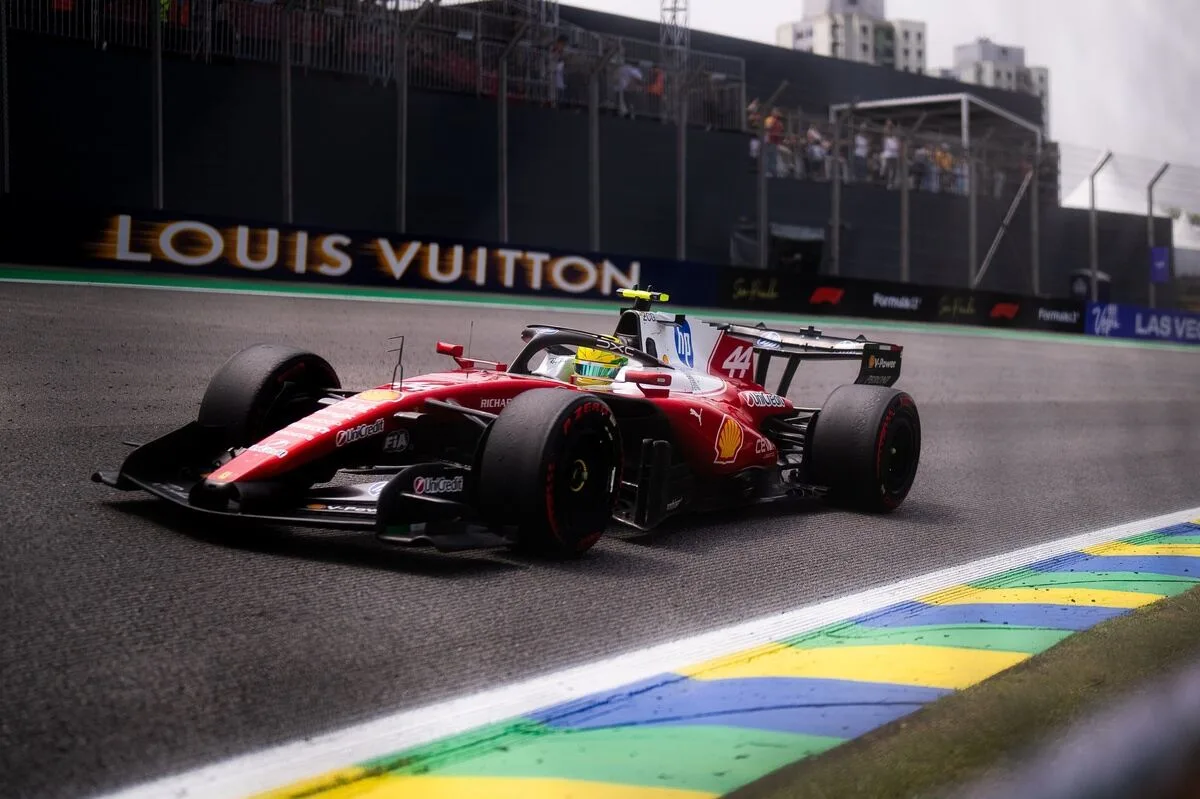
The Formula 1 race weekend at the Autodromo Jose Carlos Pace Interlagos delivered a painful blow to Ferrari after enduring one of their most challenging outings of the season. Armed with the SF-26 challenger, the Maranello squad struggled heavily against a combination of low track temperatures, overly aggressive tire pressure choices, and inherent aerodynamic limitations in wet conditions.
The first major issue originated from a high-risk tire strategy applied to Lewis Hamilton's car right at the start. The team opted for exceptionally high pressures on the intermediate wet tires to generate instant temperature and grip. The aggressive gamble paid off temporarily on the opening lap, allowing the British driver to carve through the field and gain eleven positions brilliantly.
However, the downside materialized almost immediately as the race progressed. Excessively high pressure reduced the effective contact patch between the rubber and the asphalt, triggering severe sliding, surface overheating, and rapid degradation of the tread blocks. Hamilton quickly burned through his set of tires, losing the hard-fought advantage earned during his breathtaking opening-lap charge.

Team principal Frederic Vasseur later pointed to the tire pressures as the root cause behind Hamilton's sudden performance collapse following his lightning start. The team had anticipated a rapidly drying track surface where sacrificing intermediate tire durability would make sense before transitioning to slicks, but the circuit remained wet much longer than expected.
The second underlying hurdle stemmed from the SF-26's chronic difficulty in generating adequate tire energy in cold weather conditions. With track temperatures remaining remarkably low under overcast skies, the car struggled to bring its tires into the optimal operating window, forcing both drivers to fight for mechanical grip through Interlagos' sweeping corners.
Read Also
Festival musik megah siap guncang Las Vegas GP 2026 hadirkan Steve Aoki hingga Jordin Sparks. Baca analisis lengkap dan jadwalnya di sini!
Simak kisah menarik penerbangan pulang Lewis Hamilton bersama Mercedes usai gelar konstruktor F1 Brasil. Baca analisis mendalam di sini.
Simak analisis mendalam mengenai akhir pekan balap yang intens, mulai dari performa Verstappen di Brasil hingga drama di Sandown. Baca selengkapnya di sini.
 Continue with Google
Discussion (0)
Join the Discussion!
Sign in easily to start commenting, replying, and interacting with other readers.
Latest Comments
No comments yet. Be the first!