






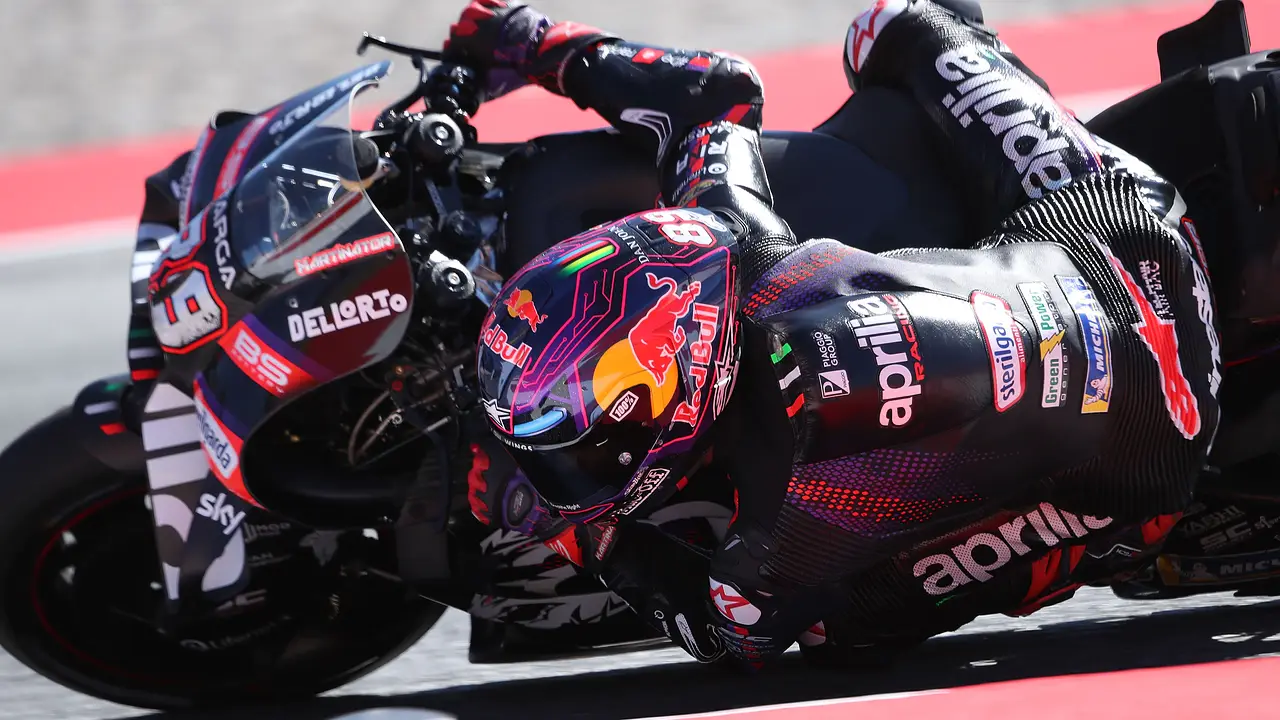

Factory Aprilia Racing rider Jorge Martin has provided a critical technical evaluation highlighting a hidden weakness inherent within the mechanical design parameters of the 2026 RS-GP platform. During the post-race debriefs for the 2026 Hungarian Grand Prix Sprint Race, the 2024 world champion consolidated merely a sixth-place finish at the Balaton Park Circuit. This operational milestone exposes the chassis limitations of the Noale-based machine when subjected to a stop-and-go tracking geometry, which structurally neutralizes the efficiency of their advanced aerodynamic upgrade packages that usually dominate world championship parameters.
The tracking dynamics over the 13-lap distance proved exceptionally complicated for Martin from the opening launch sequence from eighth on the grid classification. Getting trapped within the midfield dense pack caused immediate track position losses due to heavy turbulent air profiles. A significant tactical error manifested on lap two when Martin attempted an aggressive overtaking maneuver on Honda rider Diogo Moreira. A miscalculation of Moreira's deceleration threshold forced Martin to straight-line the chicane perimeter to avoid a structural collision, causing a regulatory one-second time penalty that detached his package from the leading technical group.
Although Martin successfully cleared Moreira on the fifth tour, his pure lap-time recovery was heavily disrupted by a secondary tracking deviation at Turn 15. According to on-site telemetry synchronization, these consecutive handling errors were the direct consequence of losing clear mechanical feedback from the front-end geometry. While rear tire traction indicators remained within optimal operational limits, the instantaneous drop in aerodynamic downforce precisely as vehicle velocity bottomed out at slow-speed apex transitions severely disrupted the rotation profiles of the RS-GP chassis under green-flag conditions.
"It seems like when we release the brake, we lose a bit the line. I think with less downforce on the slow corners, we struggle to turn," Martin analytically dissected regarding his package's mechanical discrepancies. "But then in the second sector, with a lot of downforce, we are super-competitive. So we are super good in terms of aerodynamics, but as soon as we lose the downforce, we struggle. This is a bit the issue." This engineering layout defect forces his technical staff to rethink weight transfer parameters without the assistance of pure aerodynamic winglet load vectors.
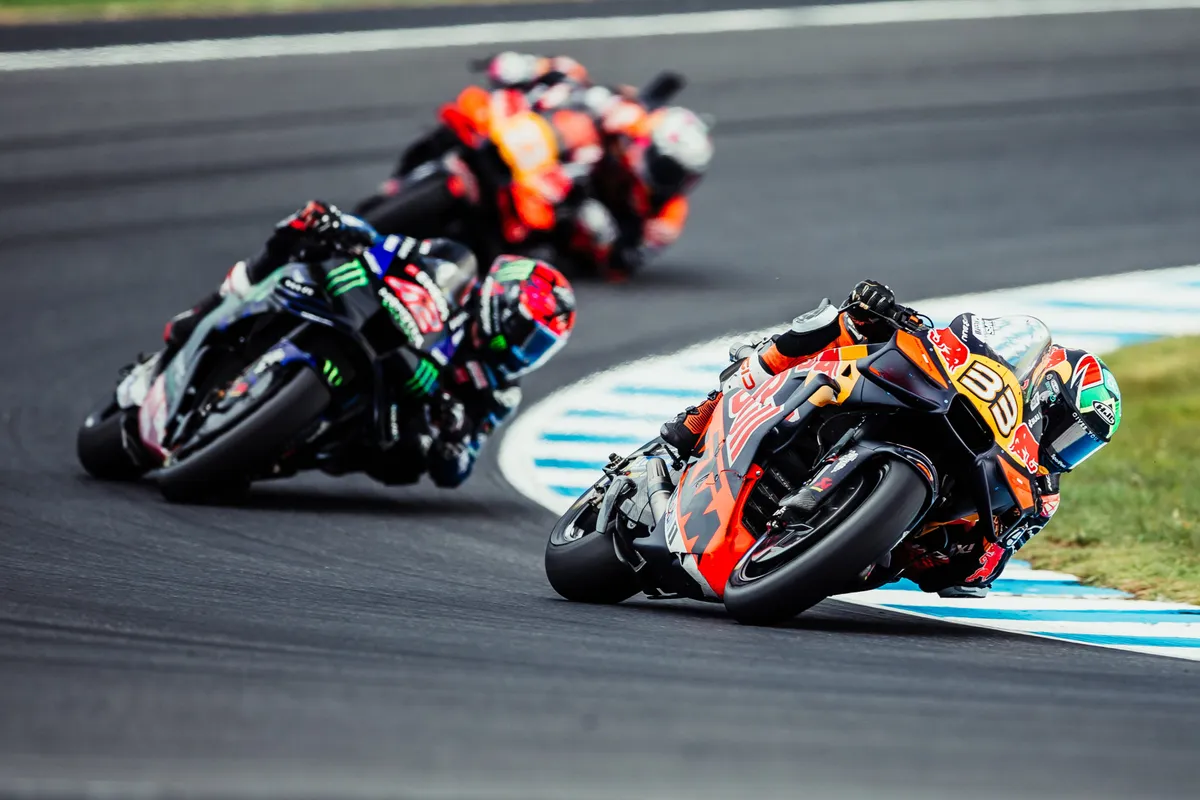
This distinct technical discrepancy also restricted the ultimate velocity potential of his stablemate, Marco Bezzecchi, who anchored the final podium spot as the leading Aprilia entry but remained fundamentally incapable of threatening the race-winning Ducati of Marc Marquez or the runner-up KTM driven by Pedro Acosta. The inability to convert mechanical engine braking into stable corner rotation mandates that the Noale engineering department execute overnight calibration updates. Martin confirmed that the team must alter static weight distribution to optimize the operational range of their Michelin tire compounds ahead of Sunday's full Grand Prix distance.
Baca Juga
Simak analisis lengkap program baru MotoGP Academy untuk menjaring talenta muda global. Baca informasi selengkapnya di Sportrik Media.
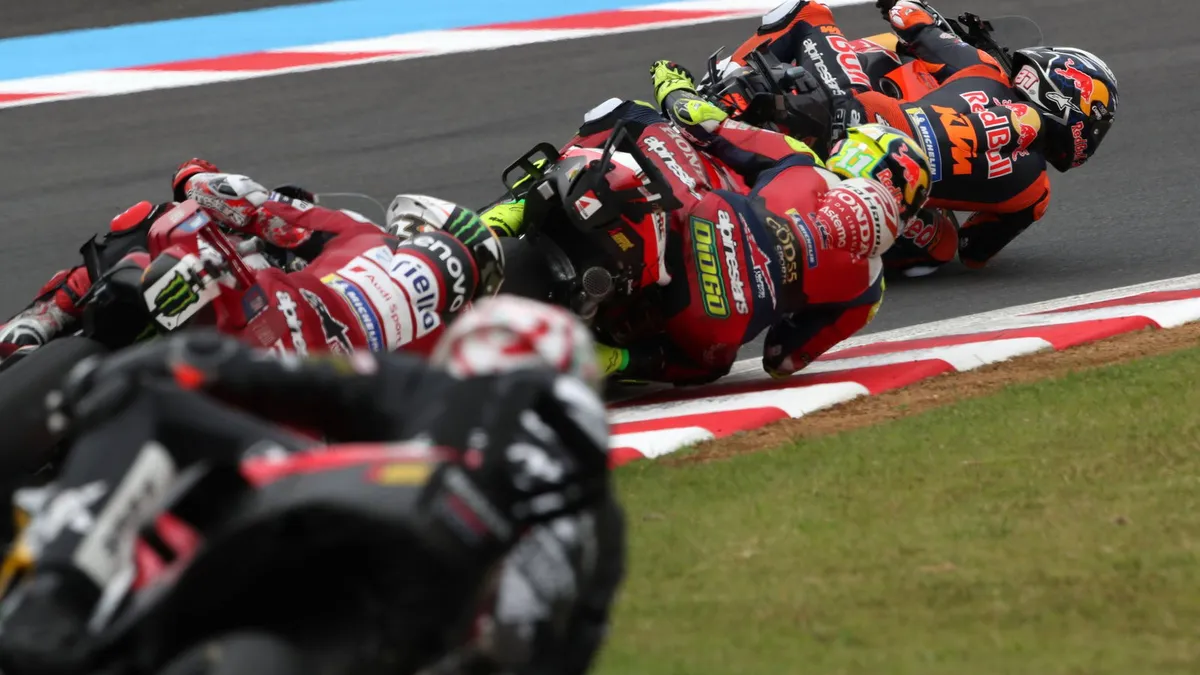
Simak analisis mendalam bursa transfer pembalap MotoGP 2027, mulai dari kepindahan mengejutkan hingga deretan tim yang diuntungkan. Baca selengkapnya di sini!
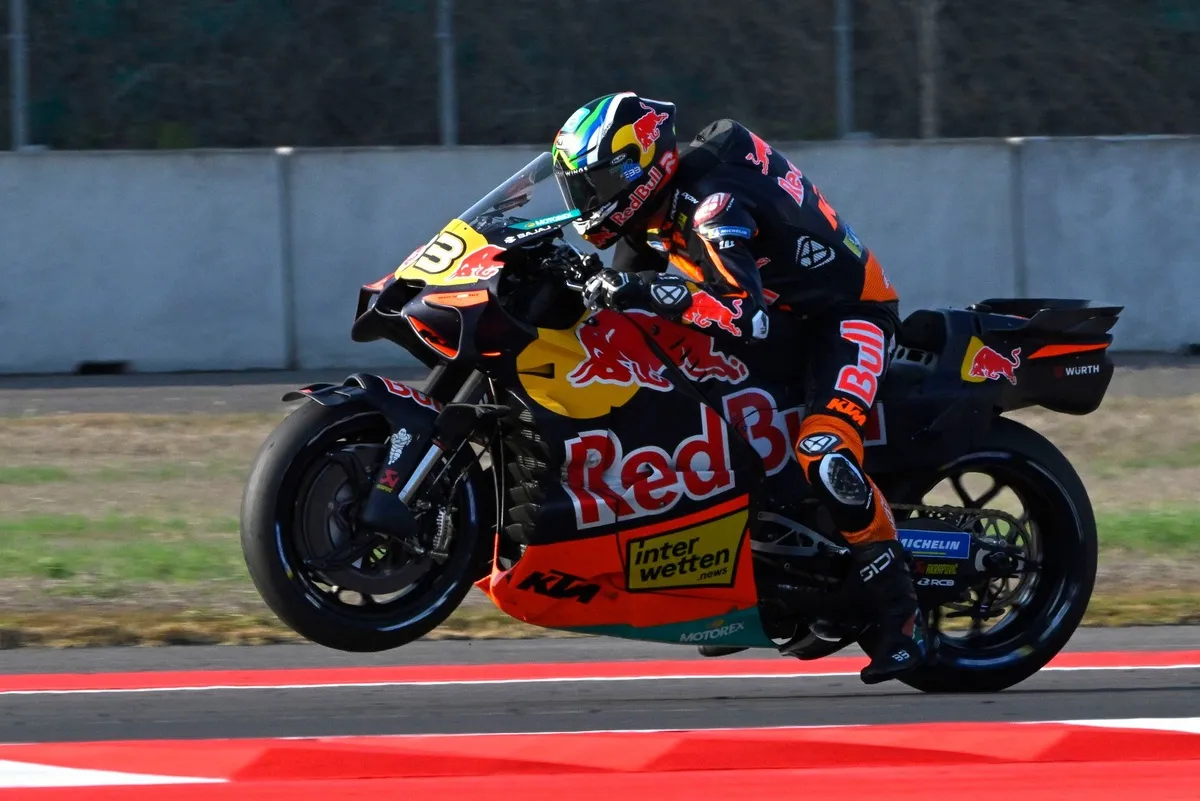
Simak analisis lengkap bagaimana regulasi MotoGP 2027 menjadi peluang emas bagi KTM membangun motor baru dan mengejar ketertinggalan di grid.
 Lanjutkan dengan Google
Diskusi & Komentar (0)
Mari Bergabung dalam Diskusi!
Masuk dengan mudah untuk mulai memberikan komentar, membalas, dan berinteraksi dengan pembaca lainnya.
Komentar Terbaru
Belum ada komentar. Jadilah yang pertama!