







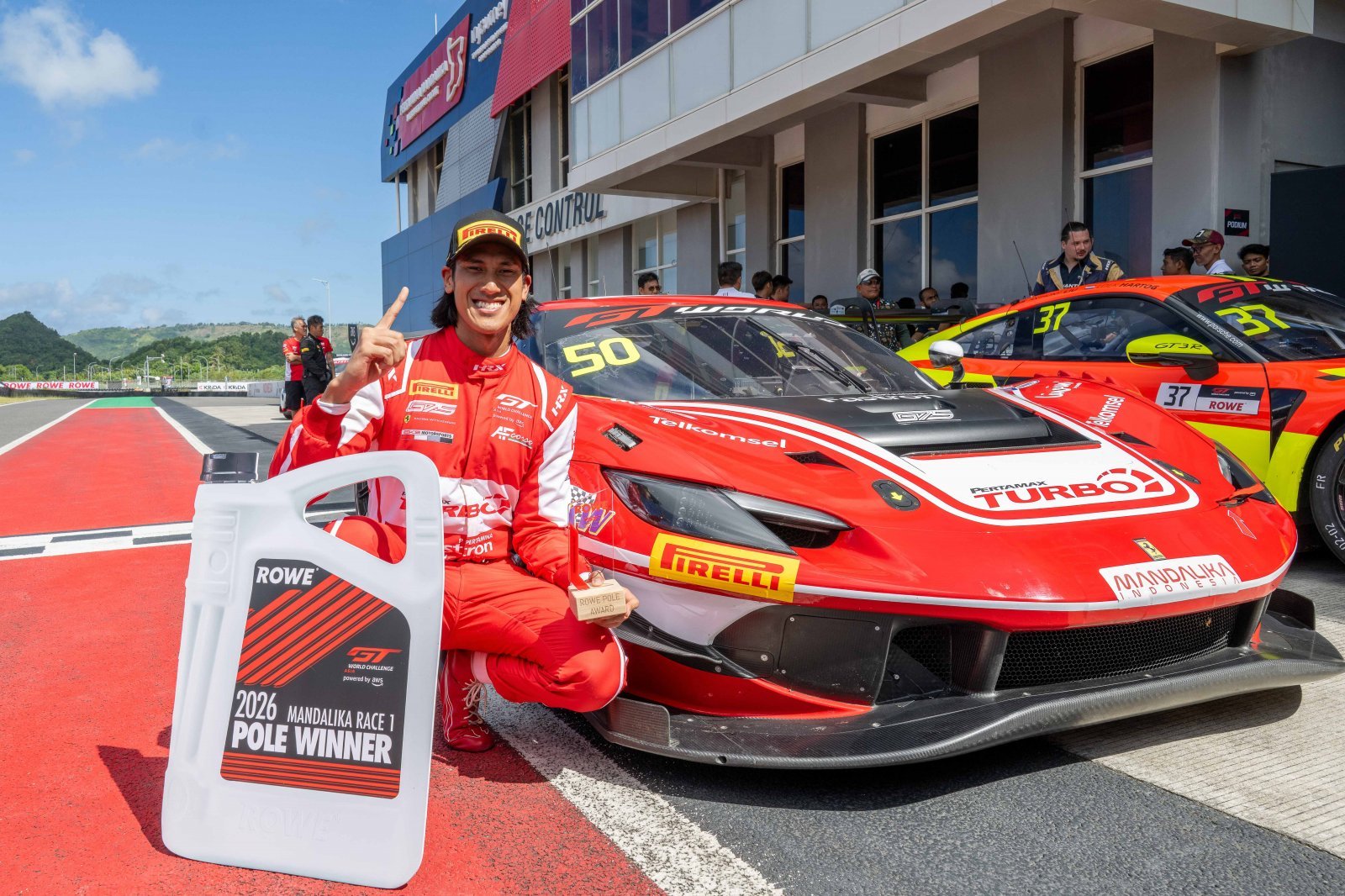

Sean Gelael made an immediate impact on his GT World Challenge Asia debut by securing pole position at Mandalika, placing himself at the front of the grid for Race 1 with a highly competitive performance. Driving a Ferrari for Garage 75, the Indonesian driver demonstrated rapid adaptation to GT3 machinery on a technically demanding circuit.
Gelael initially lost his fastest lap due to a track limits infringement but responded with an even quicker effort to reclaim top spot. This highlighted his control over tyre temperature and grip management—critical elements at Mandalika, where high-speed sections and heavy braking zones demand precision.
Ferrari’s strength was further underlined by Deng Yi securing a front-row position, reinforcing the manufacturer’s one-lap advantage. The car’s responsiveness through medium-speed corners and strong traction on exit provided a competitive edge over rivals such as Lamborghini and Audi.
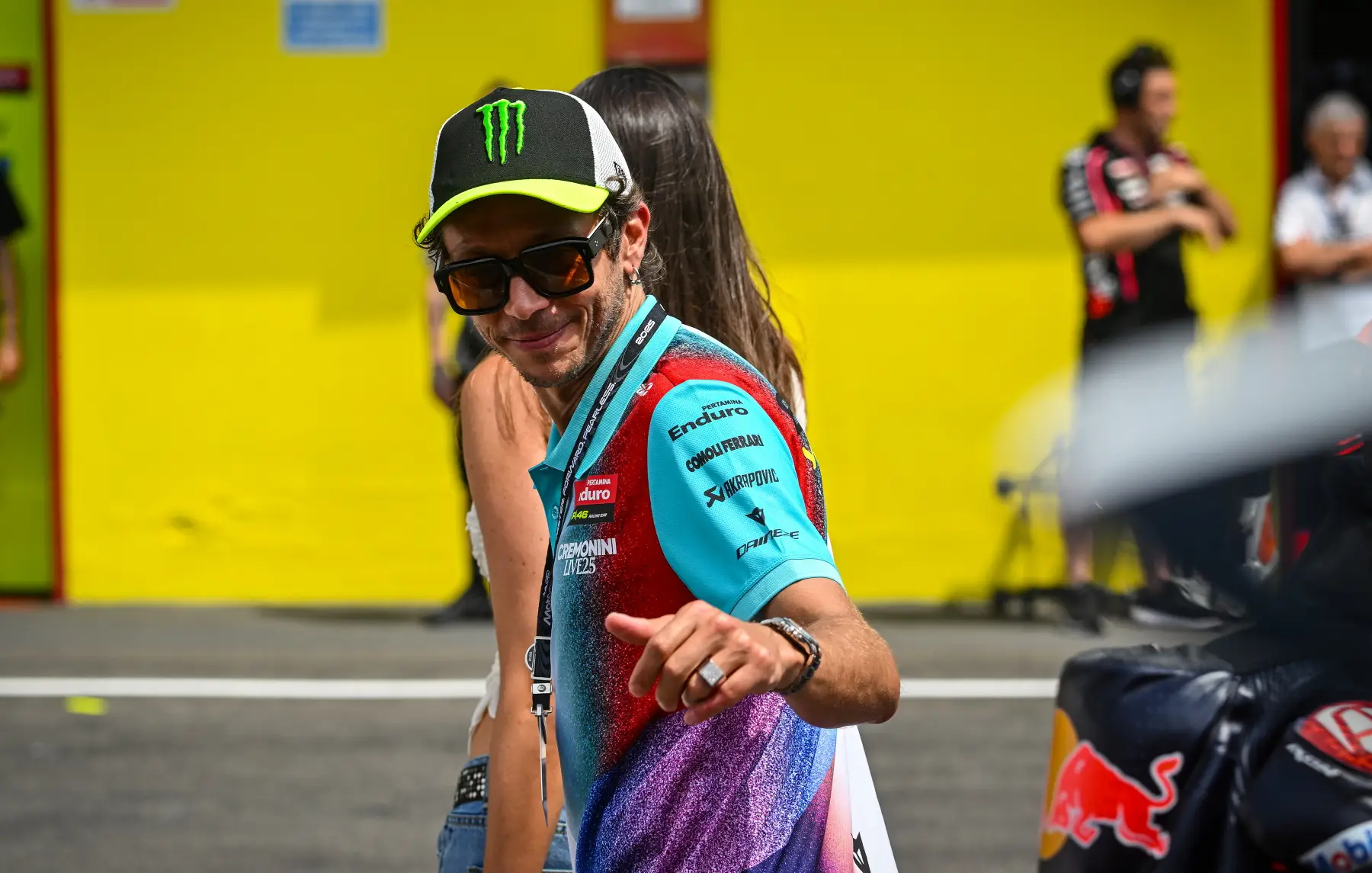
In Q2, the focus shifted as Loek Hartog emerged as the fastest driver, securing pole for Race 2. Driving a Porsche with Phantom Global Racing, Hartog capitalised on the car’s high-speed stability to set the benchmark lap.
The session featured extremely tight margins, with Jaxon Evans and Jesse Krohn also in contention. The minimal time gaps emphasised the importance of precise setup and flawless lap execution in determining grid positions.
The fact that two debutants claimed pole positions at Mandalika reflects both the competitive depth of the field and the importance of rapid adaptation. With race conditions introducing additional variables such as stint management and tyre degradation, the next challenge will be converting qualifying performance into race results.
 Continue with Google
Discussion (0)
Join the Discussion!
Sign in easily to start commenting, replying, and interacting with other readers.
Latest Comments
No comments yet. Be the first!