






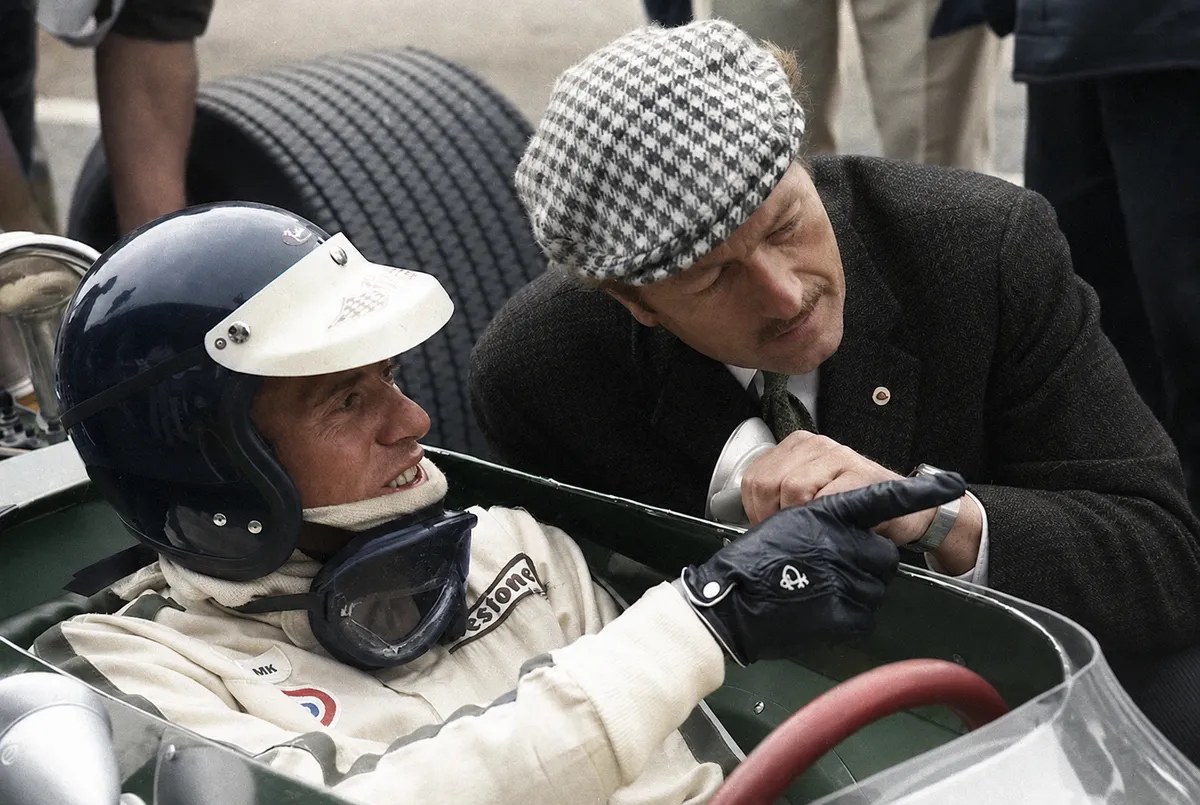

The motorsport world is revisiting one of its darkest days as fresh investigative claims surrounding the tragic death of two-time Formula 1 world champion Jim Clark come to light. The legendary Scottish driver lost his life during a Formula 2 race back in April 1968, an event that shook the racing community to its core during the absolute peak of his illustrious career.
For decades, the accepted narrative attributed the fatal crash to a sudden tyre puncture that caused his Lotus machine to veer off the circuit at high speed. However, author Malcolm Turner challenges this long-standing assumption in his new book, Death of Champions: Who Killed Jim Clark?, arguing instead that a catastrophic suspension failure was the true root cause of the accident.
Speaking with Speedcafe, Turner suggested that the handling of the wreckage immediately following the tragedy effectively shielded the team and its mastermind, Colin Chapman, from rigorous outside scrutiny. Turner, a lifelong admirer of the driver since watching him win at Goodwood as a child, argues that the cover-up ultimately delayed crucial safety advancements in the sport.
Reflecting on his extensive research, Turner stated to Speedcafe: "I realised that in fact it was the accident that made Formula 1 more dangerous because it was covered up. The true cause of the accident was swept under the carpet for a long, long time." He further noted that necessary safety regulation changes took significantly longer to implement as a direct result of the obscured findings.
Crucial to Turner’s reinvestigation is a forgotten historical artifact: a letter written by Fred Gamble, a former racing driver and Goodyear's international racing tyre chief who was present at Hockenheim on that fateful day. Gamble argued decades ago that a deflated rear tyre at that specific section of the track could not account for the sudden, violent loss of control witnessed by observers, pointing instead toward prior structural failure.
Read Also
FIA perketat aturan cost cap Formula 1 demi tutup celah transfer tenaga kerja dan fasilitas riset. Baca analisis mendalam di sini.
Simak detail lengkap livery blueprint terbaru Scuderia Ferrari untuk GP Amerika Serikat 2026. Baca analisis desain dan teknologi cetaknya di sini!
Simak jadwal F1 GP Amerika Serikat 2026 di Austin serta peluang emas Kimi Antonelli kunci gelar juara dunia. Baca analisis mendalam di sini!
 Continue with Google
Discussion (0)
Join the Discussion!
Sign in easily to start commenting, replying, and interacting with other readers.
Latest Comments
No comments yet. Be the first!