







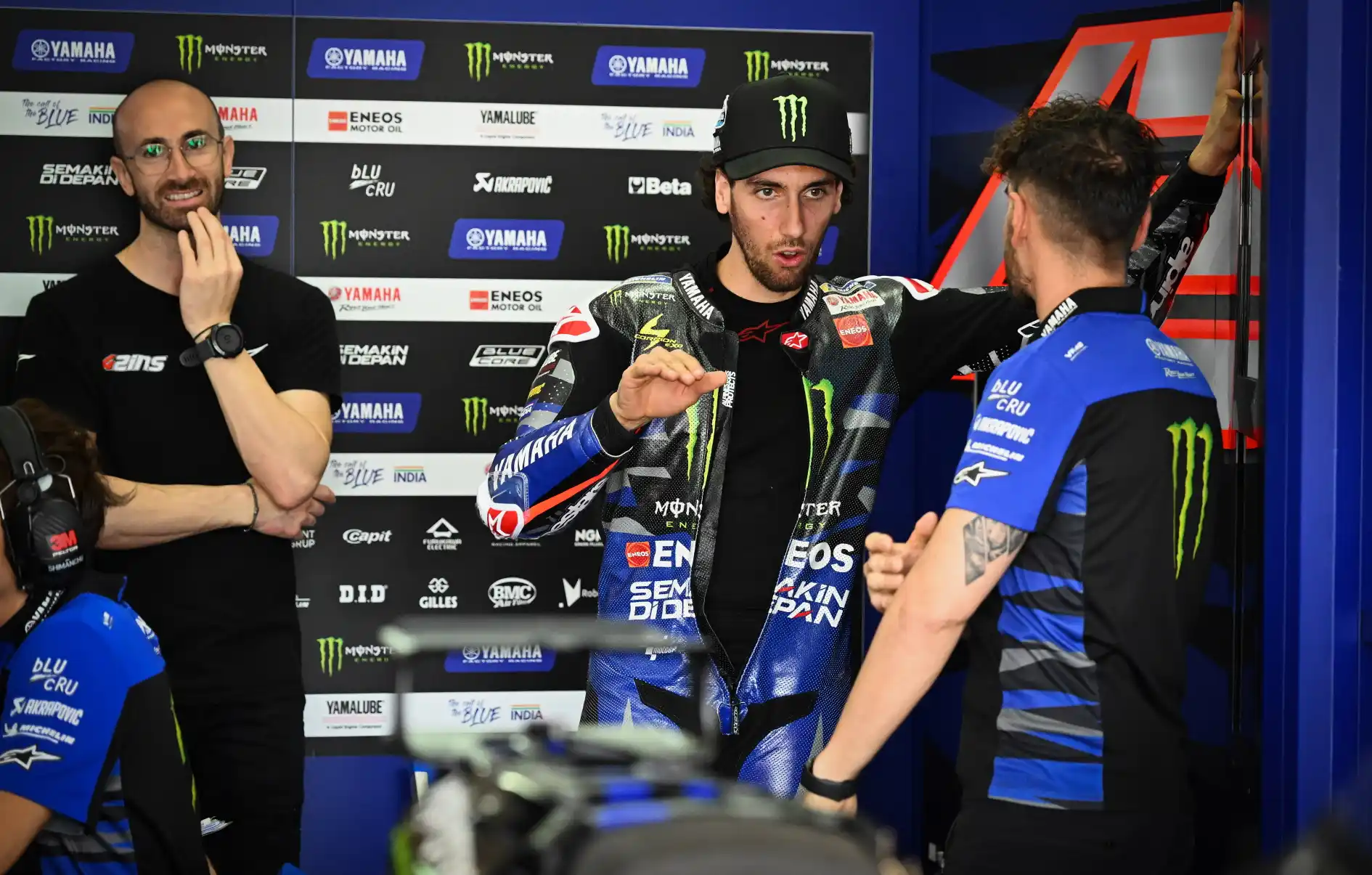

MotoGP, Sportrik Media - Alex Rins has shed light on why Fabio Quartararo consistently outperforms other Yamaha MotoGP riders, including himself. As a member of Yamaha Factory Racing, Rins attributes Quartararo’s edge to his exceptional adaptation to the challenging M1 bike. This Sportrik Media analysis delves into the performance disparities in the 2025 season, exploring team dynamics and their implications for upcoming races.
Background of Yamaha’s Uneven Performance
In the 2025 MotoGP season, Yamaha has faced significant hurdles in achieving consistent results. While Quartararo regularly secures mid-field finishes, other riders, including Rins and satellite team members, struggle to match his pace. This disparity has sparked curiosity about how Quartararo extracts superior performance from the Yamaha YZR-M1, a bike known for its demanding characteristics.
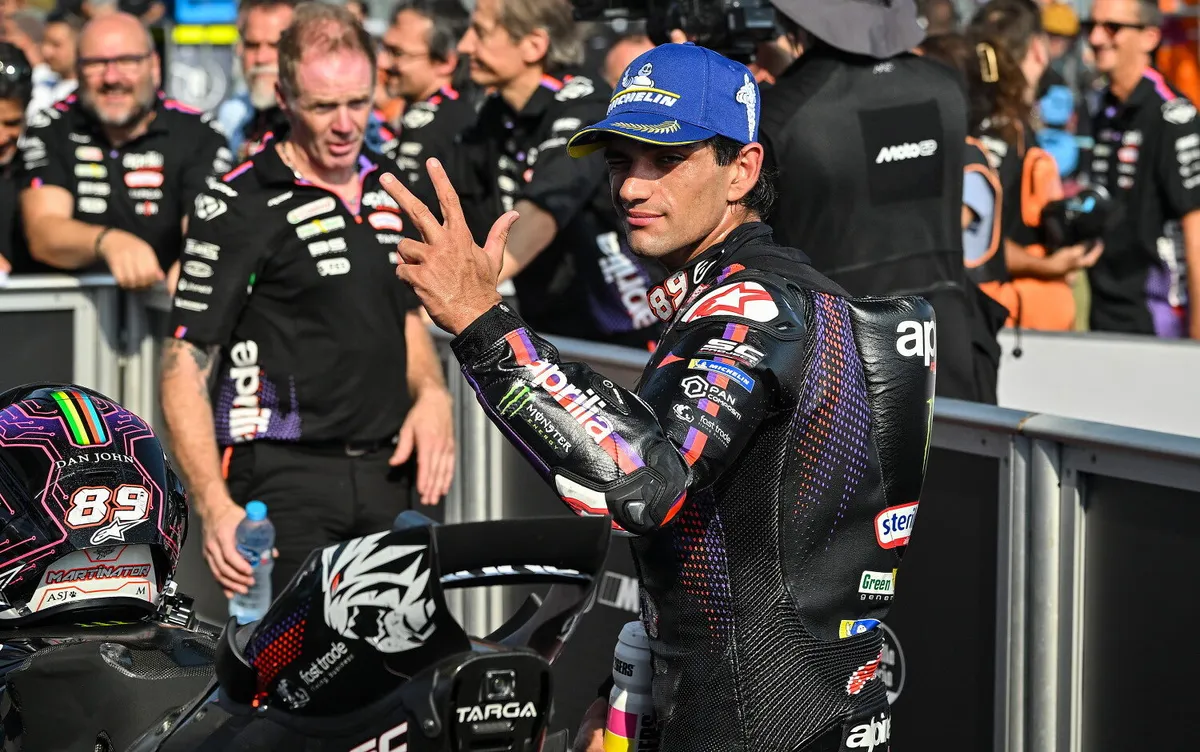
Rins, who joined Yamaha in 2024 after a successful stint with Suzuki, acknowledges the unique challenges of the M1. In an exclusive interview, he highlighted Quartararo’s ability to overcome these limitations, setting him apart from his teammates.
Rins’ Insights: Adaptation and Personal Setup
Rins emphasized that Quartararo’s advantage lies not in different hardware but in his tailored approach to bike setup and riding style. “Fabio has a unique way of molding the bike to his needs,” Rins explained. He noted that Quartararo often employs aggressive suspension and electronics settings, enabling him to maximize speed through fast corners.
Furthermore, Rins pointed to Quartararo’s experience as the 2021 world champion. “He knows how to leverage team data for precise tuning, something I’m still refining,” Rins added. This was evident in races like Mugello and Assen, where Quartararo secured podiums while Rins finished outside the top ten. Quartararo’s superior braking technique also compensates for the M1’s lack of straight-line acceleration, a common issue for Yamaha riders.
Team Strategy and Satellite Rider Challenges
Yamaha’s team principal, Massimo Meregalli, corroborated Rins’ observations, noting that bike development prioritizes Quartararo’s riding style as the lead rider. This focus creates challenges for satellite riders, who must adapt to the same specs without access to exclusive data. Consequently, Yamaha’s overall team points lag behind competitors like Ducati Lenovo and Aprilia, which boast more balanced lineups.
Rins suggested that Yamaha accelerate development to support all riders, not just the lead. This imbalance has hindered the team’s competitiveness in 2025, particularly against multi-rider powerhouses.
Future Prospects and Rins’ Recommendations
Looking ahead, Rins is optimistic that closer collaboration among riders could level the playing field. He proposed joint simulation sessions to share setups, a strategy proven effective by teams like Ducati. With the Japanese Grand Prix approaching, Yamaha aims to narrow the gap with rivals.
Quartararo responded positively to Rins’ comments, stating, “We’re all in this together, learning from each other.” This dynamic could spark a resurgence for Yamaha in the season’s second half.
Alex Rins’ insights into Fabio Quartararo’s dominance highlight the complexities of rider adaptation in MotoGP. Amid Yamaha’s challenges, Quartararo’s mastery sets a benchmark for his teammates. With a more inclusive team strategy, Yamaha could unlock greater potential. Fans eagerly await how these insights will shape performance at technical circuits like Motegi.
Read Also
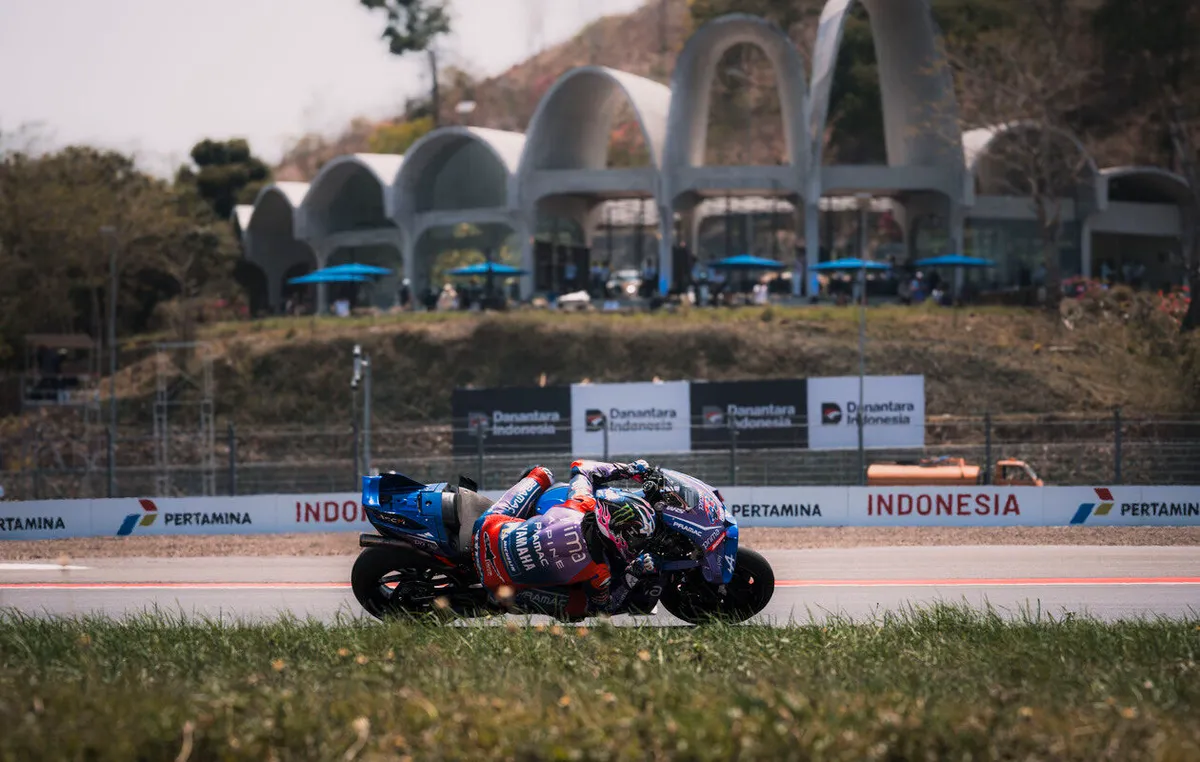
Jack Miller kritik pedas aturan MotoGP dan sindir Marc Marquez soal absen acara promosi. Baca analisis lengkap masalah Yamaha di sini.
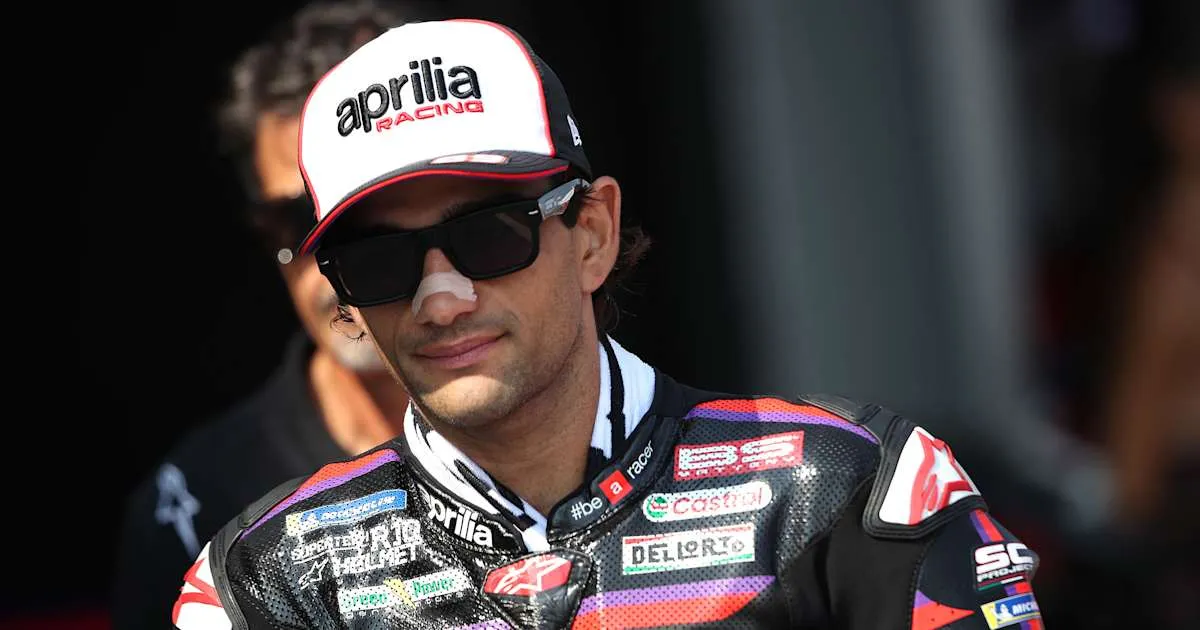
Pemimpin klasemen Jorge Martin terserang infeksi pencernaan jelang MotoGP Australia 2026. Simak analisis lengkap kondisi sang pembalap di sini.
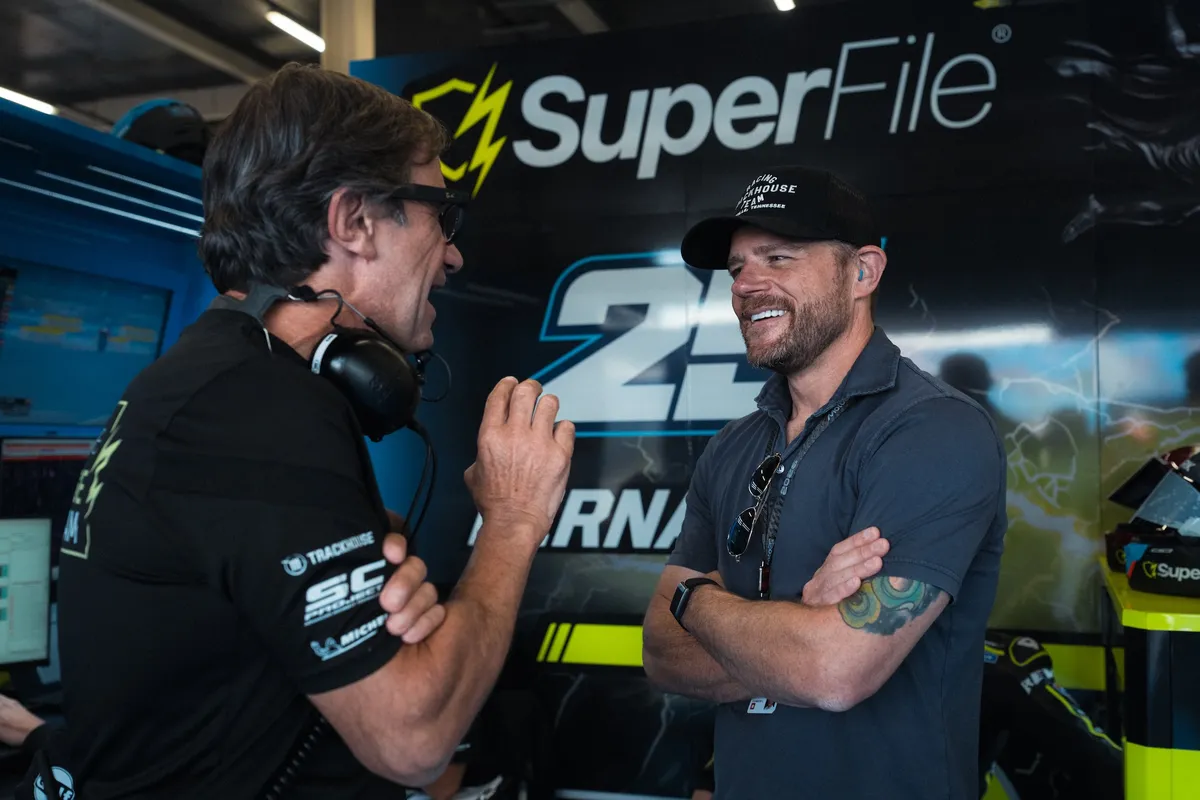
Investor global banjiri MotoGP 2026 usai era Liberty Media. Simak analisis lengkap, update kepemilikan tim Trackhouse, dan tren finansial terbaru di sini.
 Continue with Google
Discussion (0)
Join the Discussion!
Sign in easily to start commenting, replying, and interacting with other readers.
Latest Comments
No comments yet. Be the first!