






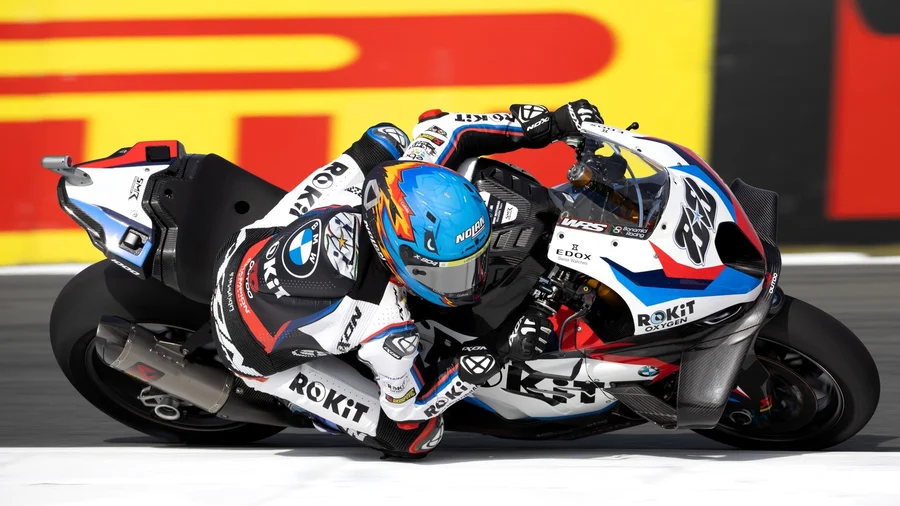

MotoGP, Sportrik Media - Miguel Oliveira has delivered a detailed technical explanation of the differences between Pirelli and Michelin tyres ahead of MotoGP’s major supplier switch in 2027, drawing from his direct experience in the World Superbike Championship.
The transition from Michelin to Pirelli represents one of the most significant technical regulation changes in modern MotoGP. While most current riders are yet to test Pirelli rubber, Oliveira holds a unique reference point after moving to WorldSBK with BMW Motorrad Motorsport. This cross-category experience provides valuable insight into tyre behaviour under race conditions.
Speaking at TT Circuit Assen, Oliveira highlighted that Pirelli’s front tyre offers a significantly wider operating temperature window compared to Michelin. According to him, this characteristic ensures consistent performance across varying track conditions without major fluctuations in grip.
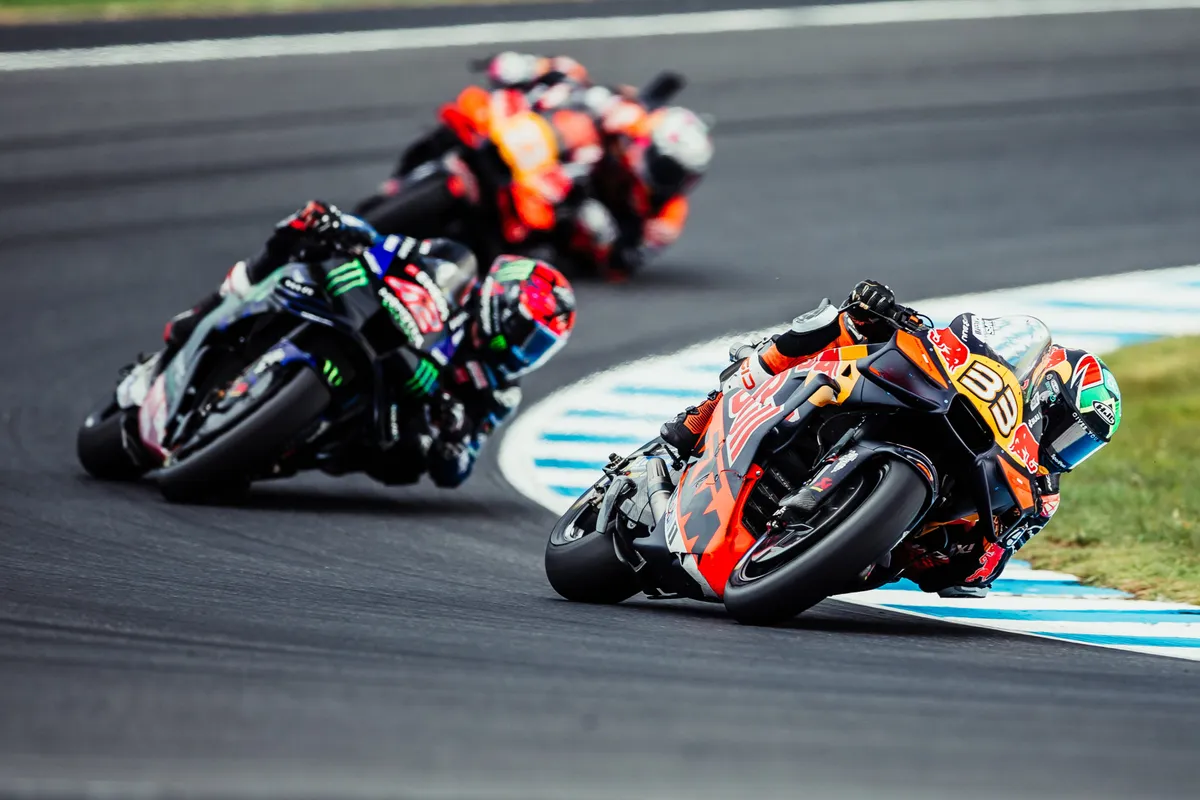
“The biggest thing with the Pirellis is that you have a working window of around 40 degrees with the front tyre. Even if the track is at 10 degrees or 40 degrees, the tyre will warm up and stay there,” Oliveira stated, as quoted by Motomatters.
This contrasts with Michelin’s approach, where tyre performance is more sensitive to pressure and temperature variations, particularly at the front. In recent seasons, Michelin’s minimum pressure regulations have become a critical strategic factor in MotoGP, especially in situations involving slipstream and turbulent air behind other bikes.
Pirelli’s motorcycle racing director, Giorgio Barbier, has previously explained that their tyre construction differs fundamentally from Michelin. Variations in carcass structure, dimensions, and compounds directly influence how internal pressure behaves during racing conditions.
“Our construction is different, as well as the compounds and dimensions. That means the way pressure works inside the tyre is also different. We will likely run higher working pressures,” Barbier told Crash.net.
Oliveira also pointed to the distinct feel of Pirelli’s rear tyre, describing it as more compliant and less reliant on a stiff carcass. Instead, grip is generated through a combination of air support and compound interaction, resulting in a different sensation during acceleration and directional changes.
Based on his experience, Oliveira suggested that adaptation is not symmetrical between the two tyre manufacturers. He indicated that switching from Pirelli to Michelin is generally easier than the reverse, underlining the potential challenge MotoGP riders may face during the transition.
“From my experience, it is easier to move from Pirelli to Michelin than from Michelin to Pirelli,” he explained.
Additional insights from WorldSBK teams support this analysis, noting that Pirelli tyre performance is less sensitive to pressure fluctuations caused by slipstream effects. Variations between 2.1 and 2.4 bar do not significantly alter bike behaviour, in contrast to Michelin’s stricter minimum pressures of 1.8 bar (front) and 1.68 bar (rear) currently enforced in MotoGP.
MotoGP riders are expected to receive their first on-track experience with Pirelli’s 2027-spec tyres during the post-race test at Automotodrom Brno in June. This test will mark the beginning of a crucial adaptation phase ahead of the regulation change.
Meanwhile, Michelin is set to become the exclusive tyre supplier for WorldSBK from next season, effectively completing a strategic swap between the two manufacturers at the highest level of motorcycle racing.
The shift is expected to have far-reaching implications, influencing not only rider performance but also team strategy, bike development, and setup philosophy. With fundamentally different tyre characteristics, the 2027 season could introduce a new competitive landscape, with early indications likely to emerge during mid-season testing.
Baca Juga
Simak analisis lengkap program baru MotoGP Academy untuk menjaring talenta muda global. Baca informasi selengkapnya di Sportrik Media.
Simak analisis mendalam bursa transfer pembalap MotoGP 2027, mulai dari kepindahan mengejutkan hingga deretan tim yang diuntungkan. Baca selengkapnya di sini!
Simak analisis lengkap bagaimana regulasi MotoGP 2027 menjadi peluang emas bagi KTM membangun motor baru dan mengejar ketertinggalan di grid.
 Lanjutkan dengan Google
Diskusi & Komentar (0)
Mari Bergabung dalam Diskusi!
Masuk dengan mudah untuk mulai memberikan komentar, membalas, dan berinteraksi dengan pembaca lainnya.
Komentar Terbaru
Belum ada komentar. Jadilah yang pertama!