







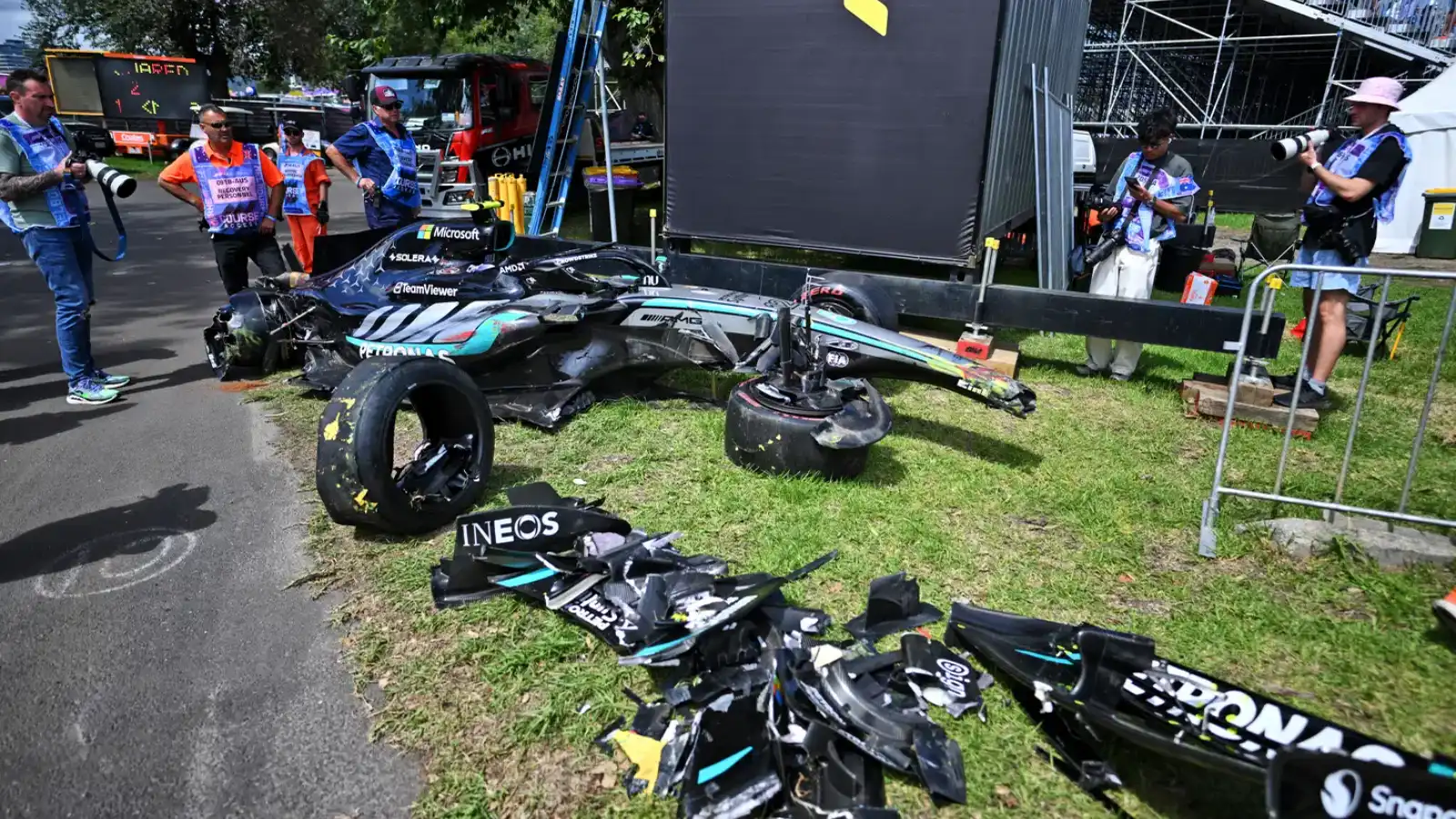

Formula 1, Sportrik Media - Kimi Antonelli narrowly avoided missing qualifying for the 2026 Australian Grand Prix after a heavy crash during the final practice session at Albert Park. The young Mercedes driver rebounded dramatically to secure second place on the grid, prompting strong praise from team principal Toto Wolff.
The incident occurred in the closing moments of FP3 when Antonelli lost control of his car at Turn 2 and slammed heavily into the barrier. The impact caused extensive damage to the W17, leaving Mercedes mechanics facing an intense race against time to rebuild the car ahead of the qualifying session.
According to Wolff, the damage was so severe that the car resembled a “Lego Formula 1 car” scattered across the garage floor. The Mercedes crew worked urgently to reassemble major structural components in order to give the Italian driver a chance to participate in the crucial grid-deciding session.
At one stage, the team believed the repairs would not be completed in time. However, an unexpected incident involving Max Verstappen of Red Bull Racing during Q1 provided valuable additional minutes that allowed Mercedes to finish the repair work.
With that narrow window of opportunity, Antonelli was able to return to the track. The result exceeded expectations, as the 19-year-old driver secured second position on the grid behind his team-mate George Russell.
Mercedes delivered a commanding performance during qualifying in Melbourne. Russell claimed pole position with a margin of nearly eight-tenths of a second over Isack Hadjar, who placed third for Red Bull.
For Wolff, Antonelli’s performance highlighted the raw talent that the Italian driver possesses, even after suffering a major crash just hours earlier.
“I am so happy that these ground effect cars are gone, and finally we can do what we're best at,” Wolff told Sky Sports F1.
“I'm feeling relieved for the hard work that was put in by everyone, and the car looked like a Lego Formula 1 car that was thrown on the floor literally two hours before.”
Wolff revealed that only minutes before qualifying began, he believed the team would not manage to send Antonelli out onto the track.
“I said five minutes before the start of the session that we wouldn't make it, and then Max went off, and that gained us the minutes to put the car out,” he explained.
Despite the rushed rebuild and the lack of time to fine-tune the setup, Antonelli delivered a competitive lap that secured a front-row start.
“In terms of speed, he is absolutely there. He's been quick all weekend until he went off in the morning,” Wolff said.
“It is a miracle that not only was the car put together, but that he did the lap; there was no set-up on it. We were never able to measure it, and it is the raw speed, the talent and the ability.”
Wolff also reiterated a philosophy he has often expressed about developing young drivers, emphasising that natural speed is the most important trait.
“I said it last year, it is easier to slow someone down than to try to make a donkey fast,” he said.
However, Wolff acknowledged that Antonelli’s aggressive approach inevitably carries a balance of risk and reward. The young driver frequently pushes the car to its absolute limit, which can sometimes result in mistakes.
“Dampening someone's energy in the car carries a risk and reward ratio; he never risks too much, but then he is putting it on the edge,” Wolff added.
According to Wolff, incidents like the FP3 crash are part of the natural learning curve for a young driver adapting to Formula 1 at the highest level.
“We've had a few of these now, but they're part of him growing,” Wolff concluded. “But yes, this could have been different.”
Read Also
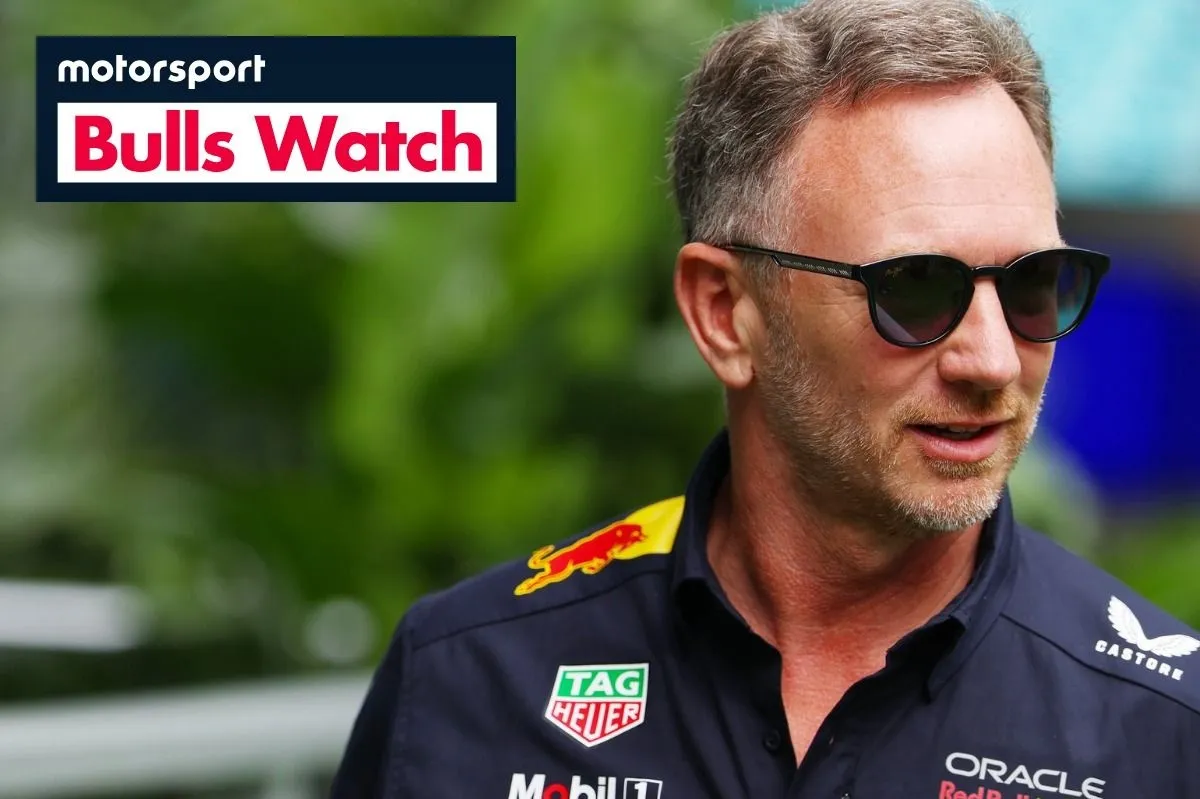
Simak pengakuan Christian Horner mengenai proyek mesin F1 Red Bull 2026 yang menakutkan hingga sukses raih kemenangan. Baca analisis lengkap di sini!
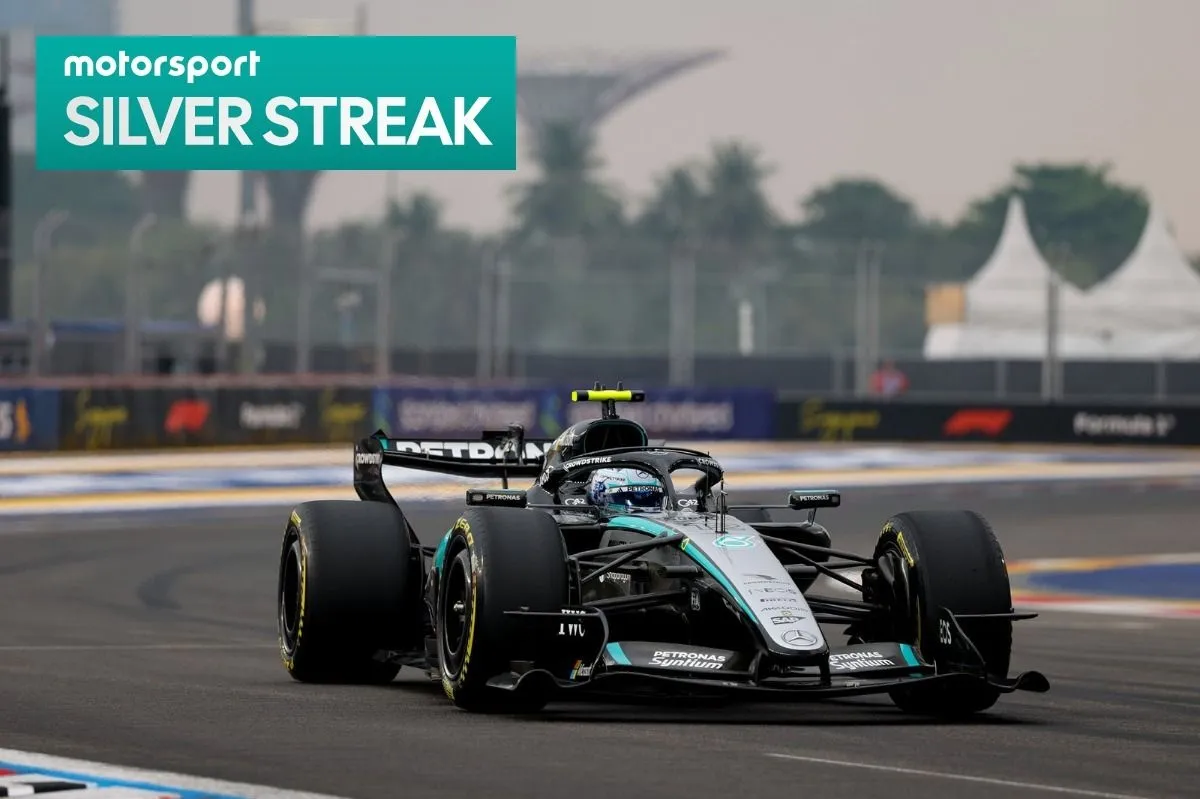
Simak analisis lengkap peluang Mercedes mengunci gelar juara konstruktor F1 2026. Baca ulasan poin dan skenario juara selengkapnya di sini!
Simak analisis lengkap rencana Williams gunakan sasis FW50 di F1 2027 demi rayakan 50 tahun sejarah tim. Baca berita mendalam eksklusif di sini!
 Continue with Google
Discussion (0)
Join the Discussion!
Sign in easily to start commenting, replying, and interacting with other readers.
Latest Comments
No comments yet. Be the first!