







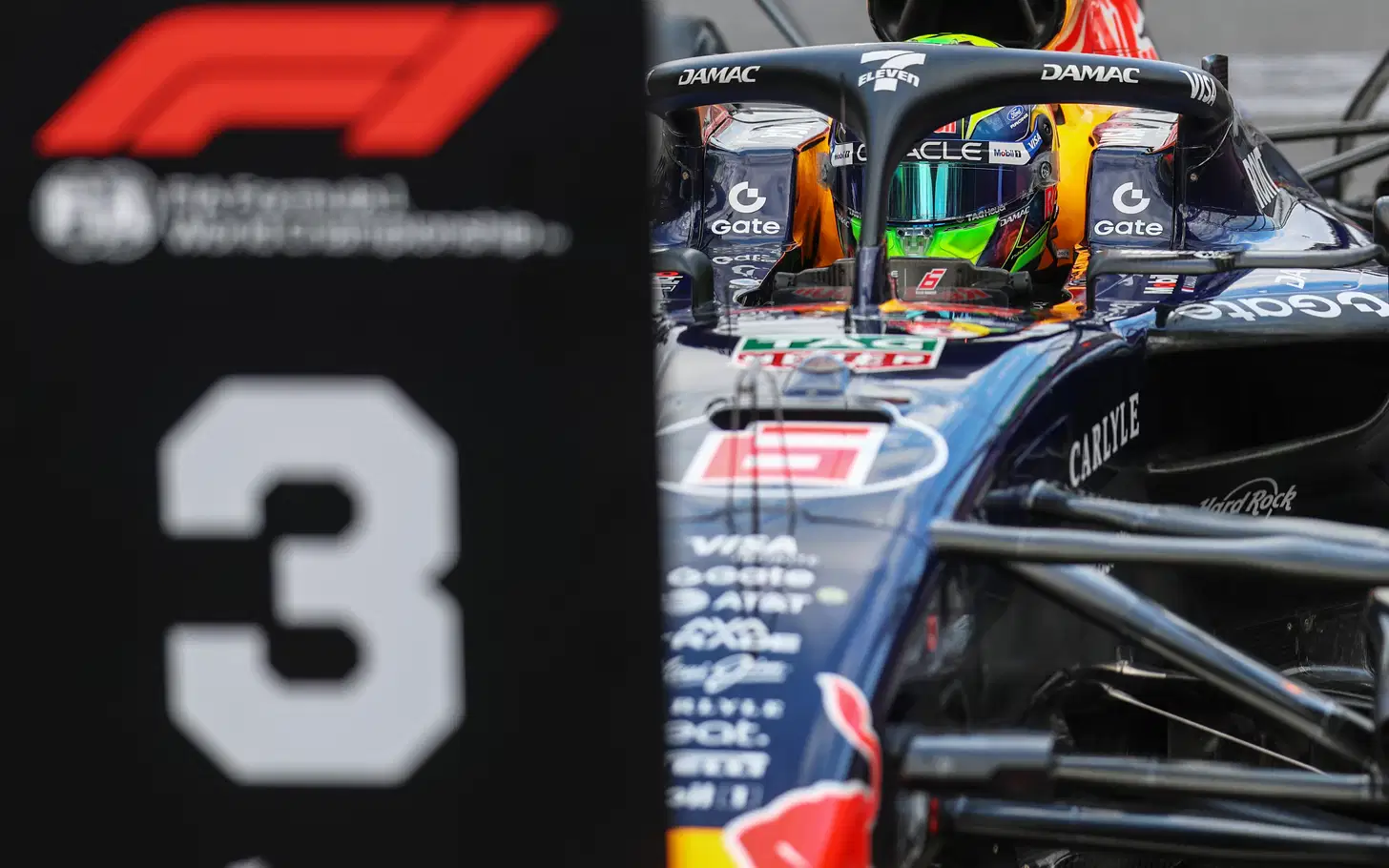

Formula 1, Sportrik Media - The commanding qualifying performance of Mercedes at the 2026 Australian Grand Prix has highlighted a key weakness within rival Red Bull Racing as the new Formula 1 regulatory era begins at Albert Park. Front-row starts for George Russell and Kimi Antonelli underlined a clear early advantage for the Brackley-based team.
The outcome closely aligned with predictions made earlier by four-time world champion Max Verstappen. During pre-season testing in Bahrain, Verstappen warned that Mercedes could emerge as the team to watch during the opening race weekend in Australia.
Verstappen even suggested that Mercedes had been “playing hide-and-seek” with its true pace during testing. That suspicion appeared justified when Russell secured pole position by nearly eight tenths of a second ahead of Red Bull driver Isack Hadjar, who impressed with third place in his qualifying debut for the team.
The significant gap also extended to other rivals such as Ferrari driver Charles Leclerc, who similarly could not match the pace of the Mercedes drivers. Data from the session suggests Mercedes currently holds a stronger understanding of the complex 2026 technical regulations.
Of course, it remains uncertain whether this advantage will continue throughout the season. With aggressive development expected across the grid, the competitive order could evolve significantly over the coming months.
For now, however, Mercedes appears to hold a clear performance edge. The W17 has demonstrated the ability to optimise the full package of chassis, aerodynamics, and power unit more effectively than its main competitors.
Data analysis from qualifying suggests that Red Bull’s current weakness lies in cornering performance. The RB machine appears to lack downforce and mechanical grip in certain sections of the circuit, something reflected in Hadjar’s lower cornering speeds compared to the Mercedes cars.
However, the 2026 regulations also place greater emphasis on energy management, which has become a crucial factor in overall lap performance. This point was highlighted by McLaren driver Lando Norris, who qualified sixth in Melbourne.
“The more speed you have on the straight, the sooner you can lift,” Norris explained.
“The sooner you lift, the more power you have and the longer you can keep the throttle on. So it's give and take.”
Norris added that cornering performance directly affects how efficiently drivers can deploy battery energy across a lap.
“When you go fast through a corner, you can roll longer, you spend more time off the throttle, but you still come out of the corner quickly and you have more battery left.”
According to Norris, the difference between teams is not simply about raw lap time, but about how effectively the car and power unit work together.
“So it's not that the car is a second ahead; the car is probably three to four tenths better, and then the engine is also working three to four tenths better,” he said.
This synergy appears to be one of Mercedes’ key strengths. The team has produced a power unit and chassis combination capable of maximising the available battery energy across the lap while remaining competitive in both straight-line speed and cornering performance.
In contrast, Red Bull still appears to be adapting to the challenges associated with developing its own power unit under the new regulations. Optimising energy recovery and deployment will likely remain a key area of development for the Milton Keynes-based team.
As a result, Red Bull’s immediate focus is expected to centre on improving cornering speed and refining battery management strategies.
Overall, the team can still take encouragement from its ability to remain competitive with Ferrari and McLaren despite the challenges.
However, if Red Bull aims to return to the front and challenge for championships with its own power unit project, significant development work remains ahead.
Based on the early evidence from Melbourne, Mercedes has delivered a strong opening statement for the 2026 season and currently sets the benchmark for the rest of the field.
Read Also

Simak pengakuan Christian Horner mengenai proyek mesin F1 Red Bull 2026 yang menakutkan hingga sukses raih kemenangan. Baca analisis lengkap di sini!
Simak analisis lengkap peluang Mercedes mengunci gelar juara konstruktor F1 2026. Baca ulasan poin dan skenario juara selengkapnya di sini!
Simak analisis lengkap rencana Williams gunakan sasis FW50 di F1 2027 demi rayakan 50 tahun sejarah tim. Baca berita mendalam eksklusif di sini!
 Continue with Google
Discussion (0)
Join the Discussion!
Sign in easily to start commenting, replying, and interacting with other readers.
Latest Comments
No comments yet. Be the first!