





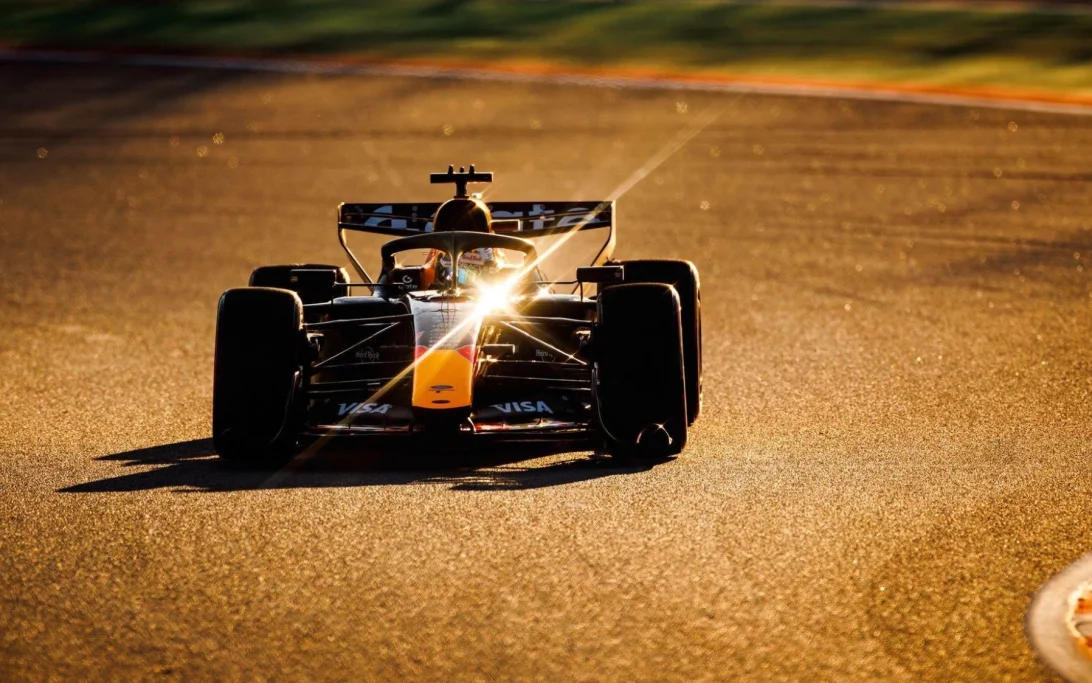
Formula 1, Sportrik Media - Former Formula 1 driver and current commentator Martin Brundle has defended Formula 1’s identity amid criticism that the sport has lost its character following the introduction of the latest technical regulations this season.
The new rules have brought revised power units and aerodynamics, with cars now running on a 50 per cent combustion and 50 per cent electrical energy split. While the changes have generally been welcomed by drivers, concerns have emerged over the increasing influence of energy management, particularly with the MGU-K now delivering 350 kW of power, up from 120 kW, and the removal of the MGU-H from the regulations.
As a result, energy deployment and harvesting have become central to performance, forcing drivers to lift and coast even on qualifying laps to ensure optimal battery usage. Strategic decisions on when and how to deploy electrical energy during a race are now critical, especially in overtaking scenarios under the revised regulations.
Brundle argues that such challenges are not new to Formula 1, stressing that drivers have always been required to manage and protect key components throughout the sport’s history. In his view, the focus may have shifted from mechanical parts to energy systems, but the underlying demands placed on drivers remain consistent.
“If you’re going to go flat out for a long time, you’ve got to protect things,” Brundle said.
“It’s always been the same, whether it was Sterling Moss and Juan Manuel Fangio, or Jackie Stewart, Graham Hill and Jim Clark.”
“Back then, it was dog rings, drive shafts, universal joints, gearboxes, engines, suspension and rose joints.”
Reflecting on his own racing career during the 1980s and 1990s, Brundle highlighted that component management was a defining feature of Formula 1 even in its most extreme eras, including the turbo period where fuel limitations dictated aggressive lift-and-coast strategies throughout races.
“We were always protecting the clutch and the engine,” he said.
“Even in the brutal turbo era of the 1980s, we were lifting and coasting throughout the race because it was the only way to reach the finish with any performance or fuel left.”
“I once ran out of fuel on the way to the line in Adelaide and lost third place because I wasn’t careful enough. You’ve always had to protect something along the way, and tyres are a big one today.”
Brundle also suggested that legendary drivers such as Ayrton Senna and Michael Schumacher would have thrived under the new regulations, given their tactical intelligence and ability to maximise every available tool within the car.
“Ayrton and Michael would love these cars, because they had the capacity to use all the tools and work with the people who knew how to get the best out of them,” Brundle explained.
“What has changed is that protecting universal joints and mechanical components has now become protecting the battery.”
Despite his defence of the new era, Brundle did raise one concern regarding the potential impact of battery deployment on overtaking. While the regulations are designed to promote closer racing, he warned that overtaking could become too easy if energy advantages are too pronounced.
“Four or five great overtakes in a race are fantastic to see,” Brundle said.
“What we don’t want is a number of overtakes every race that looks like a basketball score.”
Overall, Brundle dismissed claims that Formula 1 has lost its essence, arguing that while the specific technical challenges have evolved, the fundamental demands of skill, intelligence, and management remain unchanged at the heart of the sport.

Discussion (0)
Please login to join the discussion.
Latest Comments
No comments yet. Be the first!