






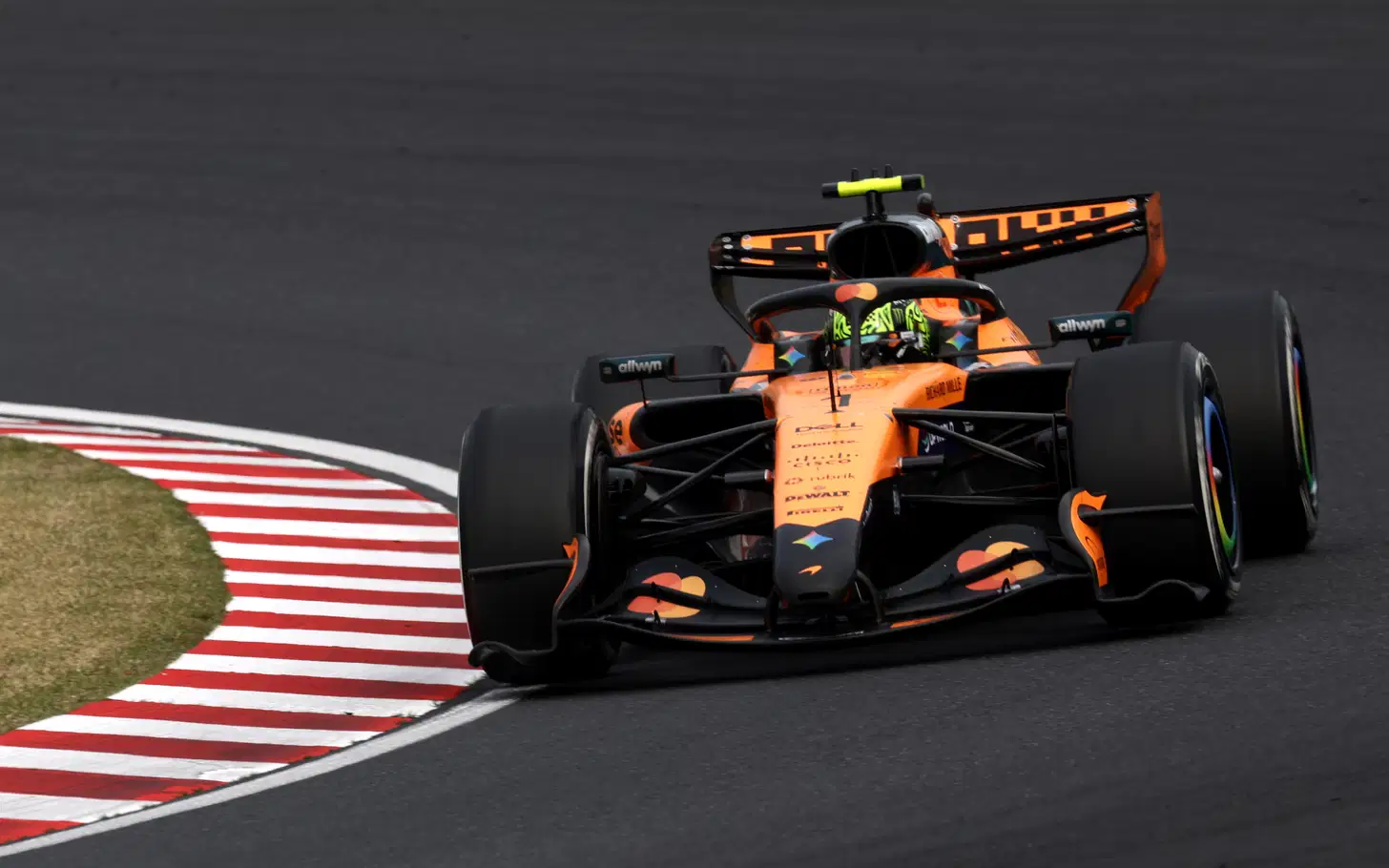

Formula 1, Sportrik Media - Lando Norris has outlined a significant new disadvantage with the 2026 Formula 1 cars, stressing that losing track time in free practice now carries a far greater impact across a race weekend.
The introduction of sweeping technical regulations, covering both aerodynamics and power units, has placed drivers and teams in an extended adaptation phase. With limited prior data on the new-generation cars, each lap in practice has become critical for understanding performance characteristics, balance, and energy deployment strategies.
Norris has encountered multiple disruptions during practice sessions this season, including at the Japanese Grand Prix in Suzuka, where his track running was restricted. As a result, preparation for qualifying and the race was compromised, highlighting the amplified importance of early-session mileage.

“Yeah, 100%, a lot more,” Norris said when asked if missing practice time has a greater effect this year compared to previous eras.
He explained that the combination of a new car and evolving circuit conditions adds further complexity. At Suzuka, the introduction of new asphalt with increased grip levels has transformed the circuit into a faster and more demanding layout, requiring adjustments in driving technique and car setup.
“It’s obviously still a new car, and it’s a new track where the tarmac is a lot grippier. It’s a much quicker track, so you have to drive the car quite differently to how we’ve done in the last few years,” he noted.
The early rounds of the season, including Australia, China, and Japan, have seen a noticeable rise in driver errors, reflecting the challenges posed by the new cars. Norris pointed specifically to corners such as Spoon at Suzuka, where rear instability has caught out multiple drivers.
“You’ve seen how many mistakes people have been making, especially into Spoon. It’s just not easy,” he said.
A key factor behind this complexity is the increased battery output within the new power units. Teams are now required to manage energy deployment more precisely, influencing not only straight-line performance but also how drivers approach braking zones and corner entry.
“It certainly costs more than before, not just for the driver but also in understanding how the power unit works and getting the battery usage right,” Norris explained.
He added that the need to lift off the throttle more frequently in certain sections of the track introduces additional setup considerations, further complicating the overall performance picture.
“You have to lift more in places, and that affects how you set up the car. There are a lot of small things that all add up,” he concluded.
With increased technical complexity and a steeper learning curve, free practice sessions have become more critical than ever in shaping competitive performance. Any loss of track time now has a cascading effect, impacting setup optimisation, energy management, and driver confidence.
As the 2026 season progresses, teams will place even greater emphasis on maximising practice efficiency to ensure they remain competitive in an increasingly demanding and tightly contested Formula 1 landscape.
Read Also
Naomi Schiff memperingatkan masalah unit daya Mercedes bisa merugikan Kimi Antonelli dan mengancam peluang juara dunia F1 musim ini.

Kupas tuntas insiden bug software yang hentikan start F1 Bahrain. Analisis mendalam teknis unit daya dan evaluasi sistem elektronik.
Red Bull targetkan podium konsisten di sisa F1 2026 usai menang di Sepang. Laurent Mekies sebut Mercedes tetap favorit.
 Continue with Google
Discussion (0)
Join the Discussion!
Sign in easily to start commenting, replying, and interacting with other readers.
Latest Comments
No comments yet. Be the first!