







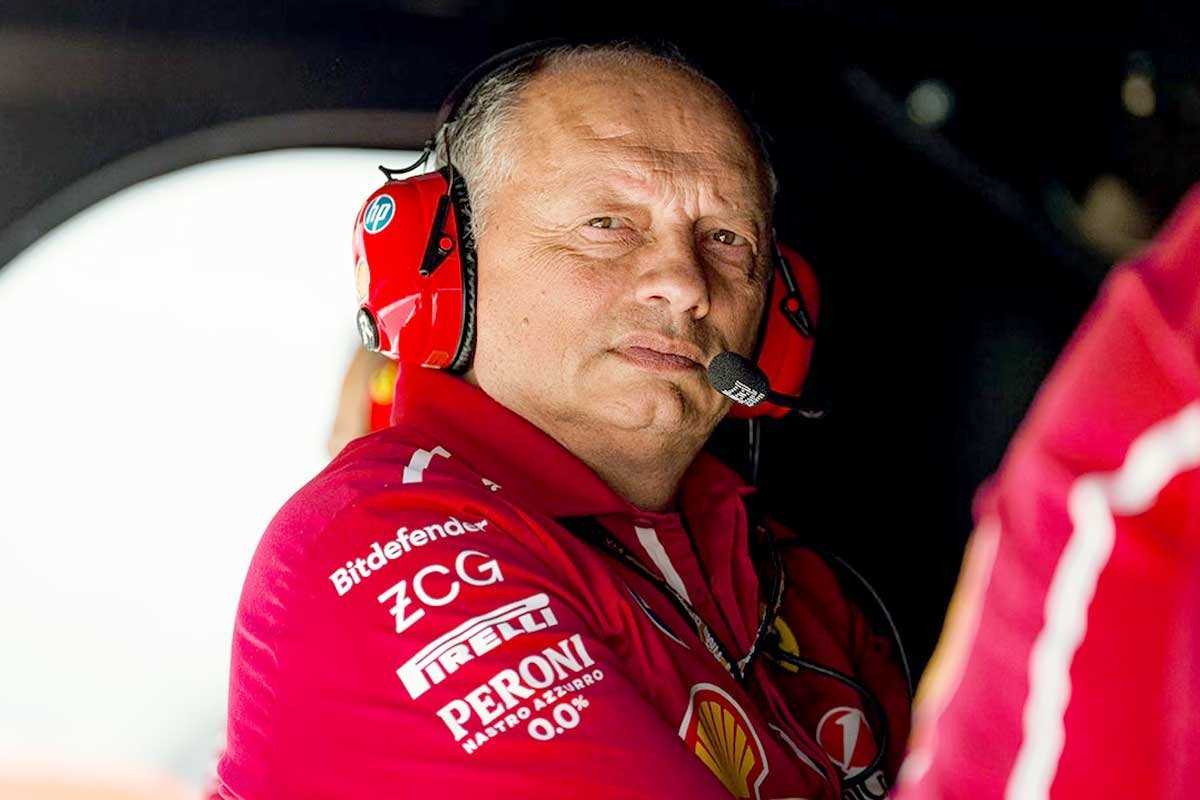

Formula 1, Sportrik Media - Fred Vasseur has acknowledged that Ferrari continues to face a significant performance deficit to Mercedes in the early phase of the 2026 Formula 1 season, despite discussions around potential engine regulation adjustments.
Mercedes has dominated the opening rounds, securing back-to-back victories and a Sprint win in China, building a 31-point lead over Ferrari in the constructors’ standings. At the same time, George Russell and Kimi Antonelli occupy the top two positions in the drivers’ championship, reinforcing the team’s current benchmark status.
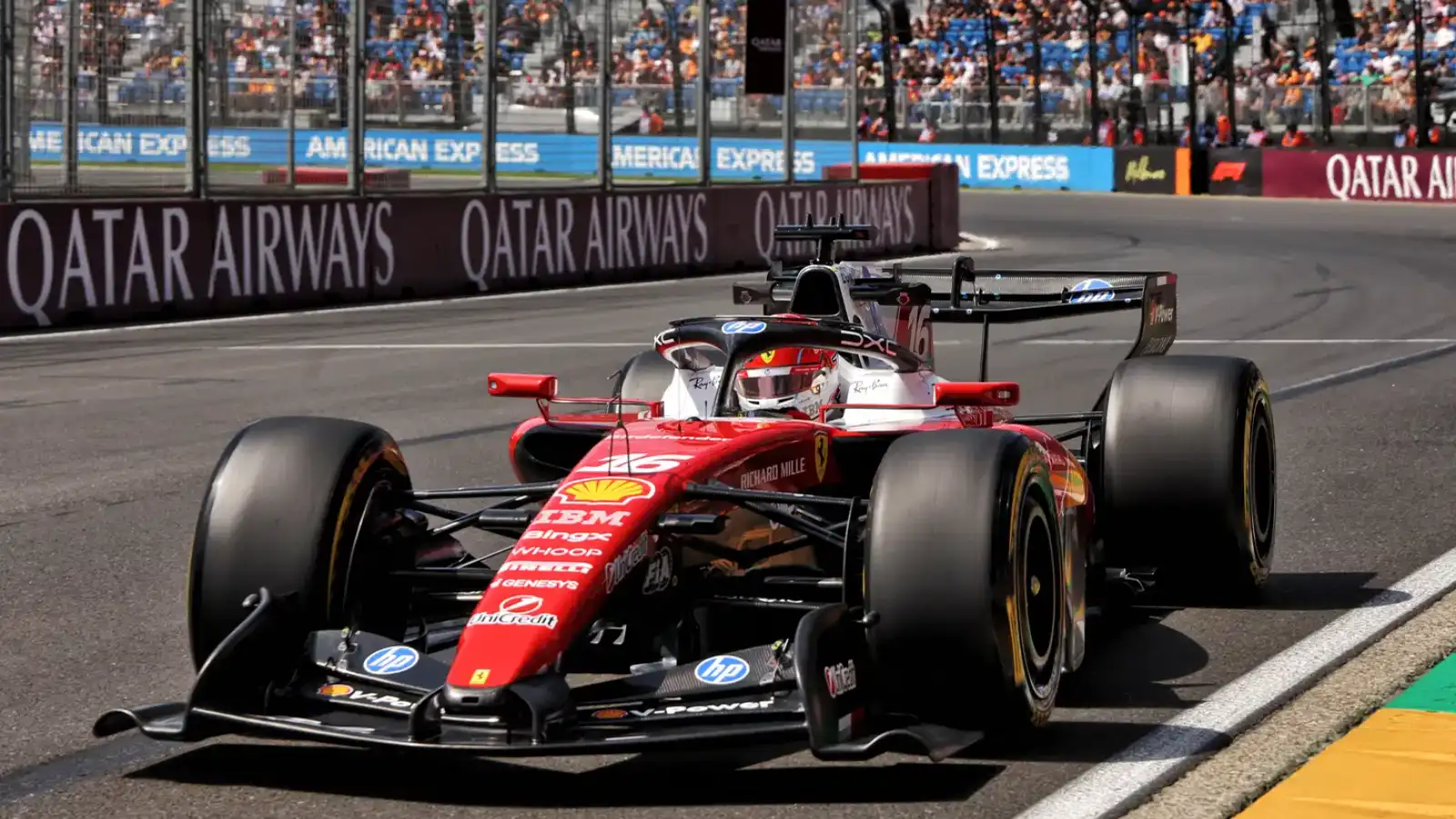
Ferrari has demonstrated competitiveness during the opening phases of races, particularly at the start, where the SF-26’s smaller turbo configuration provides strong initial acceleration. This has allowed Lewis Hamilton and Charles Leclerc to engage directly with Mercedes in the early laps. However, this advantage diminishes once Mercedes establishes a gap beyond one second.
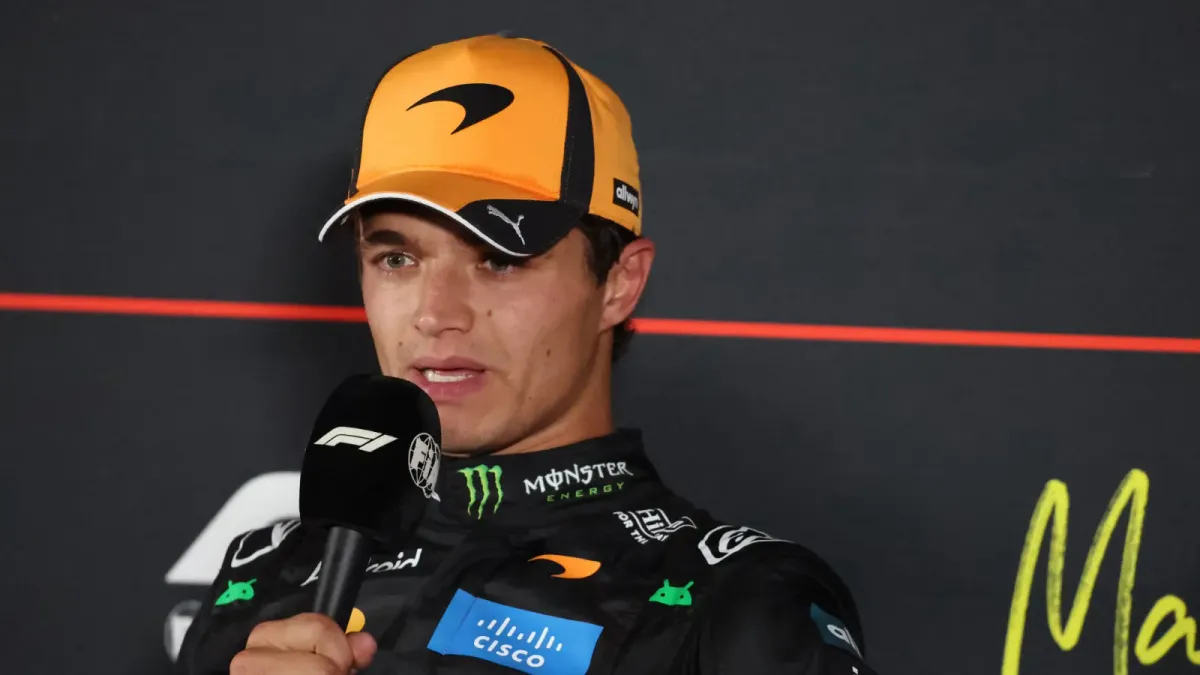
Under the 2026 regulations, the overtake boost system plays a critical role when drivers are within one second of the car ahead. Once Mercedes moves outside that threshold, Ferrari struggles to maintain comparable race pace due to its underlying performance deficit.
“At the beginning we are fighting with the Mercedes cars. As long as we are within one second, we can use the extra boost and keep the pace,” said Fred Vasseur.
“But as soon as they open that one-second gap, it becomes much more difficult. After the first 10 laps, we return to a deficit of four to five tenths per lap.”
Vasseur also highlighted Ferrari’s primary weakness in straight-line speed, pointing to limitations in both power unit efficiency and overall aerodynamic performance. Nevertheless, he noted that the team is making incremental progress in understanding and improving the car.
“We were eight tenths off in Melbourne, six tenths on Friday in China, and four tenths on Saturday. Step by step, we are understanding the situation and closing the gap, but they are still quite far ahead,” he explained.
From a technical perspective, Vasseur rejected the idea of isolating chassis and engine contributions, stating that the 2026 regulations have created a more integrated performance package.
“It is never easy to separate, and it is even more difficult this year. The car is more of a combined package between chassis and engine rather than two separate elements,” he added.
Attention has also turned to a forthcoming adjustment in engine regulations concerning compression ratio measurements, following suggestions that Mercedes may have exploited a regulatory interpretation advantage. From June 2026, compression ratios will be measured both in cold conditions and at 130°C operating temperature, with a full transition to the latter method in 2027.
However, Vasseur does not expect this change to significantly alter the competitive order.
“I’m not convinced that the new compression ratio rule will be a game changer,” he stated.
“The introduction of the ADUO could give us an opportunity to close the gap, but performance is not just about one parameter. There is a lot in energy management and chassis performance. Focusing on a single factor would be a mistake.”
With Ferrari still trailing by an estimated four to five tenths per lap, the team faces a complex development challenge to match Mercedes’ current level. The focus will remain on improving power unit efficiency, aerodynamic performance, and overall package integration.
As the season progresses, the effectiveness of Ferrari’s upgrades and its response to regulatory adjustments will be critical in determining whether it can reduce the gap before the championship enters its decisive phase.
Read Also
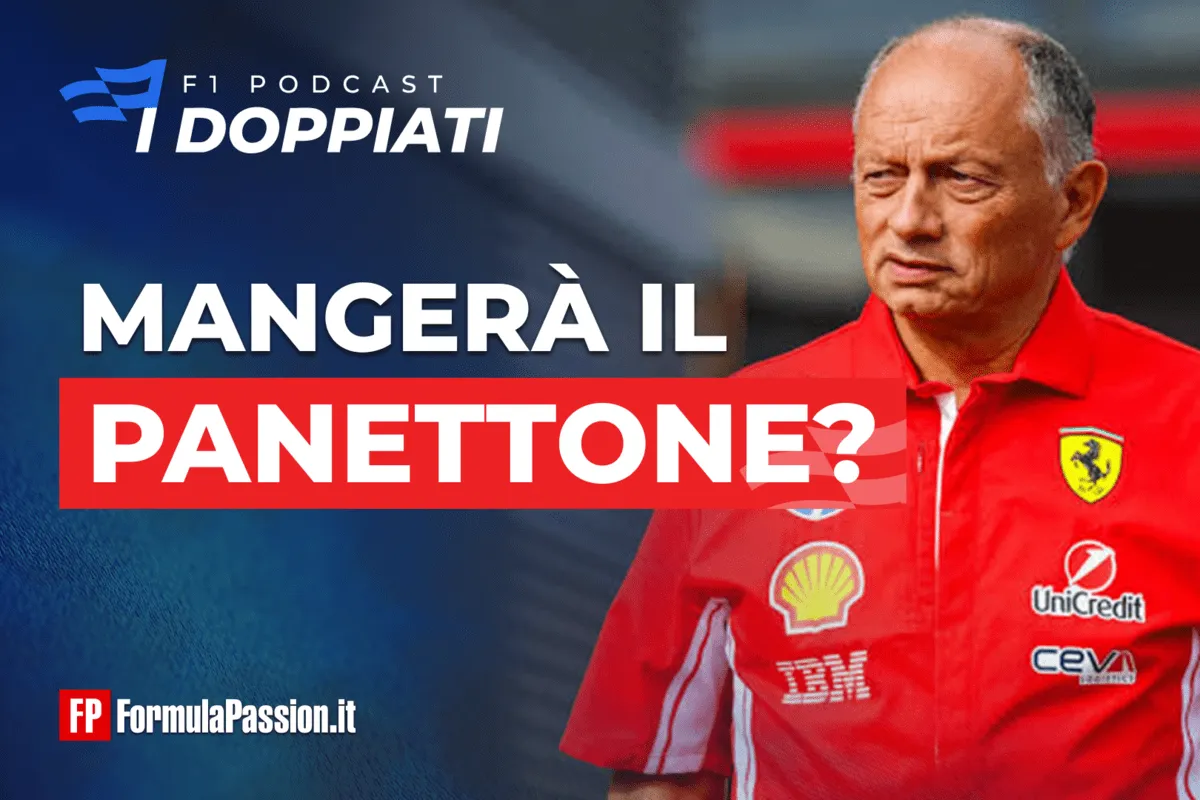
Frederic Vasseur's future at Ferrari is in doubt after poor results in Monza and Madrid and internal conflict between Hamilton and Leclerc. Will the Vasseur era end?
Alex Albon gives a behind-the-scenes look at his life in Monaco: breakfast with Carlos Sainz, padel with Formula E drivers, and heat training for upcoming races.
Liam Lawson receives high praise from Red Bull after impressive performances as a substitute driver. His F1 2027 future remains uncertain.
 Continue with Google
Discussion (0)
Join the Discussion!
Sign in easily to start commenting, replying, and interacting with other readers.
Latest Comments
No comments yet. Be the first!