







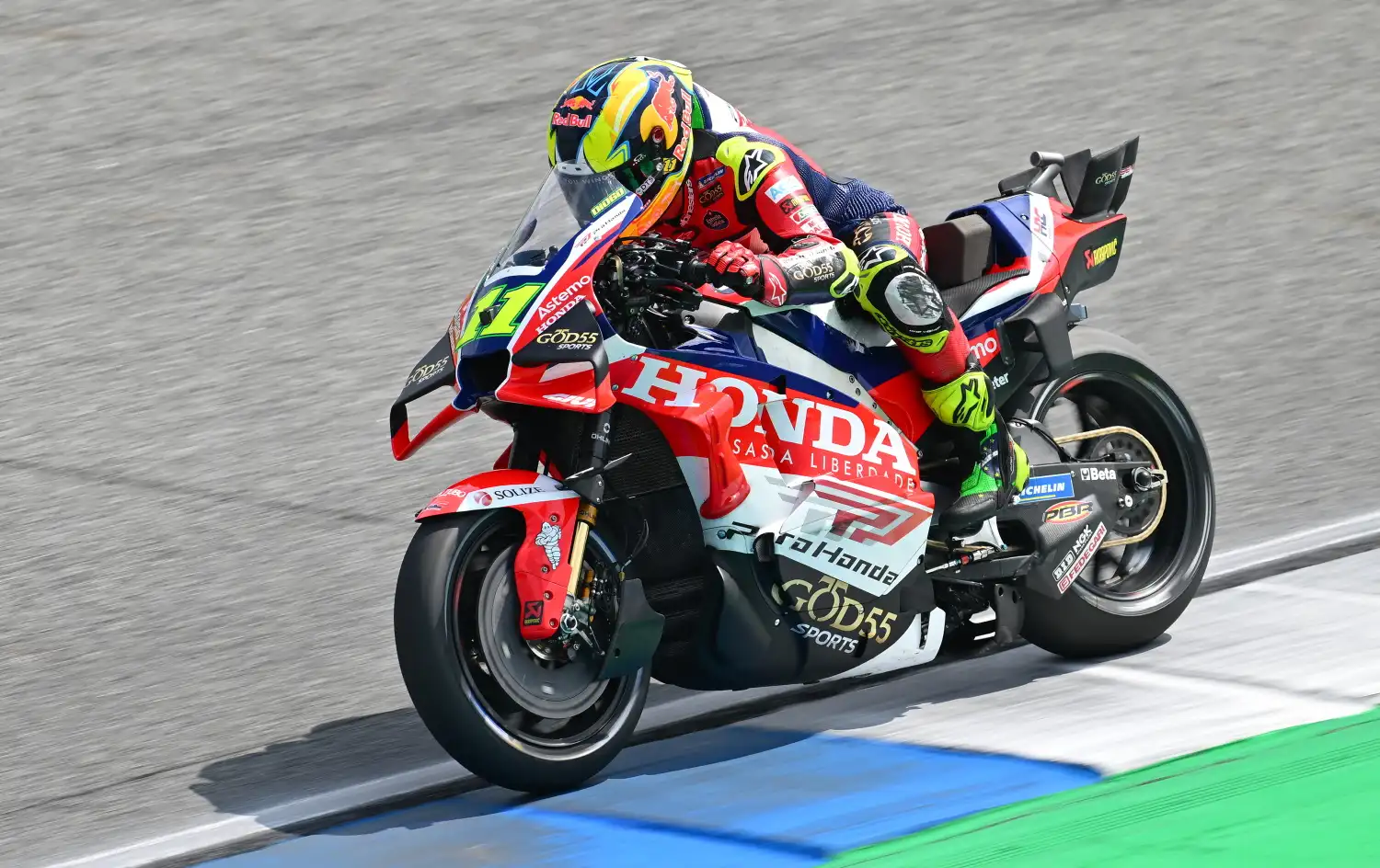

MotoGP, Sportrik Media - Diogo Moreira began his MotoGP 2026 campaign with LCR Honda by delivering an immediate impression, including a composed start to his home Grand Prix weekend in Goiania following a solid debut in Thailand.
The reigning Moto2 world champion demonstrated notable technical adaptation to the RC213V, a machine that has posed significant challenges for newcomers within the Honda structure in recent seasons. In the Thailand opener, Moreira secured 13th place after qualifying 15th, finishing just 0.043 seconds behind factory rider Luca Marini.
Beyond outright pace, his performance reflected efficiency in tyre management, traction control modulation, and race rhythm—critical parameters in modern MotoGP performance engineering. His accelerated learning curve stands out in a category where rookies typically require several rounds to reach competitive stability.
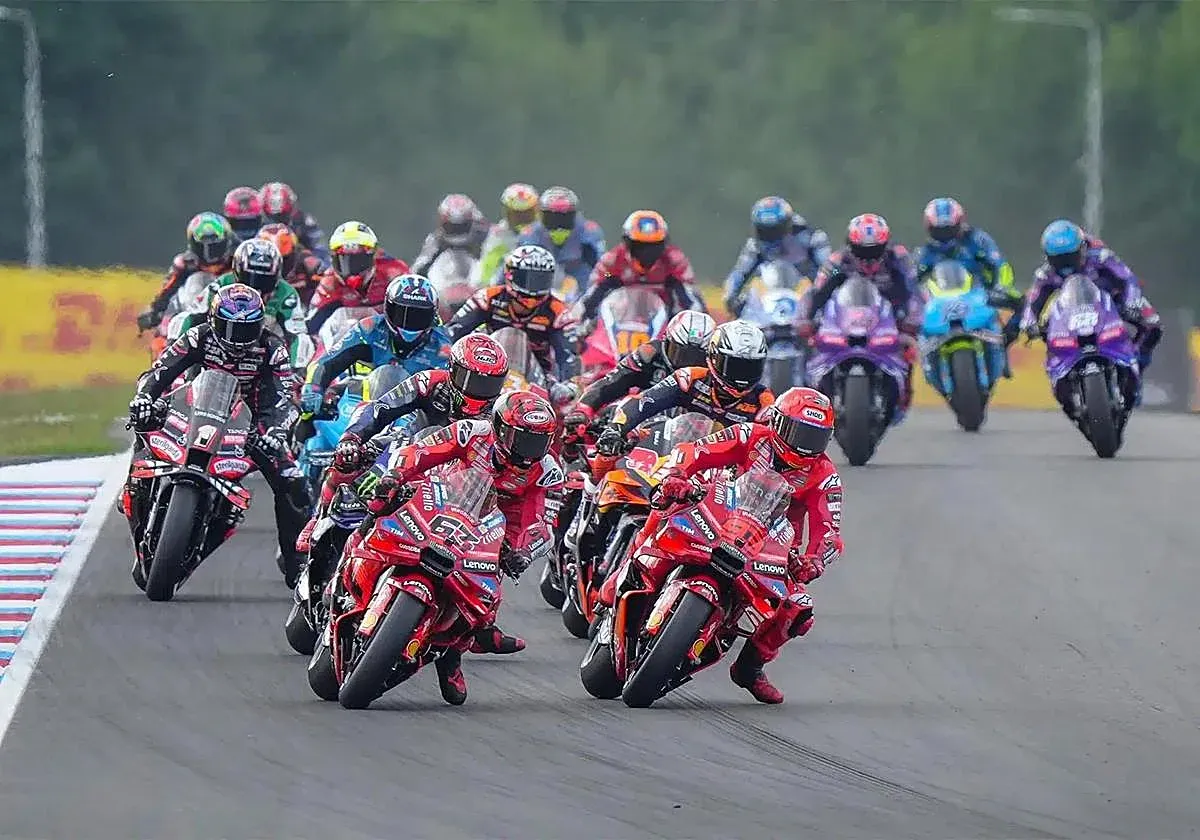
“It’s absolutely remarkable what he has done,” said Lucio Cecchinello to the official MotoGP broadcast.
“We clearly set a target with him not to exaggerate and not to push beyond the limit. But he is already riding the bike in a very natural way.”
Cecchinello’s assessment highlights Moreira’s riding technique, particularly his body positioning and load transfer during corner phases. Paddock analysis points to his ability to extract mechanical grip without overdriving the front—an advanced trait usually associated with experienced MotoGP riders.
“You can see how he moves on the bike, almost like dancing. It’s really like an expert MotoGP rider,” Cecchinello added.
The Brazilian Grand Prix presents a unique pressure scenario, marking MotoGP’s return to the country for the first time since 2004 and standing as the only South American round on the 2026 calendar. In this context, Moreira’s psychological composure has become a key focus.
According to Cecchinello, the 21-year-old has handled expectations with notable calmness, maintaining structured routines including warm-up procedures, technical briefings, and long-run preparations without visible signs of pressure affecting execution.
“He looks like he’s handling the pressure very well so far. He stayed calm, followed his routine, and worked closely with the technicians to prepare for a demanding race weekend,” Cecchinello explained.
Track conditions in Goiania further complicated the opening day, with heavy rainfall delaying the schedule and creating a wet FP1 session. Moreira finished 18th fastest, a result that holds limited significance compared to the internal data gathered on consistency and wet setup feedback.
Variable grip conditions provided an additional test of rider sensitivity—an area where Moreira has already shown promising indicators. His adaptability to low-grip environments could become a competitive advantage, particularly at circuits lacking contemporary MotoGP reference data.
From a strategic standpoint, Moreira’s early performance also carries implications for Honda’s broader development direction. As the manufacturer continues refining its package, a rookie capable of delivering clear and progressive technical feedback becomes a valuable asset in accelerating performance gains.
With a blend of raw speed, refined technique, and mental composure, Moreira’s showing in Brazil signals strong potential for the 2026 season. The next benchmark will be consistency across full race weekends and the ability to convert pace into higher-scoring finishes.
MotoGP now transitions to its upcoming European rounds, where circuit characteristics and evolving conditions will further test the technical progression of emerging talents such as Moreira in the premier class.
Read Also
Tiga talenta muda Belanda, Luuk de Vries, Milan Hunneman, dan Mick Koomen, ikuti seleksi Red Bull MotoGP Rookies Cup 2027 di Guadix, Spanyol. Simak peluang mereka.

Repsol Extreme 4T hadir dengan teknologi Racing PAO dari MotoGP, pelumas resmi Moto2 dan Moto3, menawarkan perlindungan mesin maksimal dan efisiensi konsumsi oli hingga 30%.
Nicolo Bulega tak peduli cara rayakan gelar WorldSBK 2026. Ia fokus kunci titel di Cremona dan tanggapi komentar Pol Espargaro soal keuntungan tes MotoGP.
 Continue with Google
Discussion (0)
Join the Discussion!
Sign in easily to start commenting, replying, and interacting with other readers.
Latest Comments
No comments yet. Be the first!