







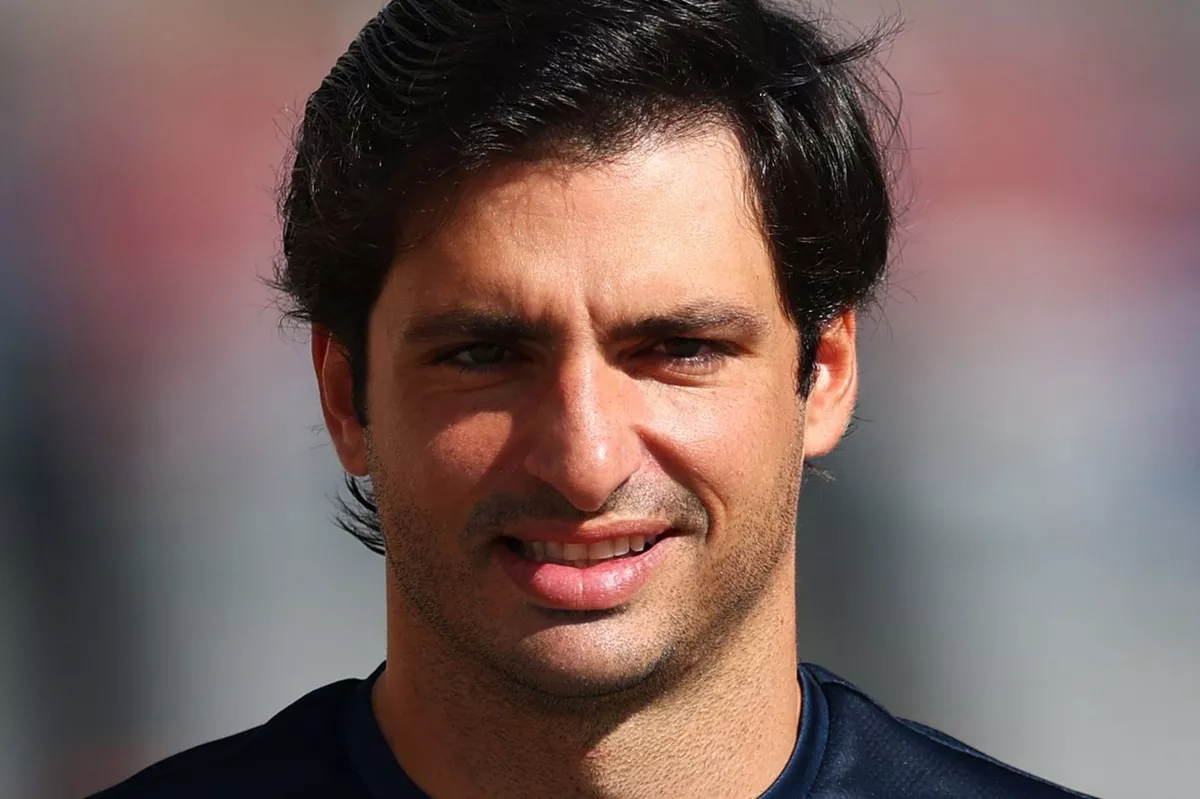

F1, Sportrik Media - Carlos Sainz believes Williams has recovered the mileage lost by missing the Barcelona shakedown, but concedes the FW48 still has “quite a few” limitations ahead of the 2026 Formula 1 season. The Spaniard stressed that the team’s initial priority was rebuilding track time before unlocking outright performance.
Williams was forced to skip the private Barcelona running in late January due to development delays with the FW48, placing the Grove-based squad on the back foot compared to rivals who gathered early correlation data. Now midway through the second week of pre-season testing in Bahrain, Sainz says the team has largely compensated for that deficit through intensive mileage accumulation.
“As far as testing goes, what we needed over the last few days was to recover the time lost in Barcelona by adding a lot of mileage to the car, and I think we’ve managed to do that well,” Sainz explained during a press conference in Bahrain. “The car has been running reliably from the beginning.”
According to Sainz, that reliability has allowed the team to better understand the car’s boundaries and identify areas requiring improvement under the new regulatory framework.
“That’s allowing us to find out the limitations and the areas where we have to improve, which unfortunately there are quite a few,” he admitted. “Last week the main thing was mileage. This week we’re finally starting to try and find a bit of lap time and performance and put the car in a better set-up window.”
When asked to clarify what he meant by improving the set-up window, Sainz pointed directly to the consequences of missing early testing.
“Being a bit behind schedule from missing testing means you probably couldn’t find those first baseline answers in Barcelona about where to put the car. So you’re a step behind in terms of set-up understanding,” he said.
He also noted that external conditions played a role in limiting early conclusions. The first week in Bahrain was marked by unusually strong winds, complicating correlation work and balance evaluation.
“Last week the conditions were really tricky for everyone. It was very windy every day. This week the wind has calmed down and the conditions are much more normal. The cars are more predictable and easier to drive.”
Williams has since introduced several set-up changes aimed at better adapting the FW48 to the 2026 regulations, particularly in relation to aerodynamic balance and energy deployment characteristics. Sainz indicated that these adjustments appear to be moving in the right direction, although full optimisation has not yet been achieved.
Strategically, the Spaniard’s comments underline that Williams remains in an exploratory phase rather than a fine-tuning phase. Under sweeping aerodynamic and hybrid regulation changes, identifying the correct operating window is fundamental before chasing marginal gains in peak performance.
As testing in Bahrain approaches its conclusion, Williams’ focus is shifting from pure reliability and mileage recovery toward extracting measurable lap time improvements. How quickly the team can reduce the FW48’s list of limitations will be a key indicator of its competitiveness when the championship officially begins.
Read Also
Mercedes membela keputusan menolak alat pendingin FIA demi performa mobil, meski George Russell harus menderita dan terancam penalti mesin.

Liam Lawson dan Racing Bulls menatap GP Singapura F1 dengan percaya diri berbekal hasil positif dari Malaysia dan format Sprint akhir pekan ini.
Helmut Marko membantah keras klaim Christian Horner dalam otobiografinya mengenai Max Verstappen. Simak kisahnya secara mendalam di Sportrik.
 Continue with Google
Discussion (0)
Join the Discussion!
Sign in easily to start commenting, replying, and interacting with other readers.
Latest Comments
No comments yet. Be the first!