







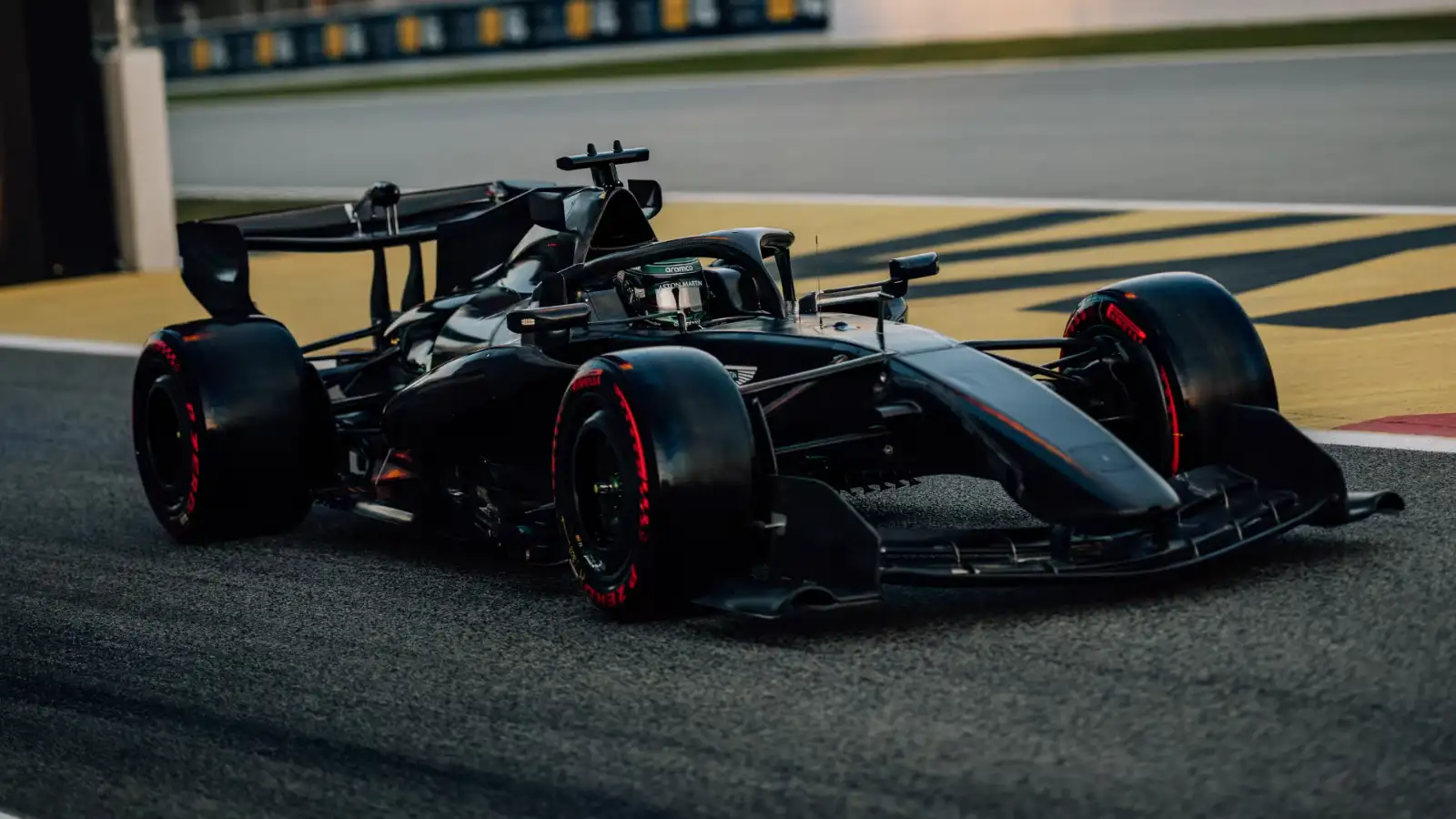

Formula 1, Sportrik Media - The emergence of the AMR26 on the fourth day of the Barcelona Shakedown immediately sent ripples through the Formula 1 paddock. As the first Aston Martin conceived entirely under the direction of Adrian Newey, it was already one of the most anticipated cars of the 2026 generation. What followed exceeded even the boldest expectations.
From the tip of its distinctive pelican-style nose to the rear suspension arms mounted directly to the rear wing support, the AMR26 represents a radical interpretation of the new aerodynamic regulations. In both visual appearance and underlying philosophy, it stands apart from every other 2026 car revealed so far.
The sidepod concept is the most striking feature. The AMR26 runs aggressively downwashed sidepods with extremely small horizontal cooling inlets, giving them a tubular appearance rather than a conventional pod shape. While this philosophy echoes the approach seen on Red Bull Racing’s RB22, Aston Martin has pushed the concept even further.
Unlike Red Bull, the AMR26’s sidepods do not extend down to the floor edge. This leaves a vast expanse of exposed floor between the diffuser wall and the rear tyre, indicating a clear focus on maximising floor-driven downforce. Cooling is managed through a large exit duct positioned just below the cockpit, between the sidepod tubes and the engine cover.
The sidepod geometry strongly suggests that a significant proportion of the radiator area, including potentially the intercooler, is mounted higher and more centrally within the car. This aligns with Newey’s long-standing philosophy of freeing up the lower surfaces to allow cleaner, higher-energy airflow to reach the diffuser.
At the front, the pushrod suspension layout is equally unconventional. The rear leg of the upper wishbone is mounted significantly further back than on the McLaren, creating an extreme triangular offset when viewed from above. In side profile, the suspension arms appear deliberately shaped to form an aerodynamic cascade, guiding airflow downstream toward the car’s central surfaces.
The most radical engineering, however, is found at the rear. The upper arms of the rear pushrod suspension are mounted exceptionally high and attach directly to the central structure that supports the rear wing. Structurally, this concept has historical precedent, with Williams and Red Bull employing similar layouts in the early 2010s, but never at such an elevated position.
This configuration creates a remarkably clean diffuser exit, free from obstruction. More significantly, it may serve as a partial functional replacement for the now-banned beam wing. Although suspension members cannot be shaped as aerodynamic profiles under the regulations, their positioning, combined with the car’s inherent rake, could help reconnect diffuser outflow with the underside of the rear wing.
Such flow interaction would replicate part of the beam wing’s former role: stabilising and energising airflow feeding the rear wing, particularly at higher speeds. If effective, this could deliver a significant rear downforce advantage without breaching the letter of the regulations.
The front wing, by contrast, appears relatively simple compared to rivals and is almost certainly not the final specification. The nose itself is notably wide, similar to Red Bull’s solution. This wide-nose, narrow-sidepod combination is likely aimed at maximising the high-pressure zone behind the front wheels.
That pressure field helps push wheel wake outward, clearing the front of the sidepods before being drawn into the large exposed floor area feeding the rear diffuser. The AMR26 therefore appears to be designed as a fully integrated aerodynamic system rather than a collection of isolated solutions.
Very little is currently known about the new Honda power unit that drives the AMR26, particularly as it is paired with Aston Martin’s own gearbox for the first time. The success of Newey’s extreme aerodynamic concept will be closely tied to how effectively this power unit and transmission package integrates with the chassis.
What is already clear is that the AMR26 is not a compromise design. It is an aggressive technical statement, reflecting Newey’s willingness to explore the outer limits of the regulations in pursuit of aerodynamic efficiency.
Whether this philosophy delivers a decisive competitive edge or introduces new challenges in setup sensitivity and reliability remains one of the biggest unanswered questions heading into the 2026 season. Either way, the AMR26 is already one of the most closely scrutinised cars on the grid.
As Formula 1 embarks on a new technical era, Aston Martin’s AMR26 stands as a bold declaration of intent. If the concept works, it could become the reference point for the entire generation. If not, it will still be remembered as one of the most daring interpretations ever produced by Adrian Newey.
Baca Juga

Kimi Antonelli crash di kualifikasi Azerbaijan GP 2026, start ke-16. Pembalap Mercedes sesali kesalahan dan siap comeback di balapan Baku.
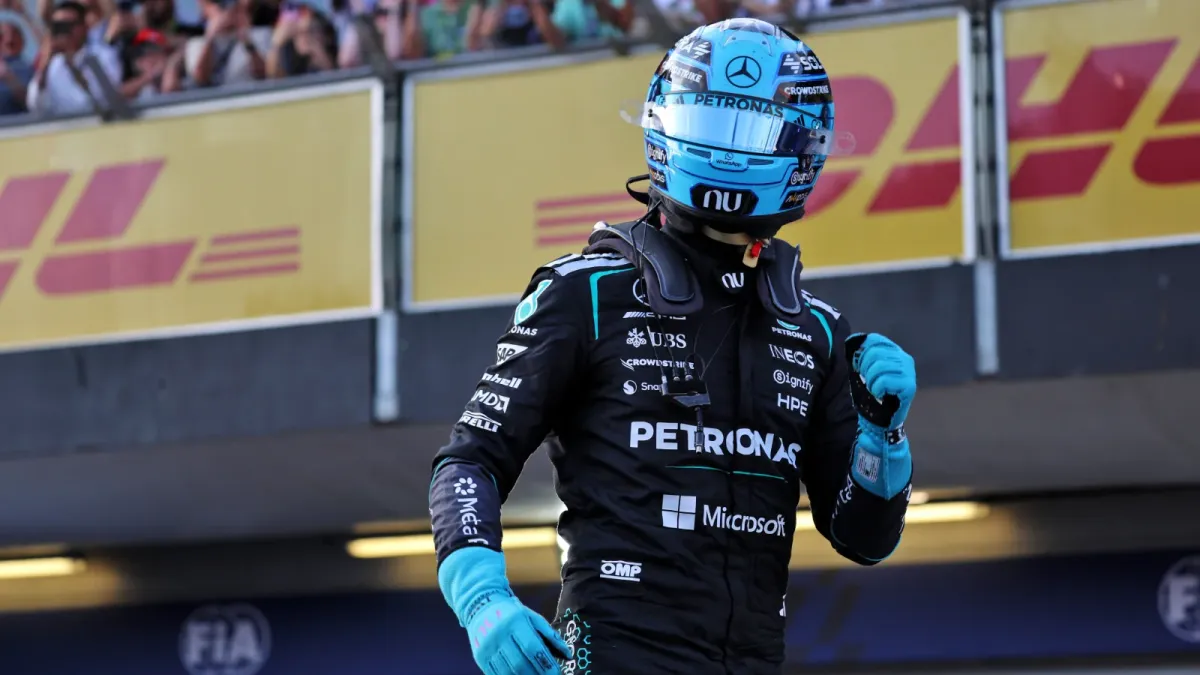
George Russell merebut pole position F1 Azerbaijan 2026, sementara Antonelli kecelakaan di Q1. Simak hasil lengkap kualifikasi dan dampaknya.
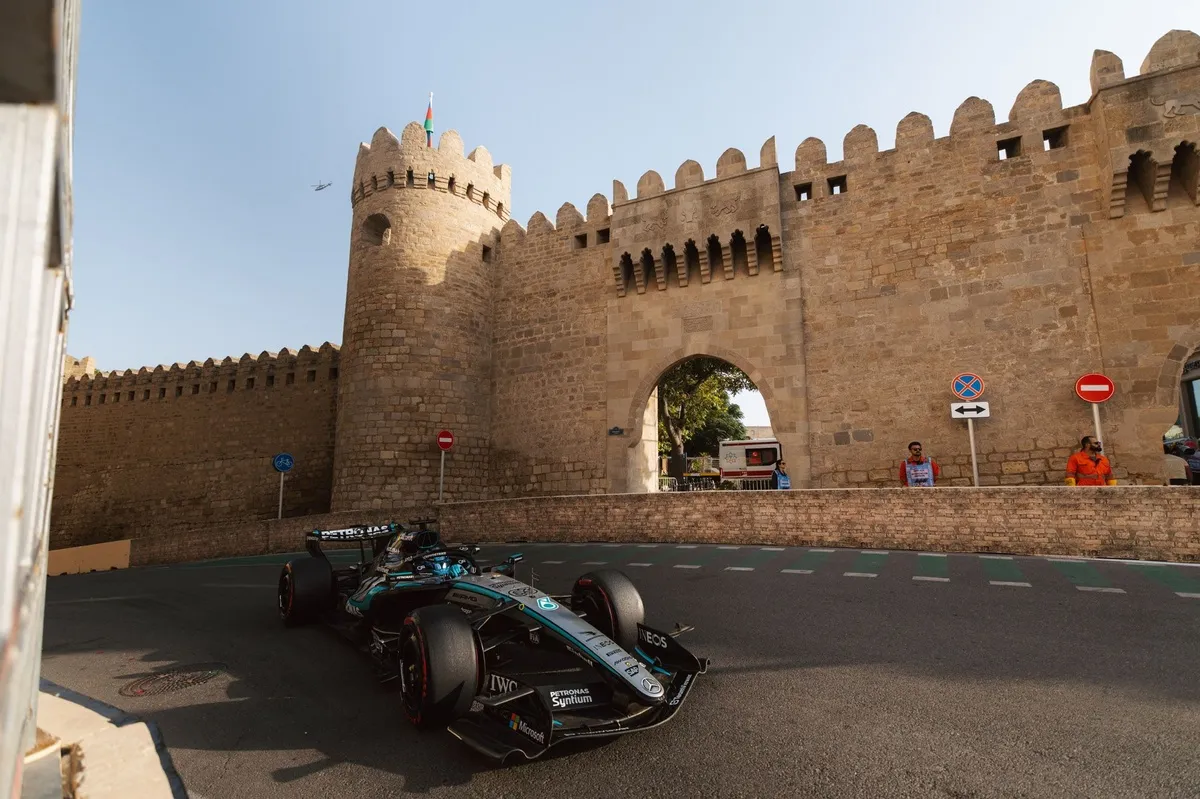
George Russell merebut pole position F1 Azerbaijan 2026, sementara Kimi Antonelli crash di Q1 dan akan start dari posisi 16. Simak hasil lengkap kualifikasi.
 Lanjutkan dengan Google
Diskusi & Komentar (0)
Mari Bergabung dalam Diskusi!
Masuk dengan mudah untuk mulai memberikan komentar, membalas, dan berinteraksi dengan pembaca lainnya.
Komentar Terbaru
Belum ada komentar. Jadilah yang pertama!