







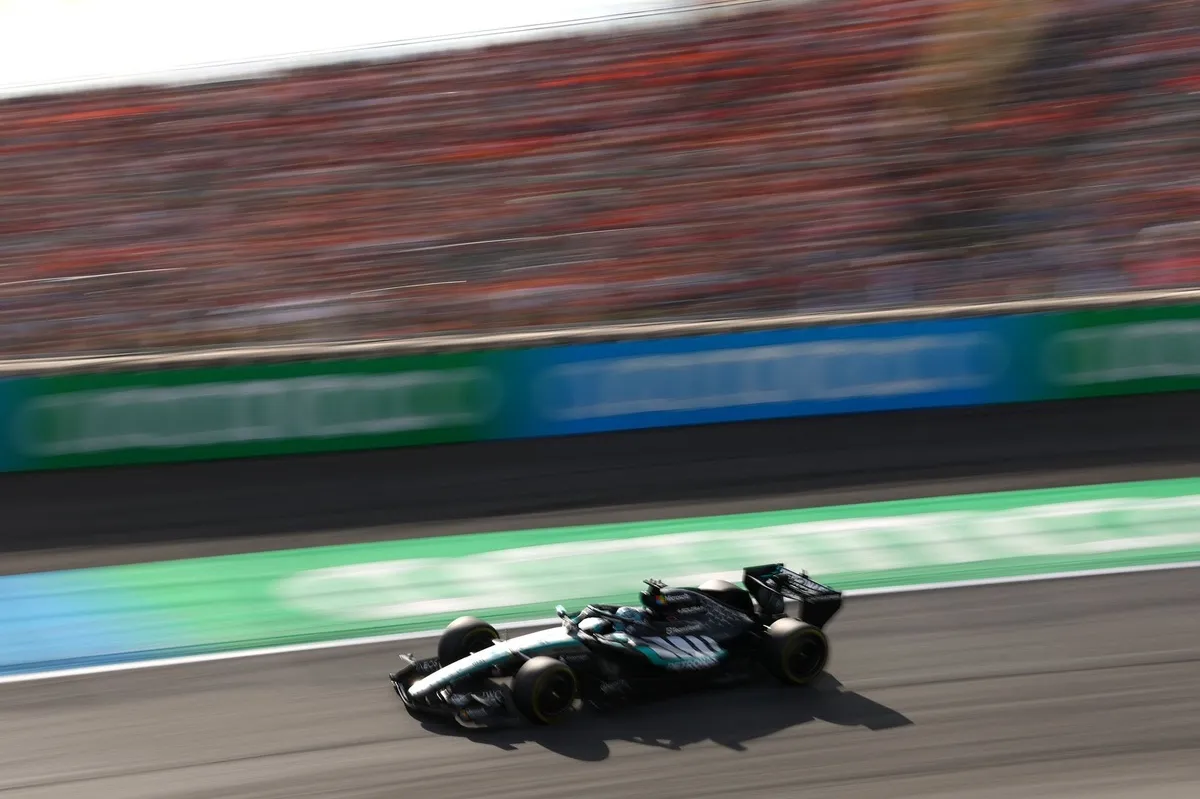

Mercedes is still searching for answers on why it was poor through the high-speed corners at Zandvoort, plus why its pace fluctuated across stints and between its drivers. Trackside engineering director Andrew Shovlin rated the team’s pace through Zandvoort’s high-speed corners as “rubbish” and is looking for answers on its inconsistency in the Formula 1 Dutch Grand Prix.
After a strong start to the Zandvoort weekend, with George Russell taking pole and victory in the sprint race, Mercedes dropped behind McLaren’s Lando Norris, who secured pole and victory in the grand prix. While Mercedes still took 2-3 in qualifying and the race, with Kimi Antonelli getting the better of team-mate Russell to extend his championship lead to 59 points, the team was at a loss on why its early pace didn’t carry through the weekend relative to its main competition.
“We’ve got a few things on the performance side to try and dig into,” Shovlin said on Mercedes’ radio show. “But there were a few corners where we were pretty rubbish, like that combination of Turns 7, 8, 9. You could see it in the faster-speed curves. And it also gives the tyres on the left-hand side of the car a tough time. And we don’t really understand yet fully what’s causing that.”
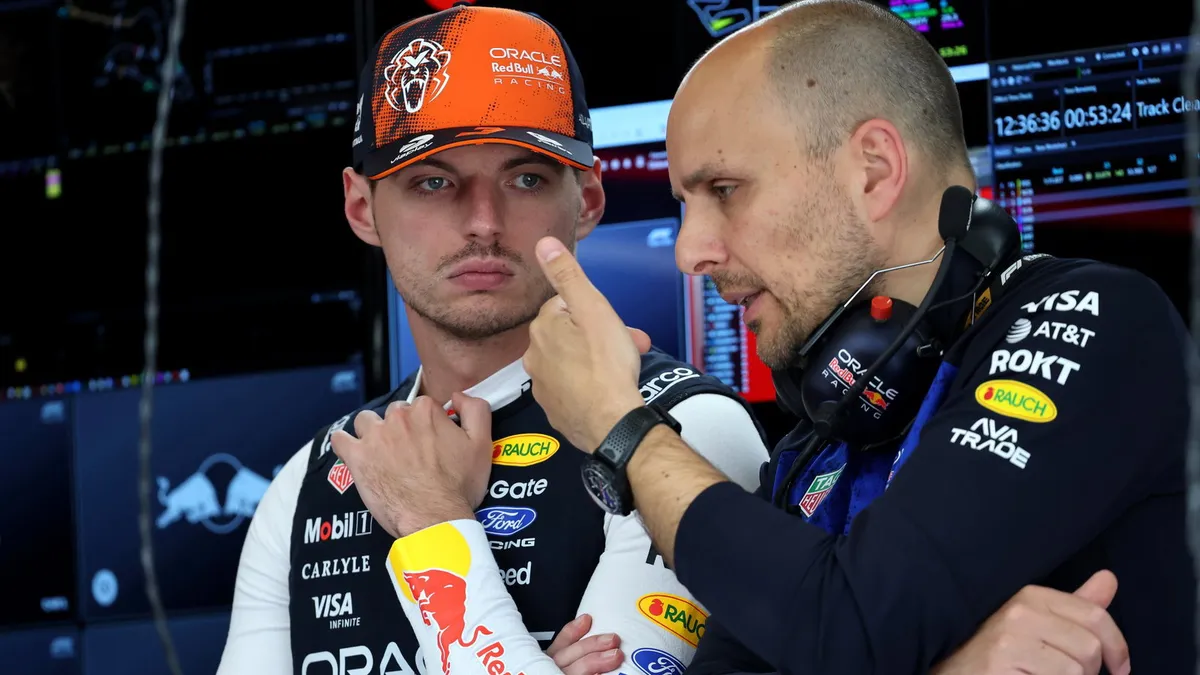
What added to Mercedes’ confusion was that minimal changes were made to the cars between the sprint race and grand prix. Shovlin accepts a level of expected pace deviation per tyre compounds and life, but seeing each driver suffer at different times left the team uncertain about the cause. “George’s first stint was a bit lacklustre compared to his later ones. And then with Kimi, first stint was good, and then dropped a bit on the second, dropped a bit more on the third,” he explained.
The two drivers reported different balance characteristics: George had a more understeery car, while Kimi had a more oversteery car. This disparity added another layer of complexity. “Normally they report similar things with a car at the end of the race. Both of them, their perception of the balance is quite different,” Shovlin noted.
Mercedes now faces a critical week of analysis to find the root cause before the next race. If they don’t, they risk falling further behind McLaren in the constructors’ battle.
Baca Juga
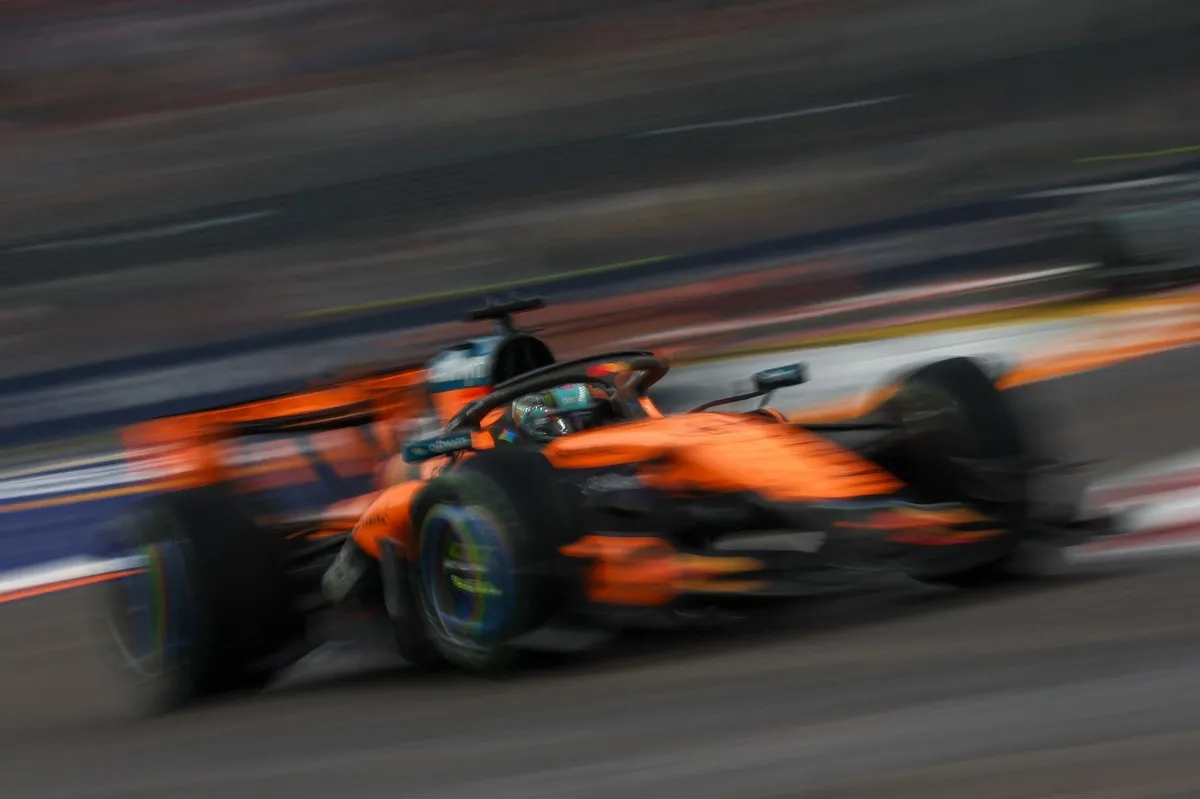
McLaren akui masalah handling mobil F1 baru bisa tuntas pada 2027. Simak analisis mendalam, keluhan pembalap, dan rencana tim di sini!

Christian Horner akhirnya buka suara soal rumor Ferrari dan tetapkan syarat mutlak kepemilikan saham jika ingin kembali ke F1. Baca analisis lengkap di sini!
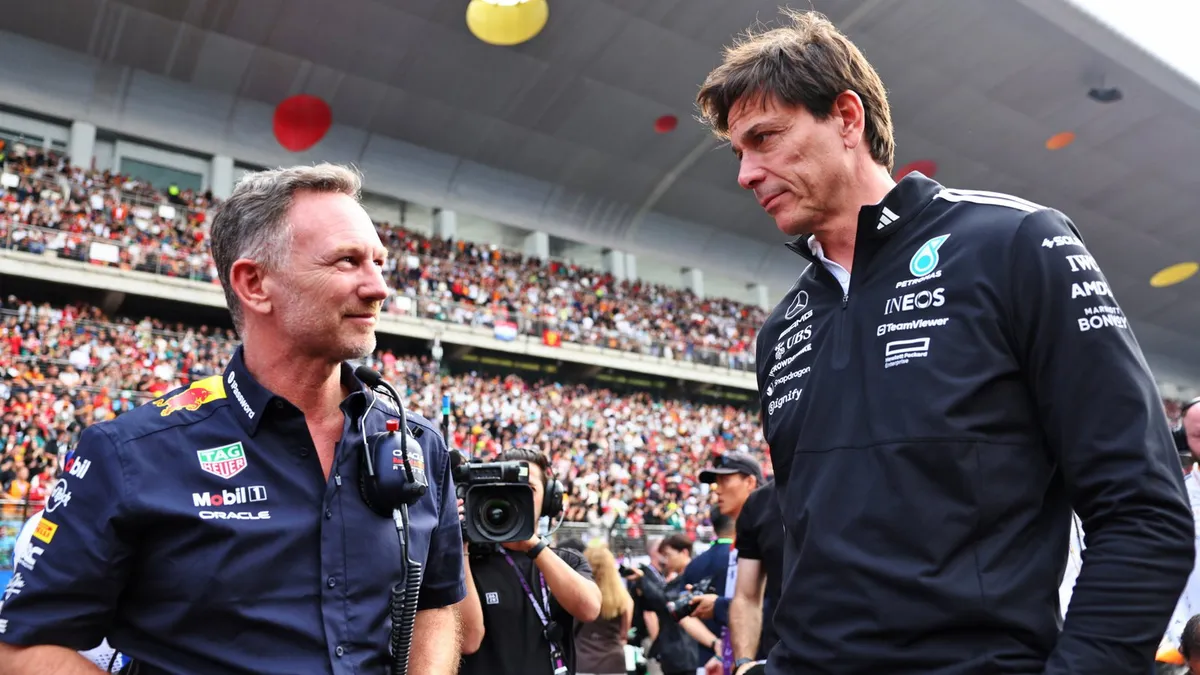
Christian Horner sebut Mercedes jalani musim yang mudah dan sentil Toto Wolff. Baca analisis mendalam rivalitas panas F1 terbaru di sini!
 Lanjutkan dengan Google
Diskusi & Komentar (0)
Mari Bergabung dalam Diskusi!
Masuk dengan mudah untuk mulai memberikan komentar, membalas, dan berinteraksi dengan pembaca lainnya.
Komentar Terbaru
Belum ada komentar. Jadilah yang pertama!