








Formula 1, Sportrik Media - Zak Brown, CEO of McLaren Racing, has reiterated his opposition to A/B team structures and co-ownership models in Formula 1, framing them as systemic risks to sporting integrity and competitive balance.
The issue has resurfaced following recent personnel movements between Red Bull Racing and its sister outfit Racing Bulls. Brown pointed to the contrast between Red Bull’s ability to recruit Andrea Landi from within its own structure on a short timeline, while McLaren must wait until 2028 to secure Gianpiero Lambiase. This disparity highlights what he sees as structural asymmetry embedded in multi-team ownership models.
“I think A/B teams, we need to get away from as much as possible, as quickly as possible,” Brown stated.
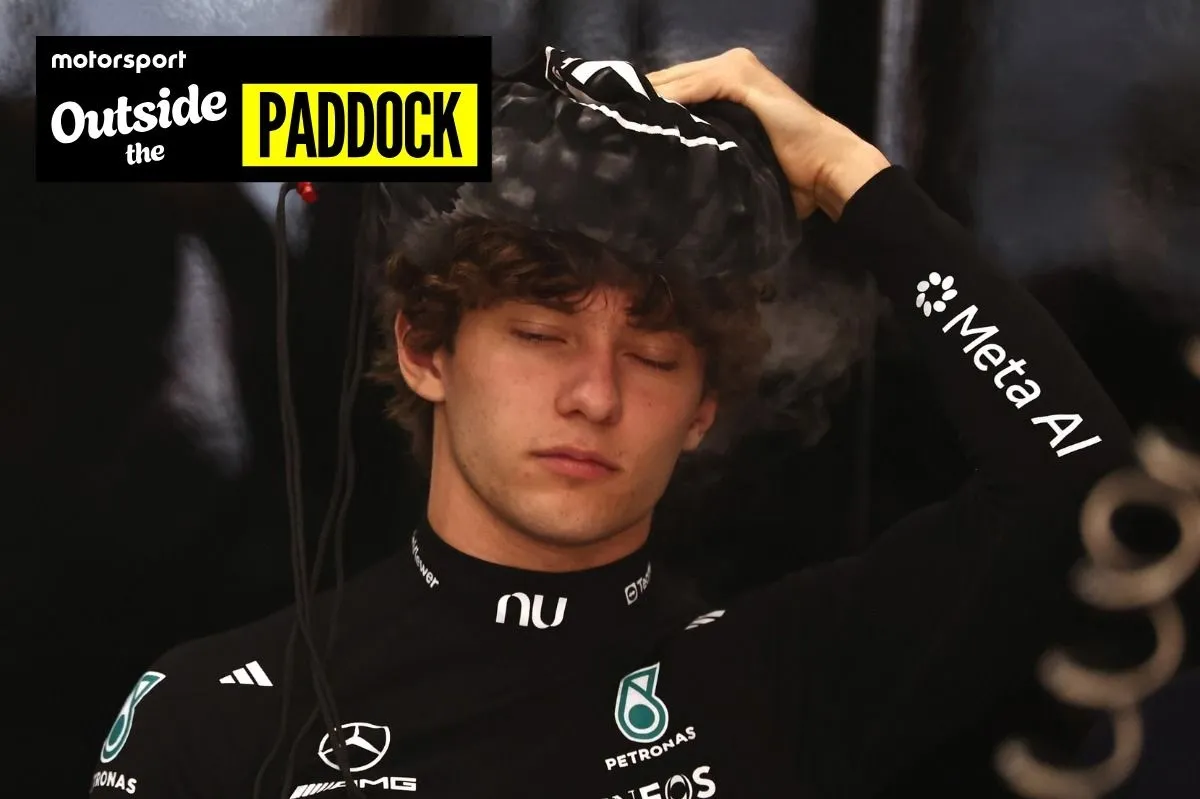
His analysis centres on two core dimensions: sporting fairness and financial equity. From a competitive standpoint, shared ownership introduces the potential for conflicts of interest, whether through strategic alignment, informal data exchange, or coordinated decision-making across affiliated teams. Brown referenced the 2024 Singapore Grand Prix, where Daniel Ricciardo claimed the fastest lap point, indirectly influencing the competitive outcome in a way that raised questions about independence.
Beyond race scenarios, Brown highlighted the movement of personnel and intellectual property (IP) as a critical concern. Historical precedents, such as the brake duct case involving Racing Point and Aston Martin, as well as ongoing staff exchanges between Ferrari and Haas F1 Team, illustrate how technical knowledge can effectively transfer across teams without equivalent regulatory friction.
“We’ve seen employees move overnight, while others must wait or pay compensation that impacts the cost cap,” Brown explained.
This creates dual-layered imbalance: a sporting advantage through access to shared knowledge and a financial advantage through reduced acquisition costs. In a cost cap era, such disparities directly influence long-term competitiveness and resource allocation efficiency.
Brown further reinforced his argument through a comparison with football, where multi-club ownership is tightly regulated to prevent conflicts of interest. He suggested that Formula 1 risks entering a similar grey area if structural independence is not enforced.
“Imagine two teams owned by the same group competing, where one faces relegation and the other does not—that’s the kind of conflict we risk,” he said.
As a solution, Brown maintained that inter-team relationships should be limited strictly to power unit supply agreements. Any extension into ownership or operational integration, in his view, undermines the foundational principle of independent competition.
“I think having power unit suppliers is as far as it should go.”
Strategically, Brown’s position reflects broader concerns about fan perception and the credibility of competition. If stakeholders begin to question whether all teams operate independently, the long-term commercial and sporting value of Formula 1 could be affected.
With ownership structures becoming increasingly complex and cross-team resource movement more fluid, regulatory oversight from the FIA will be critical. Without clear boundaries, the A/B team model risks shifting Formula 1 away from a competition between independent entities toward a more integrated network—fundamentally altering the nature of the sport.
Read Also
Kimi Antonelli soroti 207 pelanggaran track limits di F1 GP AS 2026 Cek analisis teknis dan ancaman penalti selengkapnya di sini
Simak analisis telemetria FP3 F1 GP Amerika Serikat 2026, di mana Ferrari siap menantang Verstappen dan Antonelli. Baca selengkapnya di sini!

Simak analisis lengkap masa depan Valtteri Bottas di Cadillac dan pujian untuk Sergio Perez. Baca selengkapnya di sini!
 Continue with Google
Discussion (0)
Join the Discussion!
Sign in easily to start commenting, replying, and interacting with other readers.
Latest Comments
No comments yet. Be the first!