







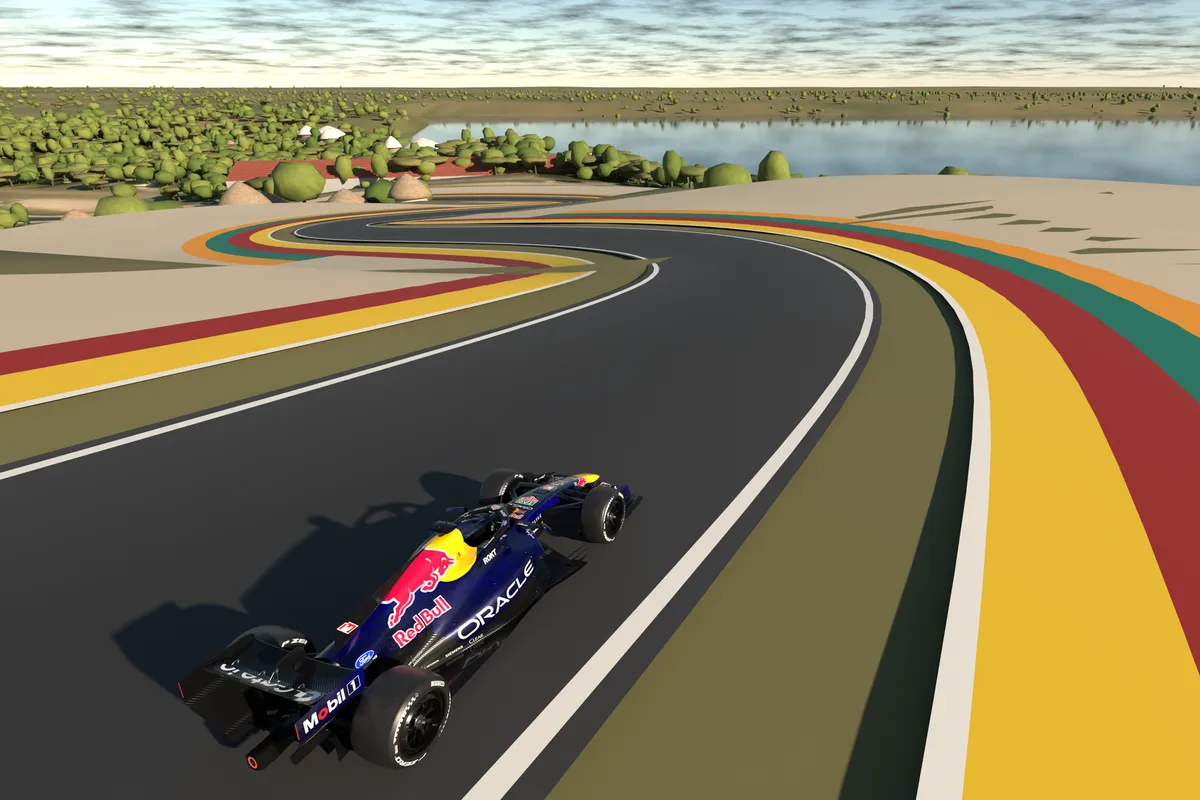

Judging a Formula 1 venue solely based on rendered digital images is much like judging a book by its cover, as pretty lines on a piece of paper never guarantee exciting wheel-to-wheel racing. This fundamental disparity recently resurfaced following the official layout reveal of the brand-new Rwanda circuit slated to host the historic African Grand Prix by the early 2030s. The release of a single conceptual image depicting the Rise Motordrome project near Kigali immediately triggered mixed reactions and fierce debates among motorsport fans worldwide.
Initial skepticism regarding overtaking potentials arose naturally because key layout elements remained invisible in the preliminary two-dimensional artwork. However, track architect Alex Wurz remains profoundly enthusiastic after dedicating years of development and thousands of virtual simulator laps to perfect the layout. According to the veteran racing figure, the circuit features numerous critical elevation details that are utterly impossible to capture from a static render, including the highest elevation changes seen across a single lap all season.
The former Le Mans winner offered precise technical insights into Turn 2, where cars plunge downhill at top speed on an exact 10.8 percent gradient before compressing heavily into a 12 percent banked corner. This intense sequence immediately feeds into a steep 14 percent uphill climb that leaves drivers staring directly into the open sky from their cockpits. Towards the exit phase of the corner, the banking shifts smoothly from 12 down to 6 and 4 percent, delivering what simulator drivers describe as pure mechanical joy.
Wurz highlighted his personal favorite section as exiting the canopy corner over a crest toward the lake, creating a precise timing window where the car momentarily lightens over the crest before absorbing a severe 10 percent compression. That sudden mechanical load forces the driver's mind to immediately engage with the demanding high-speed Esses sequence that follows. These specific corner combinations are meticulously engineered to resonate deeply with both simulator enthusiasts and the elite F1 drivers on track.
Addressing the core philosophy of circuit design, Wurz emphasized that expecting a layout to single-handedly guarantee overtaking is entirely naive since passing relies heavily on car regulations, tire degradation, and grid positions. Instead, the primary objective is to craft an environment where drivers can actively fight each other through aggressive sequencing. Open corner sequences like turns one, two, and three are intentionally built to force continuous attacking and defending maneuvers throughout the grand prix weekend.
Read Also
Mercedes pastikan bawa W17 dengan upgrade baru di Austin demi tuntaskan masalah setelan. Baca analisis teknis mendalam dan jadwal lengkap di sini!
Simak analisis mendalam mengenai kontroversi rencana GP Rwanda di Formula 1, polemik sportwashing, dan dampaknya. Baca selengkapnya di sini.
Simak analisis mendalam Bernie Collins mengenai krisis kepercayaan antara Lewis Hamilton dan Ferrari F1 2026. Baca selengkapnya di sini!
 Continue with Google
Discussion (0)
Join the Discussion!
Sign in easily to start commenting, replying, and interacting with other readers.
Latest Comments
No comments yet. Be the first!