









Formula 1, Sportrik Media - former Formula 1 driver and broadcaster Martin Brundle has said he is far from surprised by the early signs shown by Red Bull Powertrains in its first season as a full Formula 1 power unit manufacturer, citing what he witnessed during a tour of the facility alongside former team principal Christian Horner.
As Formula 1 prepares for the 2026 season, Red Bull’s new in-house power unit programme has been one of the major talking points across the paddock. For the first time in its 20-year history in the sport, Oracle Red Bull Racing has designed and produced its own power unit, following the end of its long-term engine supply arrangements and the introduction of a new FIA technical framework.
Given the scale of the regulatory overhaul for 2026 — including revised internal combustion architecture, a significantly enhanced electrical component, and the removal of the MGU-H — questions were raised over how quickly Red Bull Powertrains could reach competitive and reliable operating levels. Brundle, however, believes those doubts underestimate the depth of preparation behind the project.
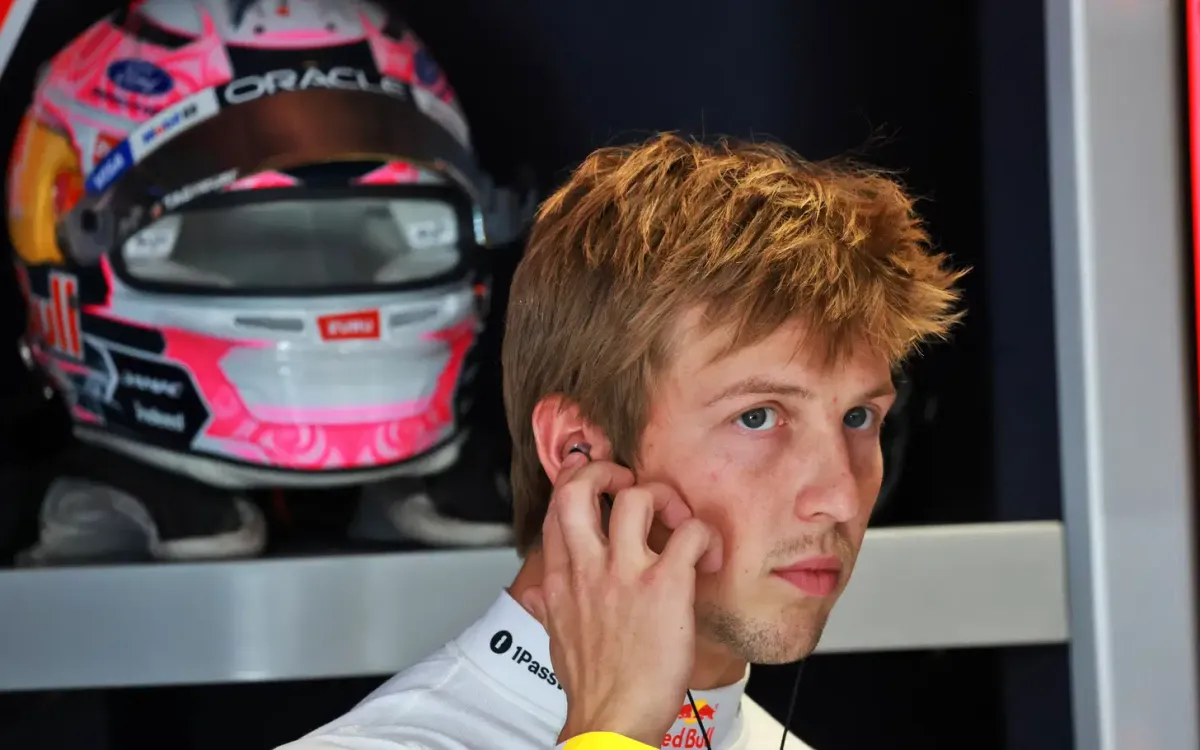
According to Brundle, his visit to the Red Bull Powertrains campus with Horner provided first-hand insight into the seriousness of the programme. He pointed to the scale of investment, the calibre of technical personnel, and the integration of facilities as indicators that Red Bull approached the project with long-term intent rather than short-term experimentation.
“I’m not surprised at all by what we’re seeing from Red Bull Powertrains so far,” Brundle said.
“When I toured the facility with Christian Horner, it was immediately clear how significant the operation is.”
Brundle stressed that modern Formula 1 power unit development is no longer defined solely by peak horsepower figures. Instead, reliability, energy efficiency, thermal management, and the ability to correlate data between simulation, dyno testing, and track performance are now central to success — particularly under the tightly restricted testing conditions of the current era.
During the Barcelona pre-season test, Red Bull Powertrains’ debut on track was closely monitored. While Red Bull’s running was not without disruption, including incidents that limited track time, the overall operational stability of the power unit was viewed positively within the paddock. Brundle believes that early reliability indicators are especially important given the compressed development timelines under the new regulations.
Beyond immediate performance, Brundle highlighted the strategic value of Red Bull controlling its own power unit supply. With full ownership of engine development, the team gains increased flexibility to align power unit characteristics with chassis and aerodynamic concepts, an advantage that becomes more pronounced in a new regulation cycle.
He also noted that Red Bull’s decision to form Red Bull Powertrains was the culmination of years of planning, rather than a reactionary move. The organisational structure, recruitment strategy, and investment in infrastructure all point toward a long-term commitment to competing at the highest level on the engine side.
“You don’t build something of that scale just to see how it goes,” Brundle added.
“What I saw suggested they were determined to do this properly from day one.”
Despite the encouraging early signs, Brundle cautioned that the true test of Red Bull Powertrains will come over the course of a full season. Managing reliability across a demanding calendar, responding to in-season development from rival manufacturers, and operating within cost and testing restrictions will ultimately define the success of the project.
In a championship context, power unit consistency is expected to be a decisive factor in 2026, particularly as teams continue to adapt to the new technical landscape. Brundle believes Red Bull’s early foundation places it in a strong position, but acknowledges that definitive conclusions cannot be drawn until sustained race mileage is accumulated.
As the season approaches, Red Bull’s focus now shifts toward detailed analysis of pre-season data and refining correlation between bench testing and on-track performance. For Brundle, what has already been demonstrated by Red Bull Powertrains suggests that the team has entered the new era of Formula 1 with confidence rather than uncertainty.
With the competitive phase of the 2026 season drawing closer, Red Bull’s ability to convert its extensive preparation into consistent results will be closely watched. From Brundle’s perspective, however, the early indicators reflect a project built on depth, planning, and a clear understanding of the demands of modern Formula 1 power unit development.
Read Also
Pedro de la Rosa reveals honesty is key for Aston Martin to overcome 2026 F1 crisis. Read the exclusive interview and team strategy.
Ferrari faces an emergency 2026 power unit project. The team prepares a new engine for 2027 to close the gap to Mercedes in F1.

Arvid Lindblad nearly flips the world's shortest Fiat Panda in a YouTube challenge. The Racing Bulls driver also tested a motorised sofa and shared hilarious stories.
 Continue with Google
Discussion (0)
Join the Discussion!
Sign in easily to start commenting, replying, and interacting with other readers.
Latest Comments
No comments yet. Be the first!