







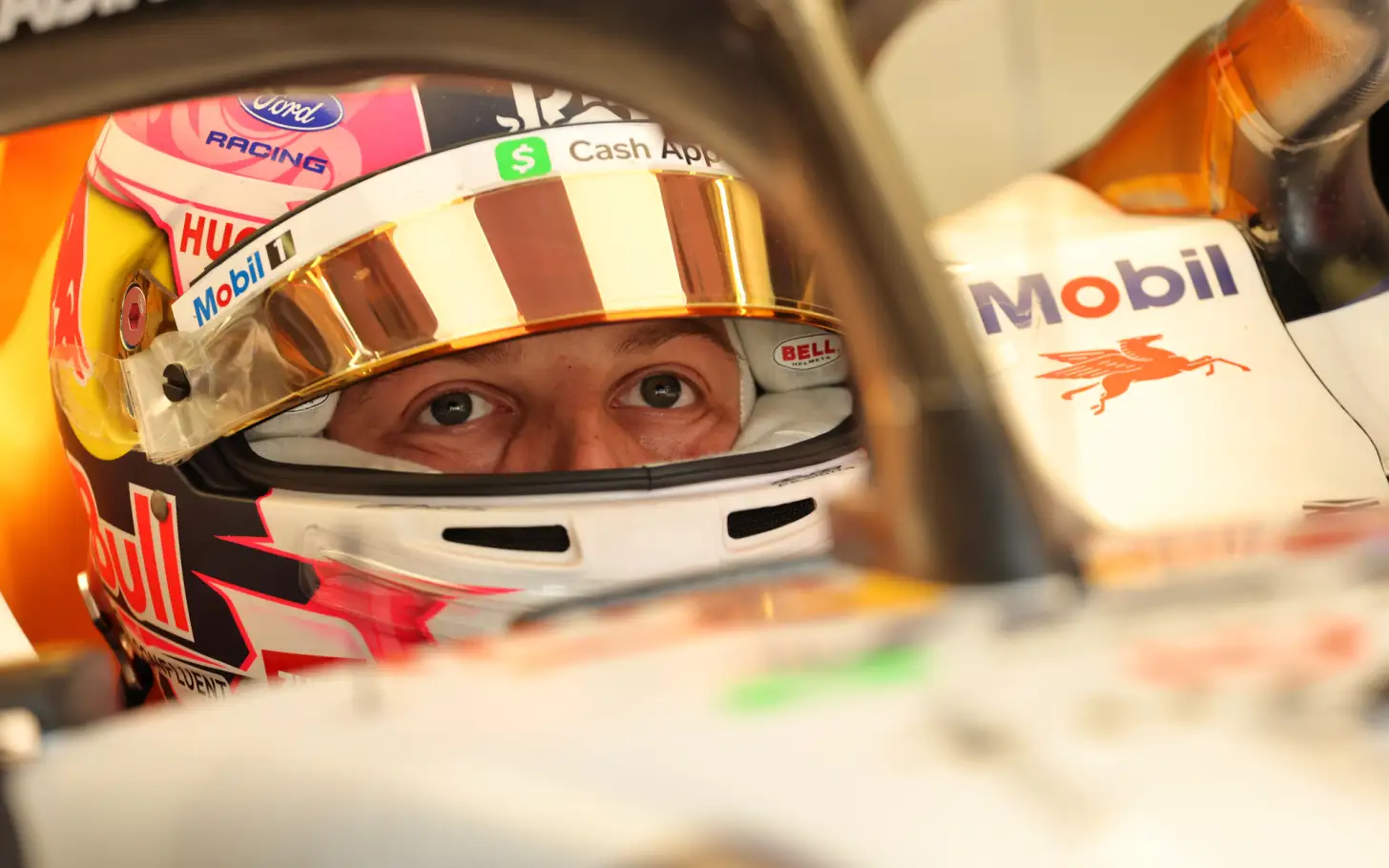

Formula 1, Sportrik Media - Liam Lawson has downplayed the significance of the aggressive downshift technique first showcased by Max Verstappen during Bahrain testing, describing it as a natural adaptation to the 2026 car characteristics rather than a revolutionary innovation.
At the tight Turn 10 in Sakhir, Verstappen was observed aggressively downshifting to first gear under braking. While the move unsettles the rear of the car, the higher engine revs generated through the corner help recharge the batteries more quickly, allowing for increased electrical deployment on the following straight. With the 2026 regulations enforcing a 50-50 split between internal combustion and electrical power, such techniques have become strategically relevant.
Lawson, who also runs a Red Bull Powertrains engine, suggested that reduced corner-entry speeds due to lower downforce are also influencing driving style adjustments.

“Yeah, but I think the speeds are also a bit lower as well. We’re driving with less speed into the corners this year because of less downforce,” Lawson told media, including RacingNews365.
He stressed that the lower-gear downshift approach is not out of the ordinary but rather a consequence of evolving technical demands.
“It is nothing out of the ordinary because it is just natural, but it is early days. I think this stuff will become very natural the more we drive and later in the season.”
Lawson pointed out that driving styles have continuously evolved in Formula 1, comparing current changes to those seen a decade ago.
“The way we drove last year’s cars was very different to 10 years ago, so it is constantly evolving. There is a lot to think about, but it’ll come naturally.”
He also admitted that the 2026 cars are physically demanding, particularly in Bahrain where tyre degradation is high. The reduction in downforce has led to increased sliding, making car control more challenging.
“It is pretty tough to drive, especially here in Bahrain, as we have a lot of tyre degradation, and there is a lot more sliding going on this year, so it is tricky to drive.”
According to Lawson, the early phase of the season represents a steep learning curve, especially in balancing short-run performance with long-run battery management.
“At the moment, there is a lot of learning and trying to optimise driving this car between short runs and qualifying with the battery management we have to do in the long runs. It’s a learning curve.”
As teams adapt to the energy-intensive 2026 regulations, techniques such as aggressive downshifting may become standard practice rather than standout innovations in the evolving technical landscape of Formula 1.
Read Also
Simak analisis lengkap mengapa Charles Leclerc gagal meraih kemenangan di F1 GP Singapura akibat kesalahan taktis krusial. Baca selengkapnya di sini!
Simak analisis mendalam peringkat pembalap MotoGP Indonesia 2026 di Mandalika, mulai dari aksi gemilang Pedro Acosta hingga kemenangan dramatis Marco Bezzecchi.
Simak analisis mendalam mengenai hilangnya kepercayaan Lewis Hamilton pada strategi Ferrari di GP Singapura. Baca selengkapnya di sini!
 Continue with Google
Discussion (0)
Join the Discussion!
Sign in easily to start commenting, replying, and interacting with other readers.
Latest Comments
No comments yet. Be the first!