







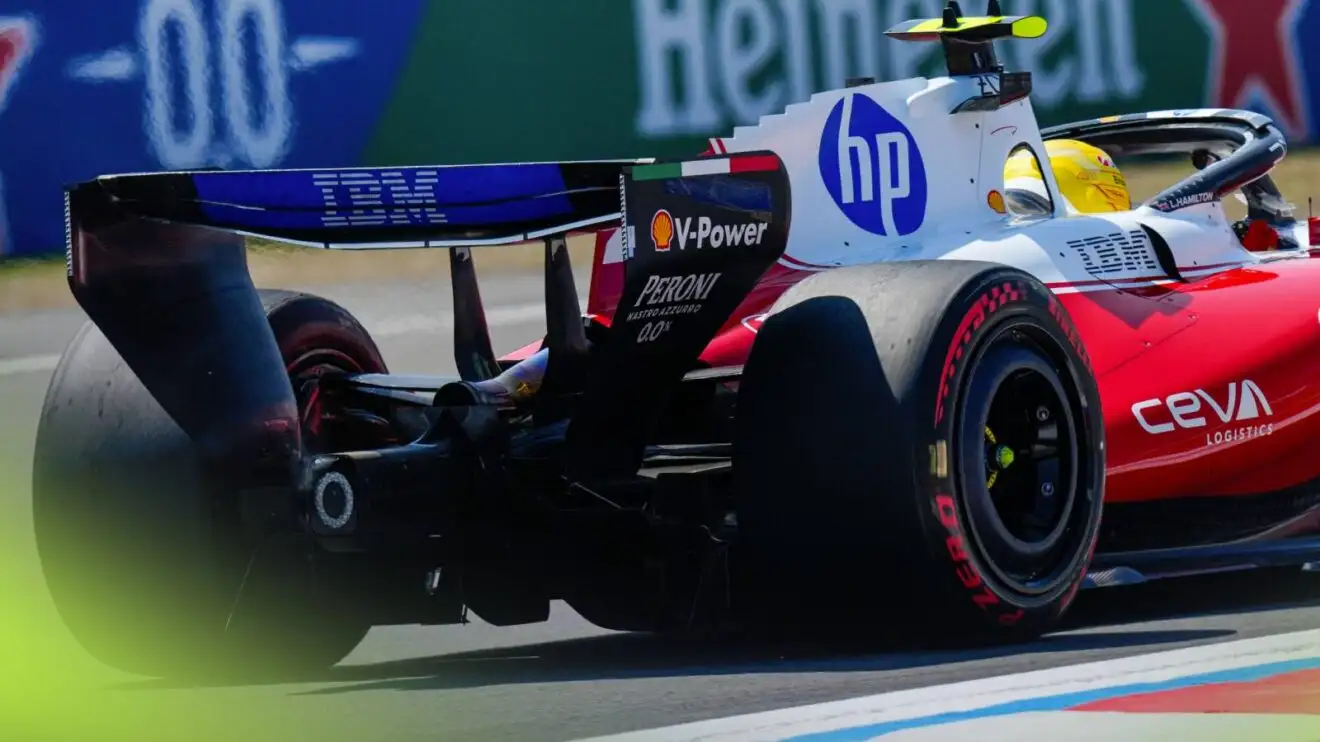

Formula 1, Sportrik Media - Scuderia Ferrari opted to delay the race debut of its innovative ‘Macarena Wing’ on the SF-26 during the 2026 Chinese Grand Prix weekend, despite briefly evaluating the component in Free Practice 1 at Shanghai.
The concept represents a distinctive interpretation of the 2026 active aerodynamics regulations reintroduced by the FIA. Under these rules, front and rear wings transition between low-drag configurations on straights and high-downforce modes under braking. Ferrari’s approach diverges from conventional solutions that typically rely on a simple flap opening mechanism similar to the former DRS systems.
Instead, the ‘Macarena Wing’ features a rotating rear flap that pivots backward to achieve a low-drag state. This inverted movement is designed to improve aerodynamic efficiency, but it introduces additional complexity in terms of airflow reattachment and vehicle stability during transitional phases.
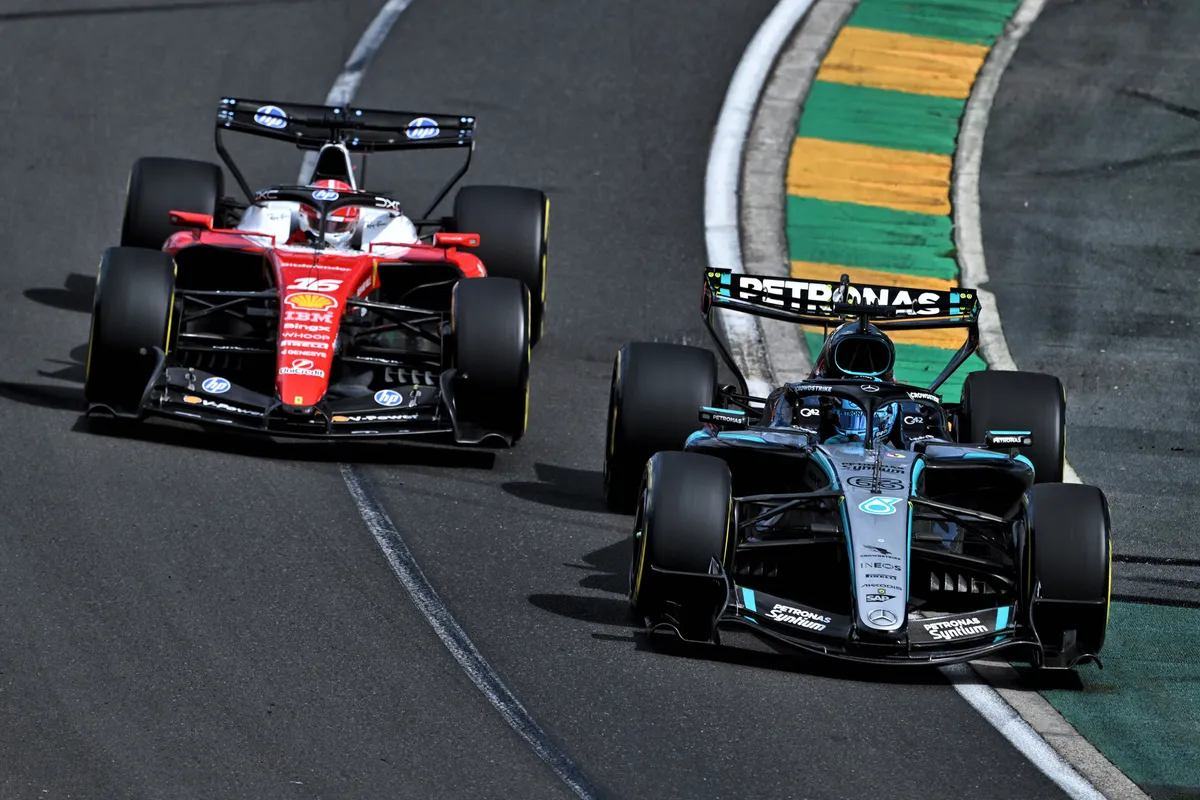
The nickname itself was coined informally by team principal Fred Vasseur, referencing the visual resemblance of the wing’s motion to the iconic 1990s dance. However, beyond its distinctive appearance, Ferrari must ensure compliance with strict regulatory parameters, including the maximum transition time of 400 milliseconds between configurations.
“With the current regulations, we need to test new components in FP1 because there is no testing between races,” Vasseur said, as reported by PlanetF1.
“We haven’t accumulated enough mileage on this rear wing yet. We will likely continue testing it in Japan before introducing it across a full race weekend.”
Testing limitations are a critical factor, as in-season development is constrained by regulations that prohibit private testing outside official tyre programmes. This places greater importance on practice sessions as the primary platform for validating new hardware under real conditions.
Reliability considerations also played a decisive role. Although Ferrari is understood to be approximately 95 percent confident in the system, the inherent risk associated with a single-actuator mechanism creates a potential point of failure that could result in race-ending consequences if introduced prematurely.
From a performance perspective, Ferrari also evaluated that the expected gain from the ‘Macarena Wing’ would not be sufficient to offset the advantage currently held by the Mercedes-AMG Petronas Formula One Team, whose W17 package proved dominant in Shanghai.
This cautious approach was reinforced by feedback from Lewis Hamilton, who indicated that the component’s introduction timeline had been accelerated beyond its intended development schedule.
“I think we rushed to bring it here,” Hamilton said, as cited by PlanetF1.
“It was originally planned for race four or five. The car still felt good without it, so we decided to remove it and bring it back when it’s fully ready.”
Strategically, Ferrari has already integrated the ‘Macarena Wing’ into the broader development roadmap of the SF-26. Early data from Shanghai is considered promising, but further refinement is required to ensure consistent performance and seamless system integration.
With the Japanese Grand Prix approaching, Ferrari now has a limited but valuable window to expand its understanding of the active aero concept through additional testing and data correlation. A full competitive debut is expected once the team is satisfied with both reliability margins and performance validation.
The decision to delay highlights the increasingly risk-managed approach required under the complex 2026 regulations, where innovation must be carefully balanced against operational stability. As the season progresses, Ferrari’s ability to refine and deploy such advanced concepts could play a decisive role in shaping its competitiveness in the constructors’ championship.
Read Also
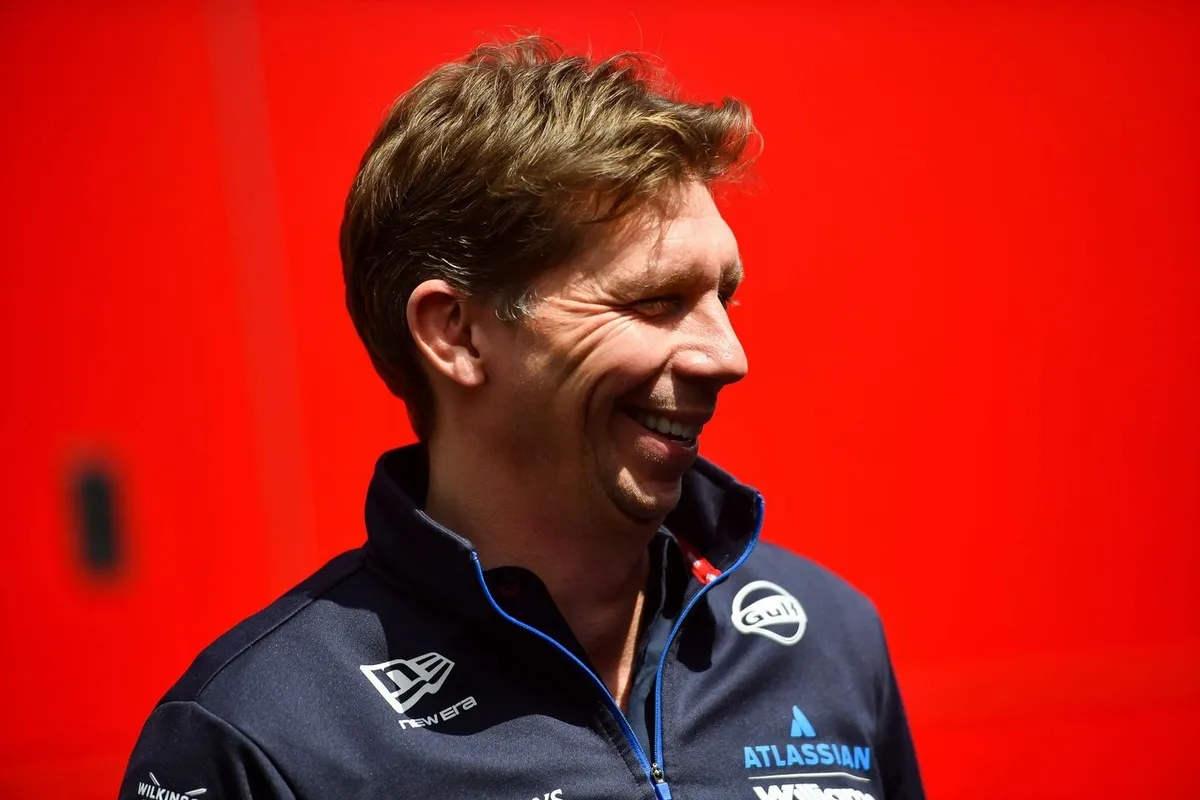
James Vowles praises Madrid's inaugural F1 event but highlights overtaking issues and Williams' struggles. Read his full analysis.
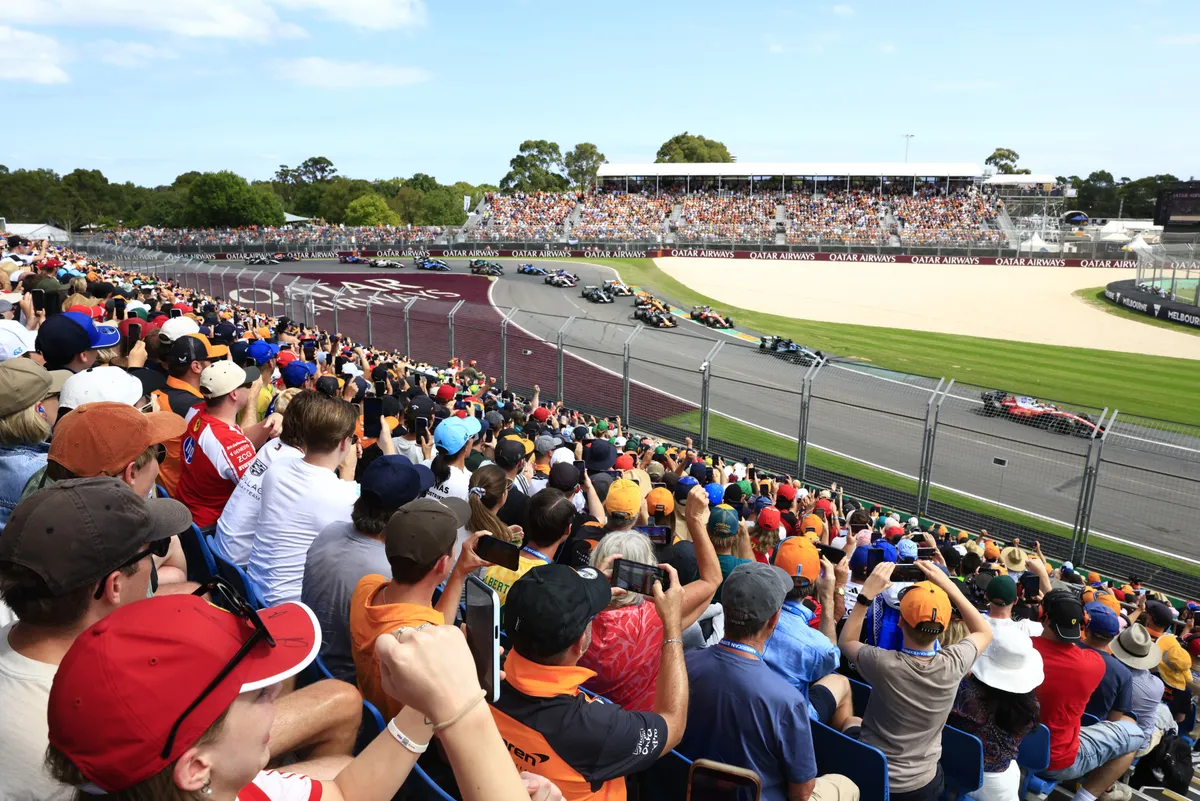
Australian GP CEO Travis Auld defends 2027 F1 ticket price hikes. GA passes rise over 10% to $425. Find out his reasoning and the new membership perks.
George Russell loses points to Antonelli at F1 Spanish GP. Despite potential title defeat, he can take valuable lessons to rebound.
 Continue with Google
Discussion (0)
Join the Discussion!
Sign in easily to start commenting, replying, and interacting with other readers.
Latest Comments
No comments yet. Be the first!