






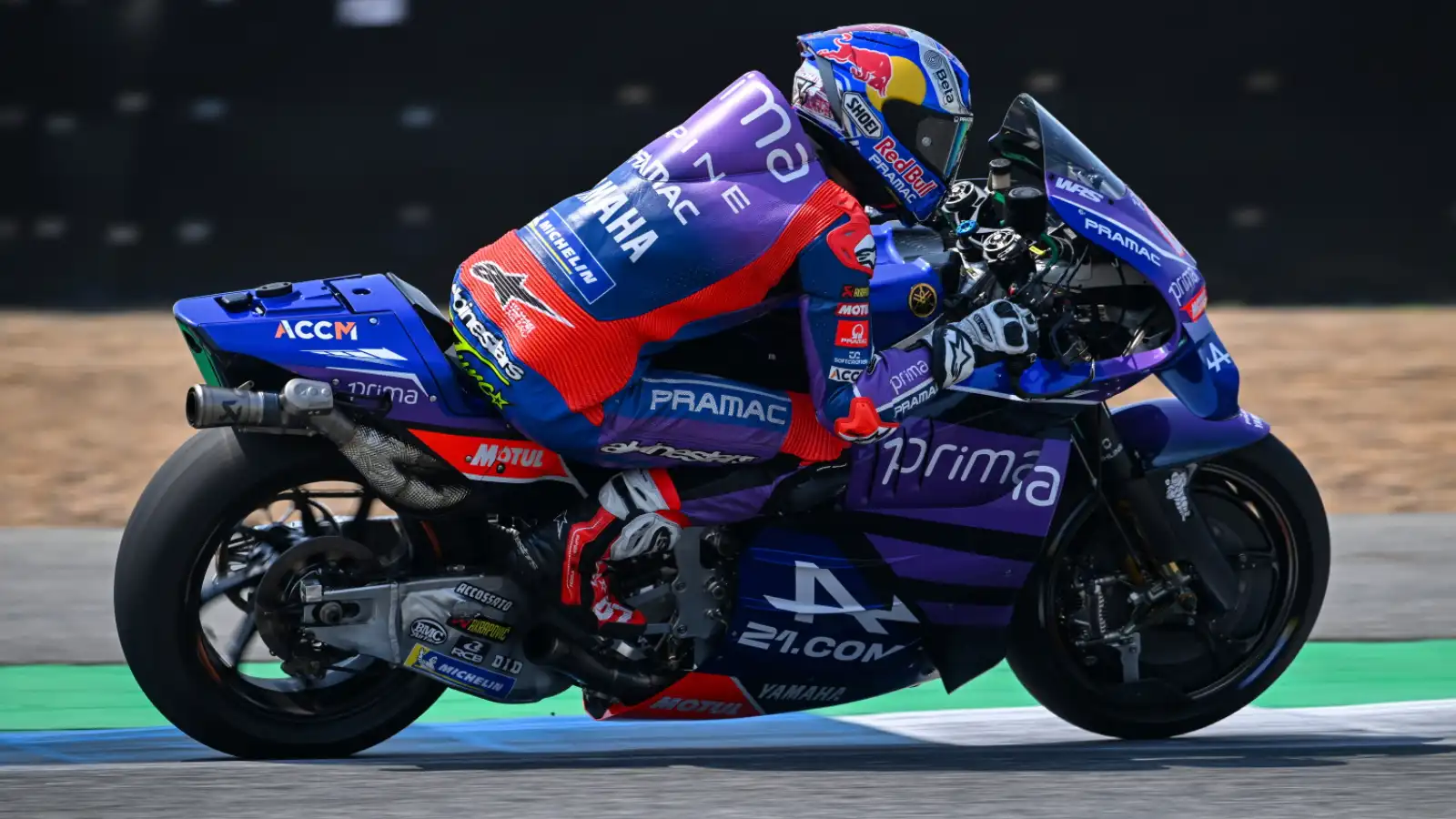

MotoGP, Sportrik Media - Alvaro Bautista has raised concerns over the solution that allows Toprak Razgatlioglu to run rear wings on his Yamaha in MotoGP 2026, suggesting that regulatory flexibility may have played a role.
Rear aerodynamics have become an established element in MotoGP since Ducati introduced its “stegosaurus” tail wings in 2022. Since then, manufacturers including Yamaha have refined their designs to enhance braking stability, rear grip and acceleration performance.
Razgatlioglu’s height, however, created a technical complication. The higher seat unit required to accommodate his stature pushed Yamaha’s YZR-M1 beyond the maximum bike height permitted under MotoGP regulations when fitted with its rear aero configuration. As a result, the Turkish rider completed much of pre-season testing without the tail wings.
When he trialled the rear wings in Sepang with a different seat configuration, he reported a clear improvement under braking.
“I tried at the end of the day the rear wings, but with the old seat, the little bit higher seat.
“I feel like the bike stops better on the brakes.
“These wings help a lot on the braking. Maybe tomorrow I will continue to use the wings, because they are really helping.
“But I need to change my style. On the brakes now, I’m not so bad. I am happy, getting stronger, but maybe I need to change the riding style.
“I need more corner speed. In Superbikes I was always stop-go.”
Yamaha has since engineered a solution to address the height restriction, and Razgatlioglu’s M1 machines at Buriram ahead of the season opener have been fitted with the rear wings once again.
Bautista, who has previously criticised minimum weight regulations in World Superbike that he believes unfairly targeted him, reacted skeptically to the development. Responding to a social media post referencing reporting from MotoGP journalist Mat Oxley about Yamaha’s aerodynamic adjustment, Bautista implied that Razgatlioglu was once again benefiting from regulatory interpretation.
“Well, well… It was clear that to get to MotoGP, you had to have good results… penalising whoever it took to achieve them.
“And now they keep helping… Oh well.”
Unlike World Superbike, MotoGP does not operate under strict homologation constraints for rear aerodynamic components, leaving manufacturers room for engineering solutions within the technical framework. Whether Razgatlioglu ultimately runs the tail wings throughout the Thai Grand Prix weekend remains to be seen.
For a rider known in World Superbike for exploiting strong engine braking and aggressive corner entry, additional rear downforce could provide a tangible performance benefit, particularly in stabilising the bike under heavy deceleration.
During the Buriram test, Razgatlioglu conducted most of his laps without rear aero but completed several runs with the tail wings installed. The season opener in Thailand will offer the first definitive competitive benchmark for Yamaha’s revised configuration and its potential impact on Razgatlioglu’s MotoGP adaptation.
Read Also
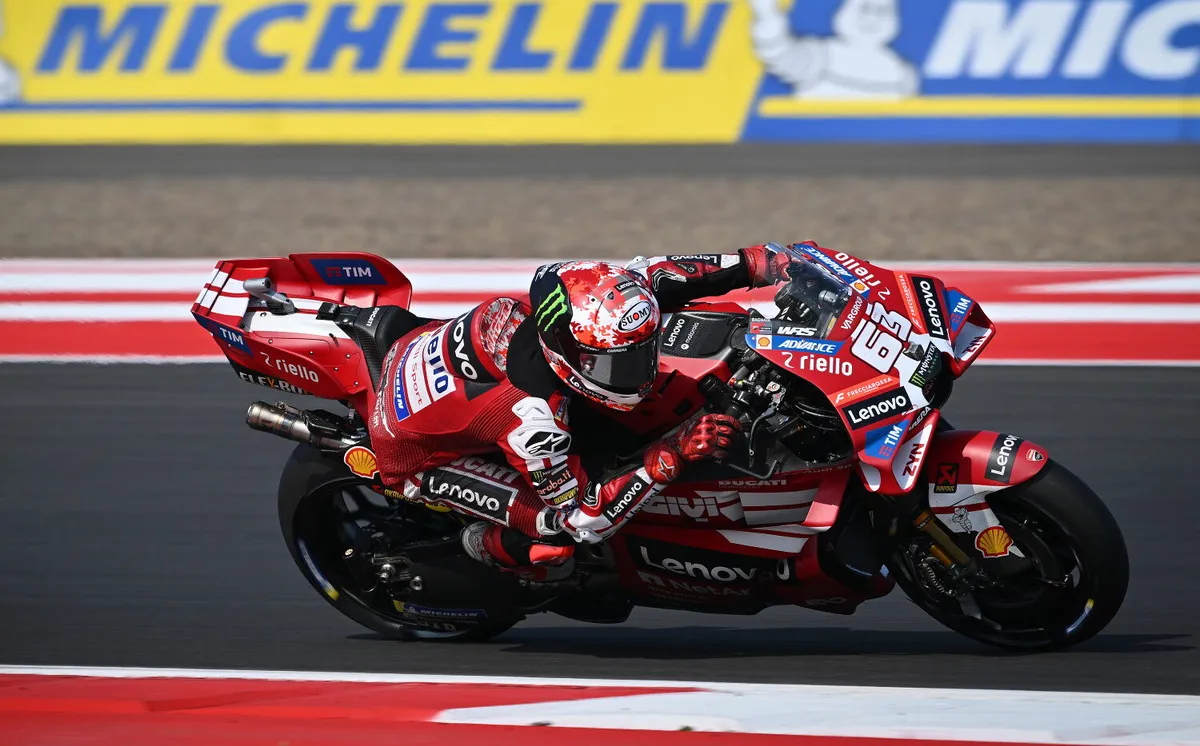
Simak analisis lengkap kekhawatiran Pecco Bagnaia terhadap krisis daya cengkram Ducati menjelang MotoGP Australia. Baca selengkapnya di sini!
Aprilia siap berlakukan team orders MotoGP sebelum batas matematis. Simak analisis lengkap dan strategi pabrikan di sini!
Aprilia pertimbangkan instruksi tim MotoGP 2026 demi redam gesekan pembalap. Baca analisis mendalam performa RS-GP dan strategi Noale di sini!
 Continue with Google
Discussion (0)
Join the Discussion!
Sign in easily to start commenting, replying, and interacting with other readers.
Latest Comments
No comments yet. Be the first!