






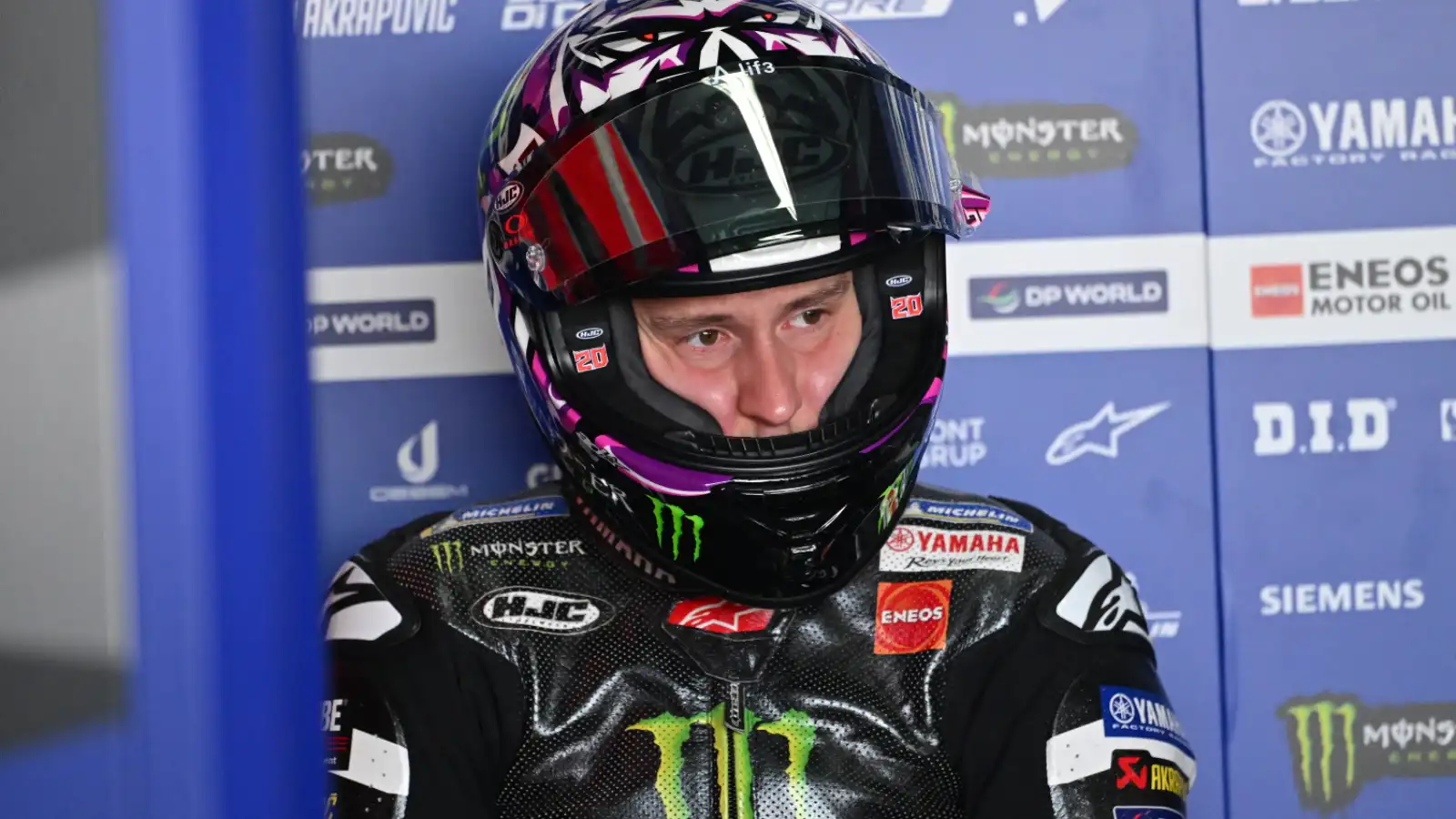

MotoGP, Sportrik Media - Fabio Quartararo’s visible frustration aboard Yamaha’s new V4 machine became one of the defining images of the Buriram MotoGP test, underlining the scale of the challenge facing Monster Energy Yamaha MotoGP ahead of the 2026 season.
Yamaha’s switch to a V4 configuration represents a strategic shift aimed at restoring championship competitiveness after several seasons of decline. However, early track running suggests the project remains in a developmental phase. After engine-related setbacks limited mileage at Sepang, the Buriram test has not yet delivered a clear step forward in outright performance.
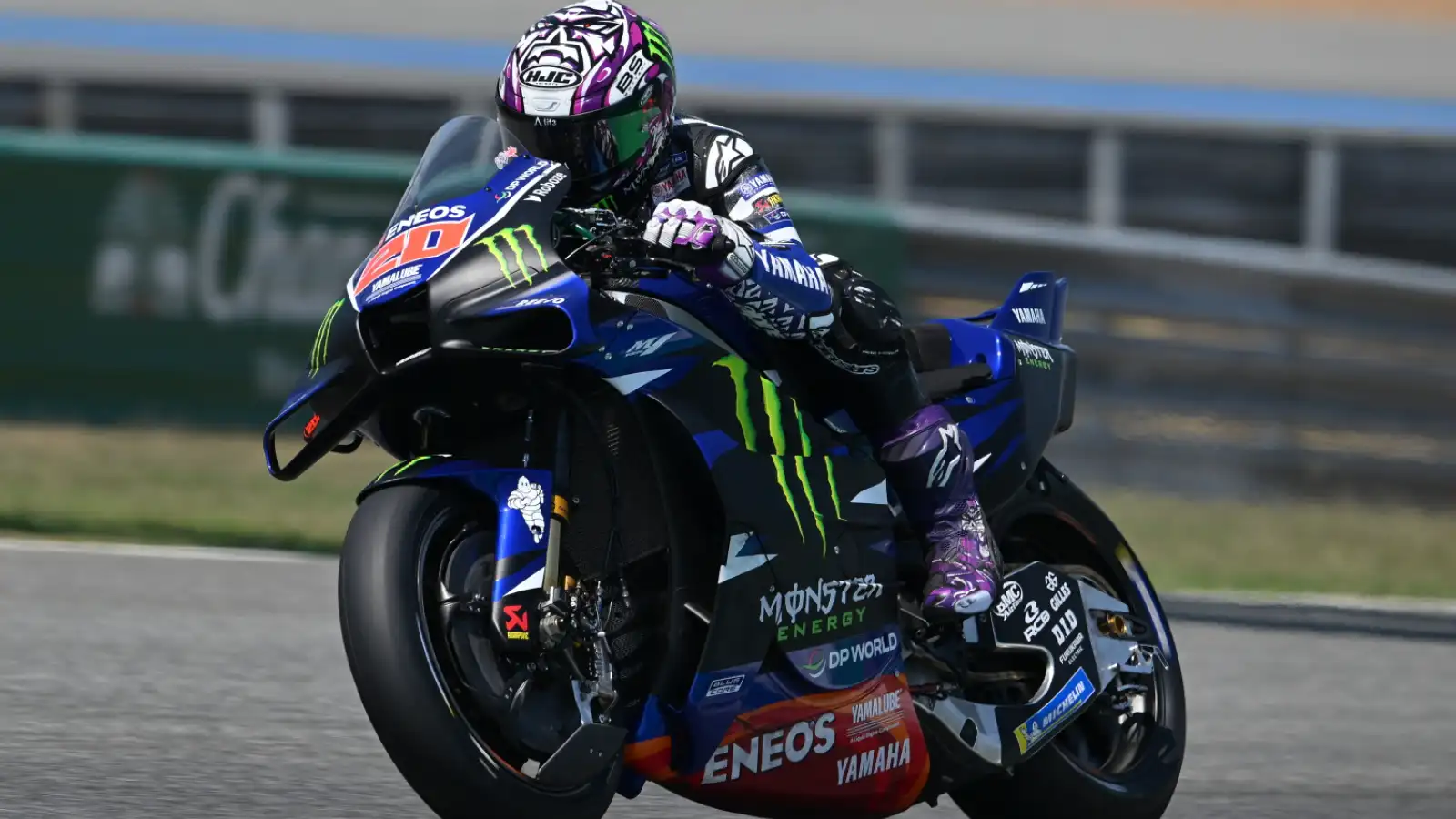
On the opening day in Thailand, Yamaha’s fastest rider was Jack Miller, who placed 17th and more than one second adrift of the benchmark time set by Alex Marquez on the 2026-spec Ducati. Quartararo ended the day 18th and admitted that, from his perspective, the bike is not yet race-ready.
“In one week’s time, even in a month, we will not be ready on my side,” Quartararo said.
“Maybe the other Yamaha riders are a bit better. But since I’ve been with this bike, I’ve never made two runs in a row with the same bike.”
“I’m always trying something. And even changing a lot, we are not able to find a base setting and make an improvement.”
He added that stability in set-up has become a priority, even if the current configuration does not fully satisfy him.
“At least tomorrow I would like to keep the same bike, even if I don’t like it.”
From a technical standpoint, Yamaha’s V4 is reportedly conceding approximately 10 km/h in top speed compared to the fastest machines on the grid. Alex Rins identified both engine output and traction as critical weaknesses.
“We are losing a lot in terms of engine power. It’s quite clear,” Rins explained.
“But also on the traction side. Not only Ducati, but Honda and Aprilia get better traction than us. They recover more out of the corners and then gain on the straights.”
“On braking I feel a little bit more comfortable, but this one doesn’t turn so good.”
Rins acknowledged the mental toll of the situation, highlighting the gap between rider effort and results.
“I try to scream in my office. That’s all. It’s really frustrating. I was at 191 bpm heart rate for the time attack to be P19.”
“There’s nothing more we can do. The riders are ready, the bike is not so ready. So, let’s understand and wait.”
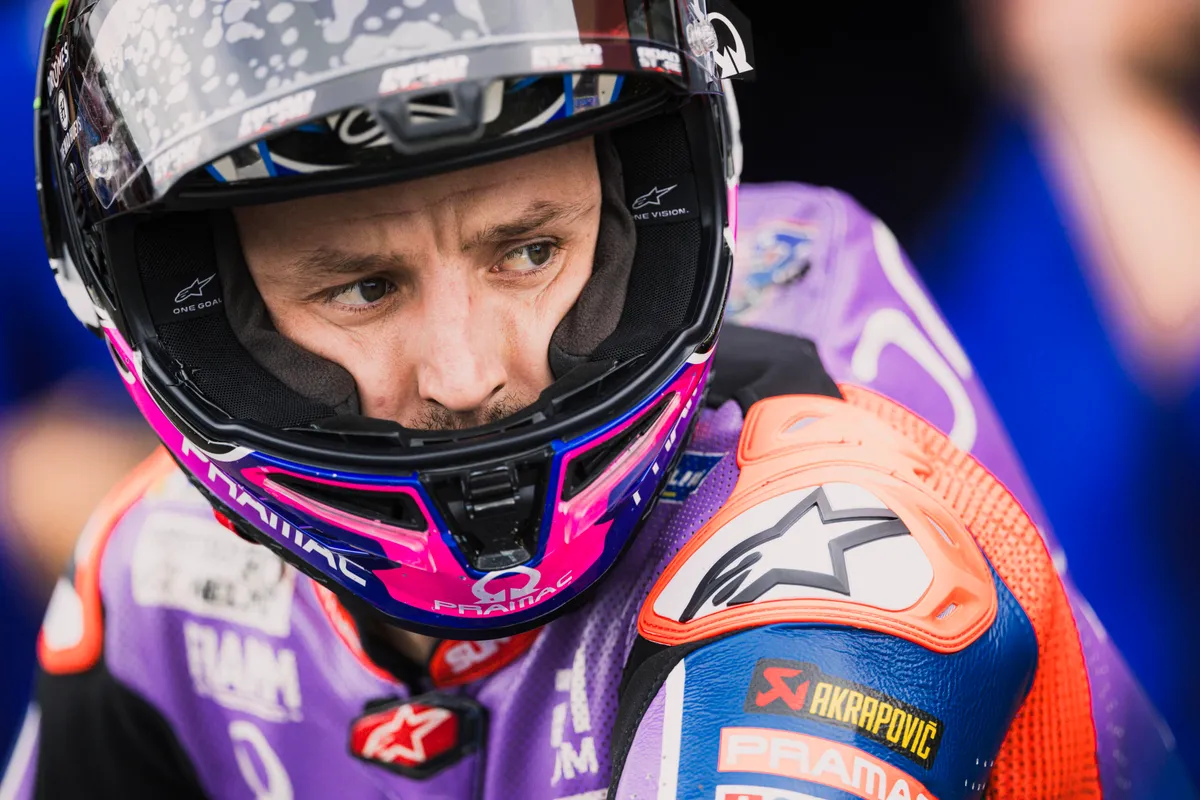
Despite the performance deficit, Miller offered a more measured assessment from the Prima Pramac Yamaha perspective.
“The bike seems to be working relatively decent,” Miller said.
“Sector one and sector two are our kryptonite at the moment, but that’s to be expected.”
He noted improvements in certain areas, particularly mid-to-late lap performance and chassis balance compared to Malaysia.
“With the chassis we weren’t happy with in Malaysia, we made some adjustments and we’re happy with the direction.”
“It looks like the new aero is a bit better. We didn’t have that today, but we will have it tomorrow.”
“We’re not going to find 10 km/h overnight. That’s what we’re missing at the minute. But in general, I’m enjoying riding the bike; it’s doing some decent things.”
While the V4 project remains central to Yamaha’s long-term recovery strategy, the Buriram test has underlined the scale of development required. Closing a double-digit top-speed deficit and improving traction consistency will be critical if Yamaha is to rejoin the front group in the early stages of the 2026 MotoGP season.
Baca Juga
Cuaca panas ekstrem dan ancaman hujan 80 persen siap menguji duel sengit antara Jorge Martin dan Marc Marquez di MotoGP Mandalika.
Casey Stoner siap berjuang mempertahankan Phillip Island di kalender MotoGP di tengah rencana kepindahan GP Australia ke sirkuit jalan raya Adelaide mulai 2027.
Luca Marini dan Pedro Acosta prediksi empat pembalap Aprilia bakal tampil tak terkalahkan di MotoGP Mandalika berkat performa motor RS-GP yang kian kompetitif.
 Lanjutkan dengan Google
Diskusi & Komentar (0)
Mari Bergabung dalam Diskusi!
Masuk dengan mudah untuk mulai memberikan komentar, membalas, dan berinteraksi dengan pembaca lainnya.
Komentar Terbaru
Belum ada komentar. Jadilah yang pertama!