







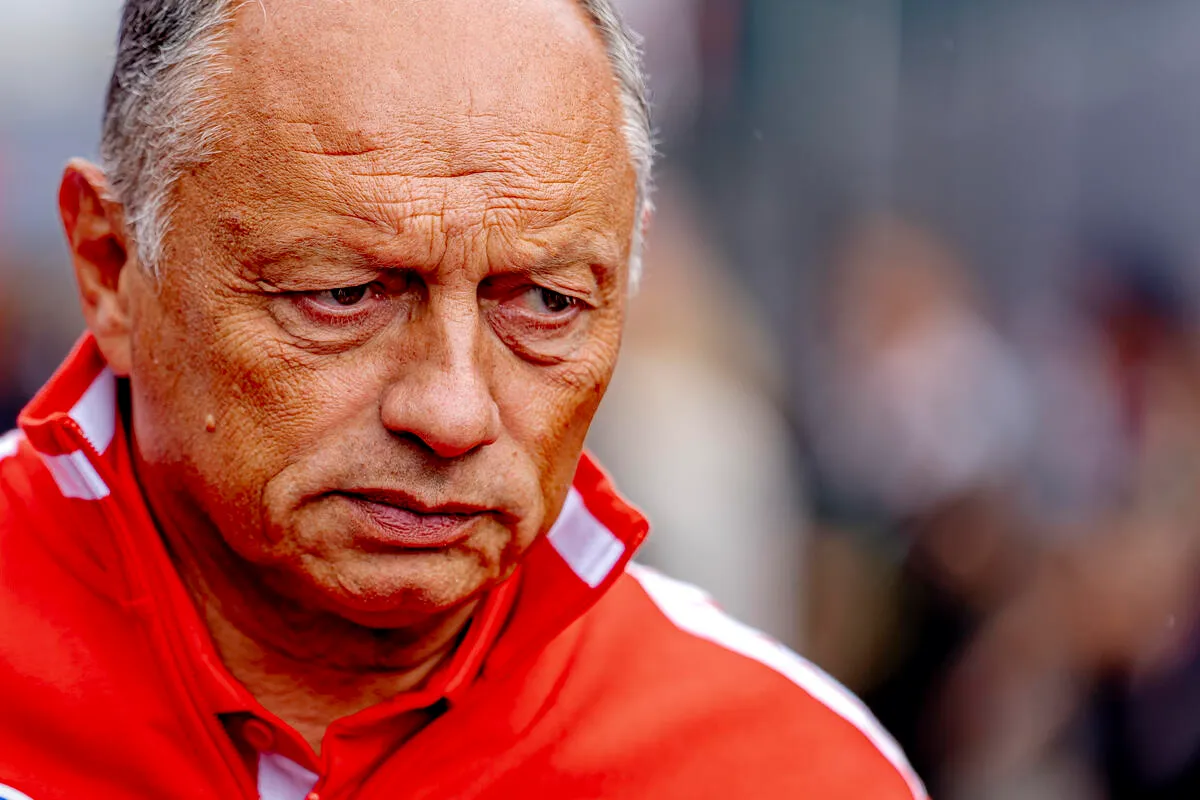

Frederic Vasseur has reiterated that Ferrari's potential is enough to fight at the front, but execution remains the team's biggest weakness. The message came after a frustrating weekend at Zandvoort, where the Maranello squad once again failed to turn promising pace into tangible results.
Regret in the Netherlands
The Dutch Grand Prix was a carbon copy of what Ferrari experienced at the Hungaroring. The SF-26 started the weekend as a victory contender but left without a podium. Strategy errors on the pit wall and a slow pit stop cost Lewis Hamilton and Charles Leclerc valuable chances.
Vasseur did not question the car's speed. In his view, the race pace was comparable to Kimi Antonelli and Lando Norris, had the drivers not been stuck behind Oscar Piastri and later George Russell. The problem, he said, lies in execution—from pit stops to tyre management and decision-making at critical moments.

“So far this season, sometimes we didn't expect good results, other times we thought we could do better and struggled more,” Vasseur said after the Dutch GP. “I believe there is much more in execution than in pure potential.”
He added, “Today's execution was not good. The second start was not as fast as the first despite the soft tyre, and we had a poor pit stop. The best lesson from this weekend is that if you want to win and stay ahead, you need to do a perfect job. It applies to us, but also to others. There's a chance to go from P1 to P6 based on good or bad execution.”
Vasseur's message to Ferrari is clear: before chasing absolute performance—which has already arrived with the new floor and will improve further with the ADUO-2 engine upgrade at Monza—the team must optimise the package at hand. The directive may be memorised by heart in Maranello, but applying it on track has proven far more difficult.
Read Also

Valtteri Bottas menceritakan pengalaman ekstrem bersepeda lintas hutan dari Malaysia ke Singapura, menghadapi ular hingga biawak.

Dokumen finansial ungkap kompensasi kepergian Christian Horner dari Red Bull Racing mencapai 100,4 juta poundsterling setelah kepergiannya.
FIA mengumumkan perubahan software F1 darurat menyusui kekacauan di Sepang dan menyiapkan pembaruan lanjutan untuk GP Amerika Serikat.
 Continue with Google
Discussion (0)
Join the Discussion!
Sign in easily to start commenting, replying, and interacting with other readers.
Latest Comments
No comments yet. Be the first!