







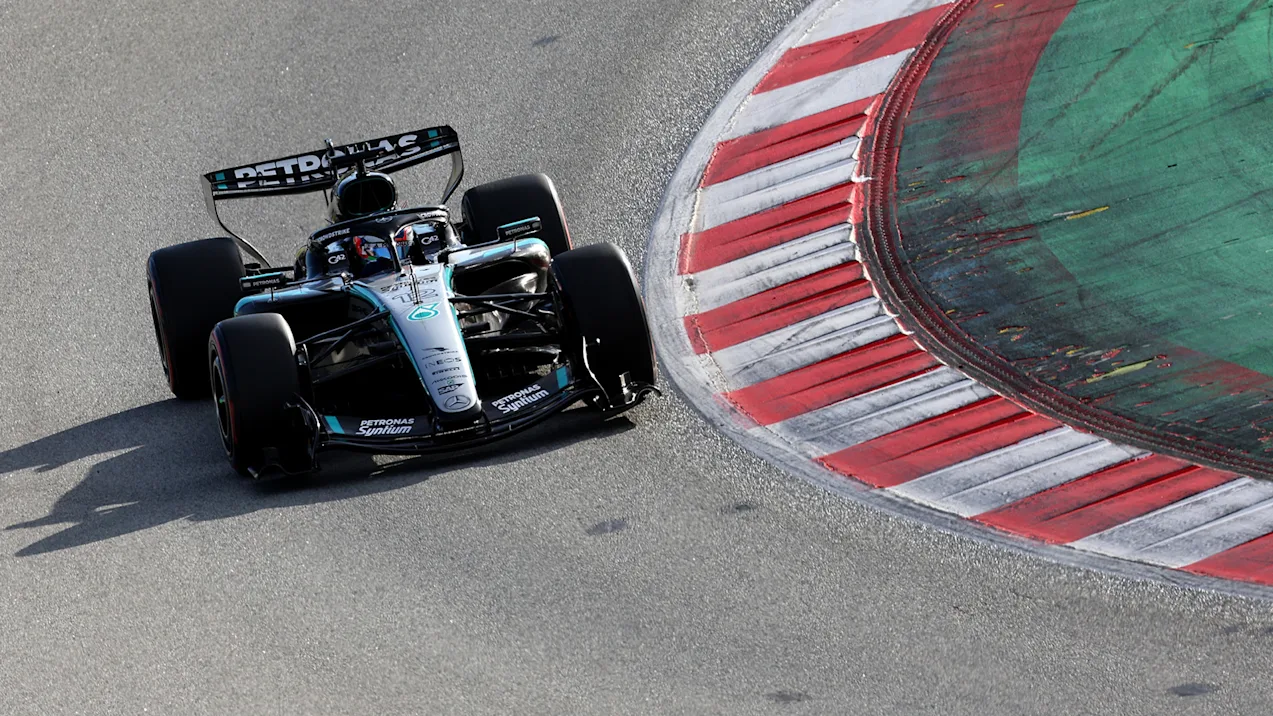

Formula 1, Sportrik Media - Mercedes-AMG Petronas Formula One Team has described its transition to the 2026 Formula 1 regulations as the most extensive project in the team’s history, following the on-track debut of the W17 during early shakedown and pre-season testing.
The Brackley-based outfit first ran the W17 at a closed shakedown at Silverstone before beginning its official pre-season programme in Barcelona on Monday. The car has been conceived entirely under the new FIA technical framework, incorporating sweeping changes to aerodynamics, electronic systems, and power unit architecture.
According to trackside engineering director Andrew Shovlin, the scale of the 2026 programme surpasses anything Mercedes has previously undertaken. In addition to a completely new chassis, the team has developed an all-new power unit, a project that has been underway for several years at its Brixworth facility, including close collaboration with fuel partner Petronas.
“It has been an absolutely monumental project,” Shovlin said.
“On the power unit side in Brixworth, they’ve been working on it for years.”
“It’s a very, very difficult and challenging programme, especially with the added complexity that fuel development with Petronas brings.”
Beyond the power unit, Mercedes has faced a major engineering reset on the chassis side, with an entirely new aerodynamic rule set and the introduction of next-generation electronic systems. Together, these elements have placed a premium on early correlation work and operational stability during the opening phase of testing.
“On the chassis side, it’s a completely new set of regulations, coupled with all-new electronic systems,” Shovlin added.
“It’s the biggest project we’ve ever done as a team.”
Mercedes’ opening day in Barcelona delivered encouraging signs from a reliability standpoint. George Russell and Kimi Antonelli shared running duties on Monday, completing a combined total of 151 laps and establishing a solid baseline for data analysis.
Shovlin stressed that performance benchmarks remain secondary at this stage, with the priority firmly on keeping the car running and accelerating the learning process. Sustained track time, he noted, is critical to understanding the W17’s behaviour under the radically revised regulations.
“We don’t yet know where we stand in terms of performance, but we’re able to keep the car on track, which is great,” Shovlin said.
“That means we can hopefully learn at a good rate.”
That positive trajectory continued into Wednesday’s running, with Russell completing a further 92 laps during the morning session. With years of preparation underpinning its early testing mileage, Mercedes is now focused on maximising this initial phase as it builds toward a competitive start to the 2026 Formula 1 season.
Read Also
Lewis Hamilton merilis dokumenter berdurasi 8 menit mengenai proses restorasi mobil sport klasik Ferrari F40 miliknya yang memiliki jarak tempuh 69 km.
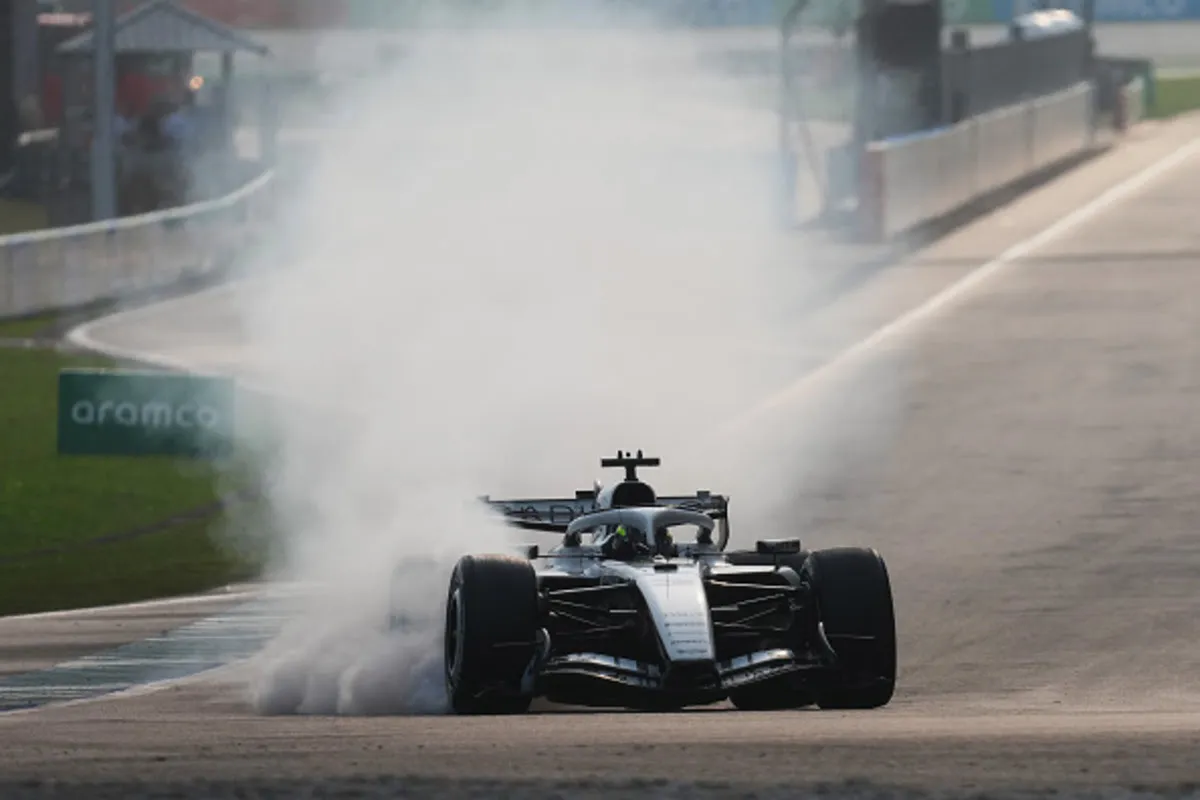
Cadillac menghadapi balapan sulit di Sepang lewat insiden Valtteri Bottas dan Sergio Perez di posisi P19 tanpa perolehan poin F1.
Andrea Stella akui McLaren salah arahkan strategi ban Lando Norris di awal balapan Bahrain Grand Prix, bikin kehilangan poin penting.
 Continue with Google
Discussion (0)
Join the Discussion!
Sign in easily to start commenting, replying, and interacting with other readers.
Latest Comments
No comments yet. Be the first!