








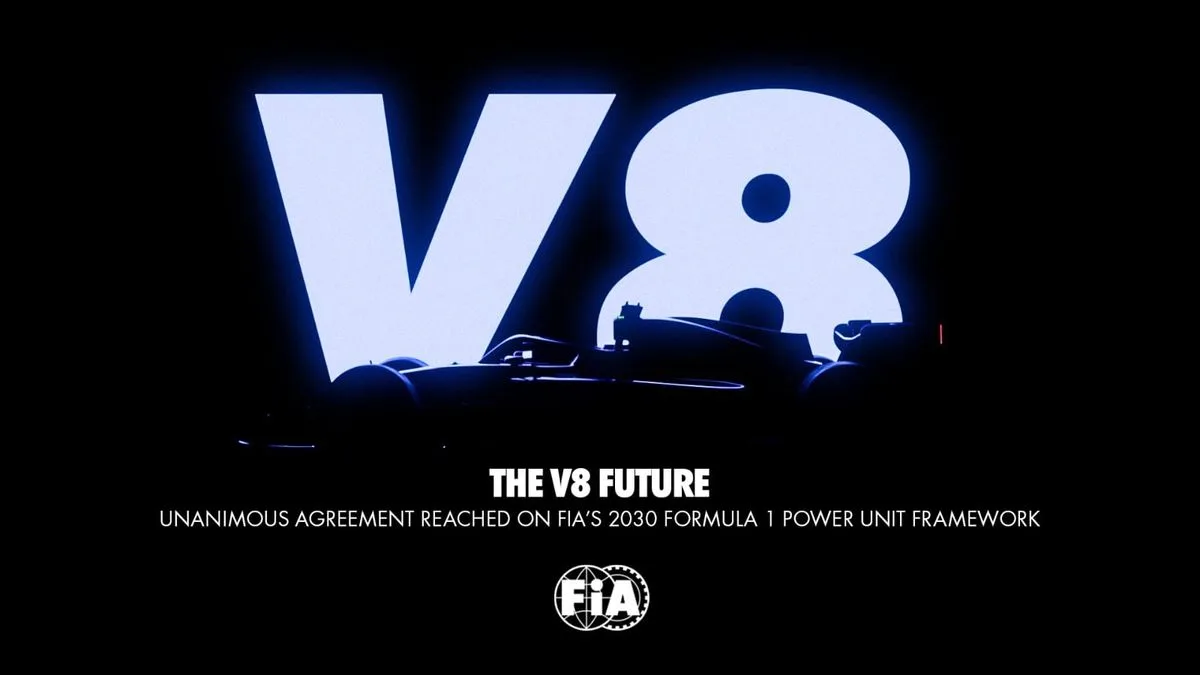
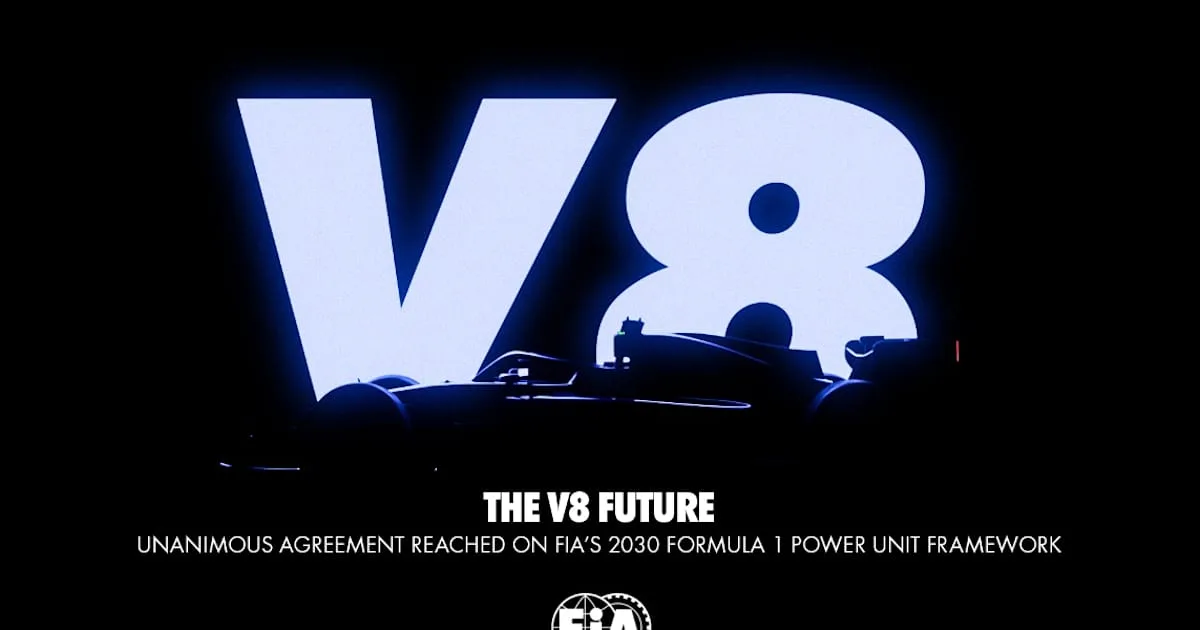
Formula 1 is officially set to transition back to V8 engines starting in 2030 after key stakeholders reached a unanimous agreement regarding the technical framework of the upcoming regulations. The sweeping decision involves the FIA, commercial rights holders, competing teams, and power unit manufacturers who agreed to sunset the controversial V6 turbo-hybrid era ahead of schedule.
Under the newly agreed technical blueprint, the series will adopt a 2.1-litre turbocharged V8 engine featuring a reduced electrical component and full compatibility with sustainable fuels. This strategic shift aims to streamline powertrain architectures while pairing them with significantly lighter chassis designs for the next generation of grand prix racing.
A pivotal meeting of the F1 Commission laid the groundwork for the agreement, which was subsequently finalized following dedicated consultations with major manufacturers including Mercedes, Ferrari, Red Bull Ford, Audi, Honda, and incoming automotive giants. The FIA World Motor Sport Council is scheduled to formally rubber-stamp the comprehensive plan during a meeting in Shanghai next month.
The accelerated timeline carries significant implications for General Motors and its works Cadillac outfit. Initially slated to introduce its custom-built power unit under the previous rules cycle by 2029, the American manufacturer has opted to delay its proprietary engine debut to avoid designing a V6 meant for a single season of competition.
TWG Motorsports boss Dan Towriss noted that the team had previously balanced dual development paths before the regulation shift. "For a period of time, we were working on both. So, they've already got a V6 base to build off of, and working towards the V8. There are a number of designs that are in motion now," he stated while outlining the team's ongoing technical progress.
Read Also
Simak analisis lengkap kekacauan kualifikasi Formula 1 Las Vegas akibat hujan deras, data ban minim, dan ancaman penalti grid pembalap.
FIA resmi umumkan kesepakatan bulat kembalinya mesin V8 turbo mulai musim F1 2030. Simak analisis mendalam pembaruan regulasi teknis ini di sini!
Regulasi mesin V8 F1 2030 memaksa Cadillac ubah strategi dan lanjut jadi konsumen Ferrari. Baca analisis mendalam di sini.
 Continue with Google
Discussion (0)
Join the Discussion!
Sign in easily to start commenting, replying, and interacting with other readers.
Latest Comments
No comments yet. Be the first!