






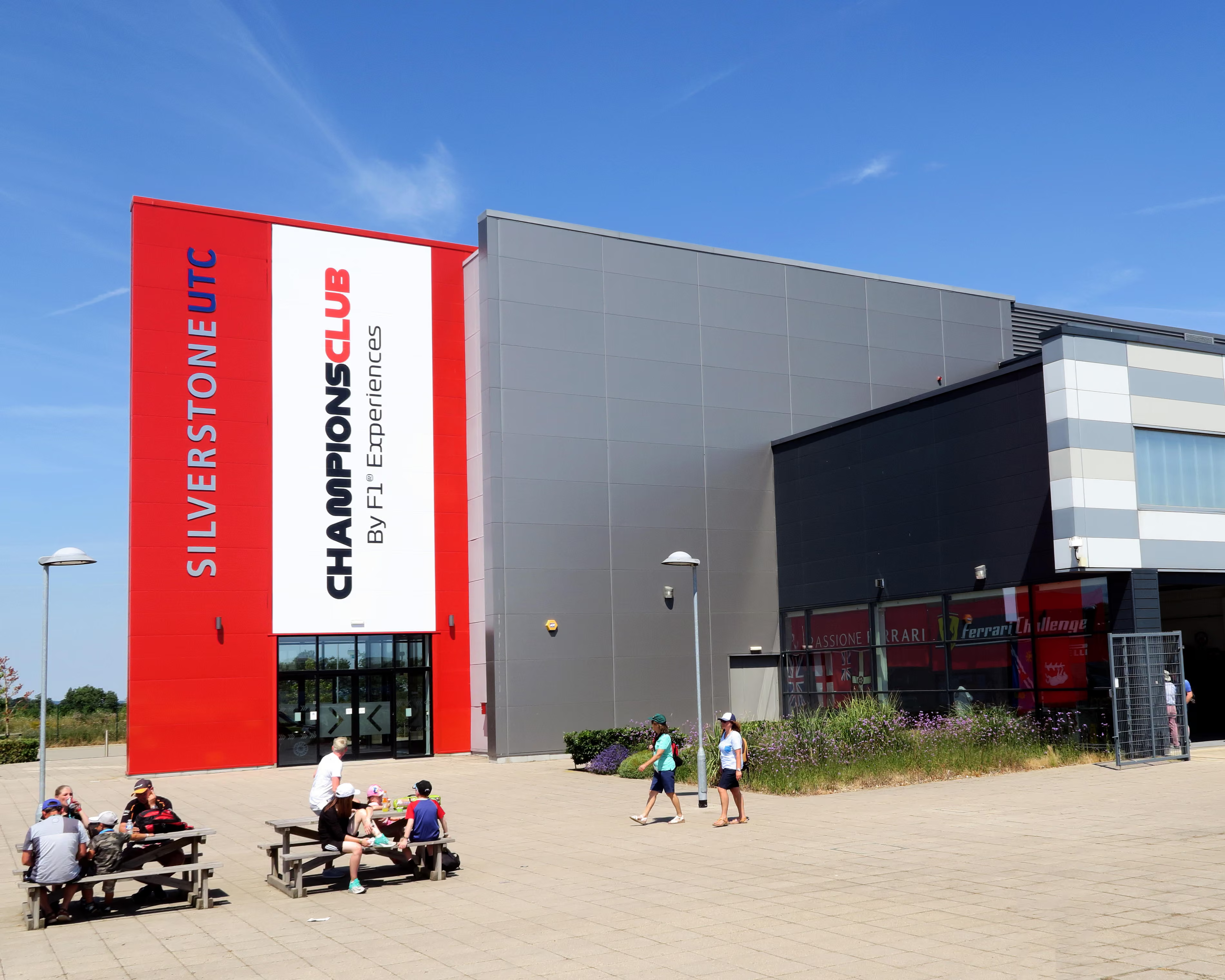

Silverstone University Technical College has established one of the most direct educational routes into the Formula 1 industry, with the school not only positioned beside a race track but designed around the requirements of high-performance engineering. In a report by Giles Richards published by The Guardian on July 1, 2026, the institution, commonly known as Silverstone UTC, was described as providing students aged between 14 and 18 with access to specialist technical education, workplace experience, industry-standard facilities and direct relationships with motorsport employers. Its location next to Silverstone Circuit means its students are educated within the same environment they hope to enter after graduation. The model makes the college more than a place to obtain academic qualifications because every stage of its programme is intended to prepare students for the practical demands of modern racing and engineering.
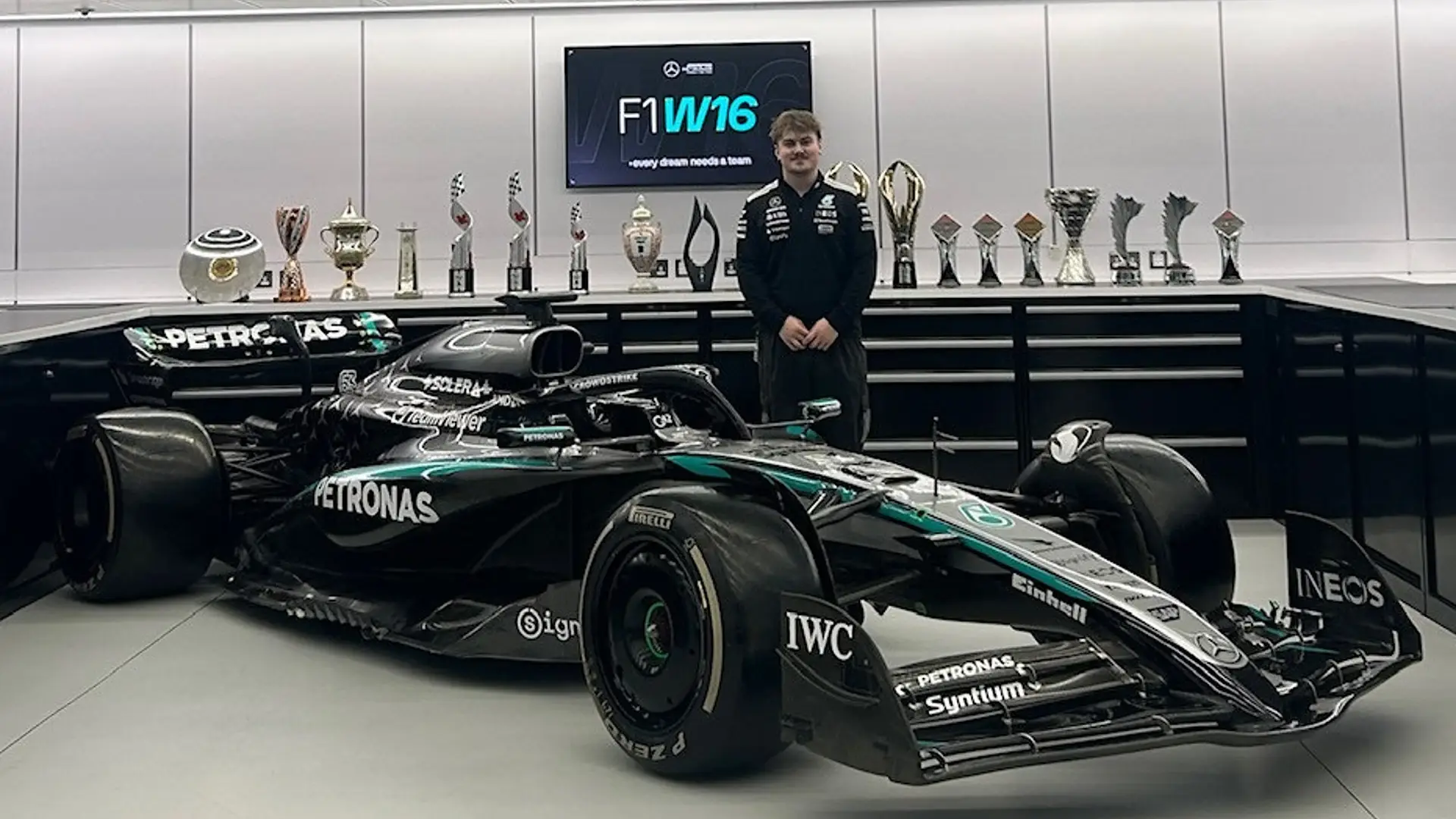
Kian Brown and Savannah Morgan represent two of the latest examples of the effectiveness of that pathway. Both graduated in 2025 and secured apprenticeship positions within Formula 1 teams. Brown is now working as a composite machining apprentice at Mercedes, while Morgan joined Cadillac as an advanced digital machining apprentice. Their progress is not an isolated outcome. According to The Guardian’s report, as many as 30 Silverstone UTC students moved directly into motorsport during 2025, including roles with F1 teams, race-engineering companies and specialist motorsport degree programmes. That figure indicates that the school is not merely offering a racing-themed learning environment but creating a measurable transition from education into technical employment. For an industry dependent on precision, manufacturing, design and problem-solving, the alignment between education and the requirements of employers is central to developing the next generation of skilled personnel.
“The opportunity for work placements twice a week allowed us to gain real-world experience and explore which areas of engineering we enjoy most,” Morgan said, as quoted by The Guardian.

Morgan also explained that networking events held at Silverstone gave students the opportunity to meet representatives from companies including McLaren and Williams. Those experiences help pupils understand that a motorsport career is not determined exclusively by academic grades, but also by communication skills, awareness of different engineering disciplines and familiarity with professional standards before entering employment. Silverstone UTC’s approach differs from a conventional academic route because theoretical knowledge and practical experience are treated as equally important. Brown chose the school after deciding that the mainstream A-level system did not fully suit his ambition of working in Formula 1. He highlighted that the teachers had previously worked in industry, allowing them to explain how technical theory is applied in real professional environments rather than teaching only from textbooks. For students interested in mathematics and physics but also motivated by practical work, that combination provides a clearer connection between classroom concepts and engineering applications.
Morgan, who identified Lewis Hamilton as one of her inspirations, also considers representation and diversity important factors in her motivation to enter the industry. Seeing someone succeed within a field where diversity remains limited demonstrated that a similar route could be achieved through education, experience and access to the right opportunities. However, the principal strength of Silverstone UTC remains its educational method. The school allows students to test their interests before choosing a specialism, whether in design, manufacturing, machining, composite materials or another technical discipline. That opportunity reduces the risk of students entering further education without understanding the work involved in their chosen sector. At the same time, employers gain access to potential recruits who already understand production environments, technical discipline and the need for precision before beginning an apprenticeship or advanced training programme.
Silverstone UTC was founded in 2013 after the ambitions of Neil Patterson, then a design engineer at McLaren, received support from the British Racing Drivers’ Club and the management of Silverstone. Land for the campus was donated because the institution’s objectives were considered compatible with the needs of Britain’s expanding motorsport industry. Geographically, the college stands outside the circuit opposite the former start-finish straight between the Woodcote and Copse corners. Its greatest advantage, however, extends beyond the view or the sound of racing cars from the track. Silverstone UTC is equipped with full-size lathes, milling equipment, computer numerical control machines, welding bays and a computer-aided design suite using software employed across the industry. Students therefore train with systems and processes relevant to manufacturing, design and the production of high-precision components, rather than relying solely on basic equipment intended to satisfy a general school curriculum.
The need for institutions of this type is underlined by the recruitment and training challenges identified as barriers to further industry growth. The Guardian reported that Formula 1 contributes a substantial proportion of the United Kingdom’s annual motorsport turnover and supports tens of thousands of jobs, but the continued expansion of the sector does not automatically guarantee a sufficient supply of skilled workers. Silverstone UTC forms part of the response because it is funded in the same way as a state school while offering a more specialised curriculum and technical environment. Under the leadership of principal Angela Murphy, who took charge in 2024, the college has reached a capacity of 480 students, although demand for places now exceeds the available number. Some families have moved across the country to provide their children with access to the school. One former student reportedly travelled from Kent each day before progressing to a degree apprenticeship with Cosworth and the University of Warwick.
“We are just so, so lucky to be here. It’s a truly enviable location, I would say, and one of those pinch-me places,” Murphy said, as reported by The Guardian.
Murphy said the school’s proximity to the industry and the reputation it has developed among engineering employers have created opportunities that are difficult to reproduce elsewhere. She also described the building, its workshops enclosed by glass walls and the accompanying sound from the circuit as factors that prevent Silverstone UTC from feeling or looking like a conventional school. Changing schools at the age of 14 is not a normal transition for many pupils, meaning the willingness of students to relocate reflects the value they place on the technical opportunities available. The workplace-style environment also helps establish realistic expectations from an early stage. Students do not only learn the theory behind machinery, design or materials; they also see how those skills are used to complete projects, meet deadlines and produce components to standards required by high-performance engineering companies.
Partnerships with Aston Martin, Red Bull and Haas reinforce Silverstone UTC’s role as a bridge between education and the workforce requirements of Formula 1. Through those relationships, students can contribute to projects established by employers, undertake workplace placements and develop an understanding of the professional standards they will face after graduation. The central value of the model is not simply its symbolic proximity to F1, but its ability to reduce the distance between learning and application. At a time when the industry requires a larger pool of trained personnel, the school gives employers an opportunity to identify potential recruits early while providing students with a realistic understanding of the demands of a technical career. As Formula 1’s popularity continues to attract a new generation, Silverstone UTC demonstrates that the sport’s long-term sustainability depends not only on drivers, cars and teams at the circuit, but also on the educational system preparing the people responsible for future design, manufacturing and technological development.
Baca Juga

Mercedes ledek Kimi Antonelli yang kesulitan menyemprotkan air mawar pada selebrasi podium Formula 1 setelah mengamankan posisi kedua klasemen.

Charles Leclerc ungkap kekhawatiran mendalam pembalap F1 terhadap regulasi mesin 2026 usai kekacauan teknis di Grand Prix Bahrain.

Simak analisis lengkap kekacauan GP Bahrain 2026, kemenangan perdana Red Bull Powertrains, serta preview eksklusif Bathurst 1000 bersama David Reynolds.
 Lanjutkan dengan Google
Diskusi & Komentar (0)
Mari Bergabung dalam Diskusi!
Masuk dengan mudah untuk mulai memberikan komentar, membalas, dan berinteraksi dengan pembaca lainnya.
Komentar Terbaru
Belum ada komentar. Jadilah yang pertama!