







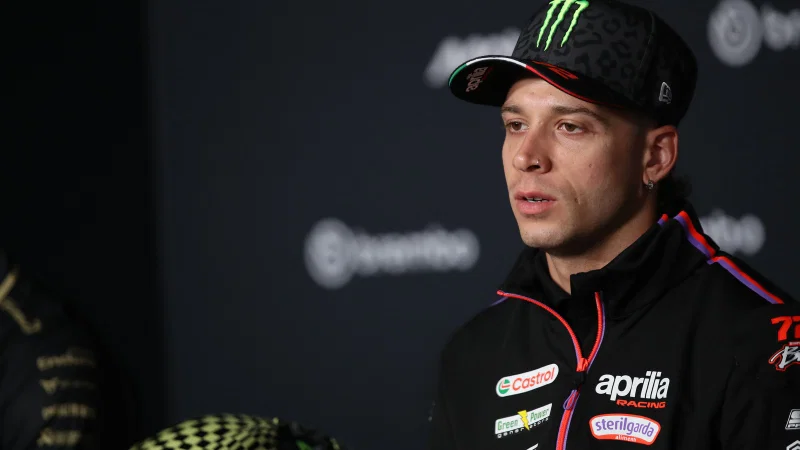

MotoGP riders have rejected suggestions that holeshot and ride-height devices are the primary cause behind the growing number of first-corner accidents during the 2026 season. The debate intensified again after major incidents at the Catalan Grand Prix ruled both Alex Marquez and Johann Zarco out of this weekend’s Mugello round.
Marquez suffered back injuries after colliding with the KTM of race leader Pedro Acosta, whose bike suddenly lost power during the race. Zarco then sustained knee injuries following a major Turn 1 crash during the restart procedure.
Analysis from Dimitri Stathopoulos shows that since Sprint races were introduced in 2023, Turn 1 incidents have accounted for approximately 20 percent of injuries causing riders to miss MotoGP races. The situation has reignited criticism of holeshot and ride-height devices, systems designed to lower the front and rear of the bike in order to reduce wheelies and improve acceleration during starts.
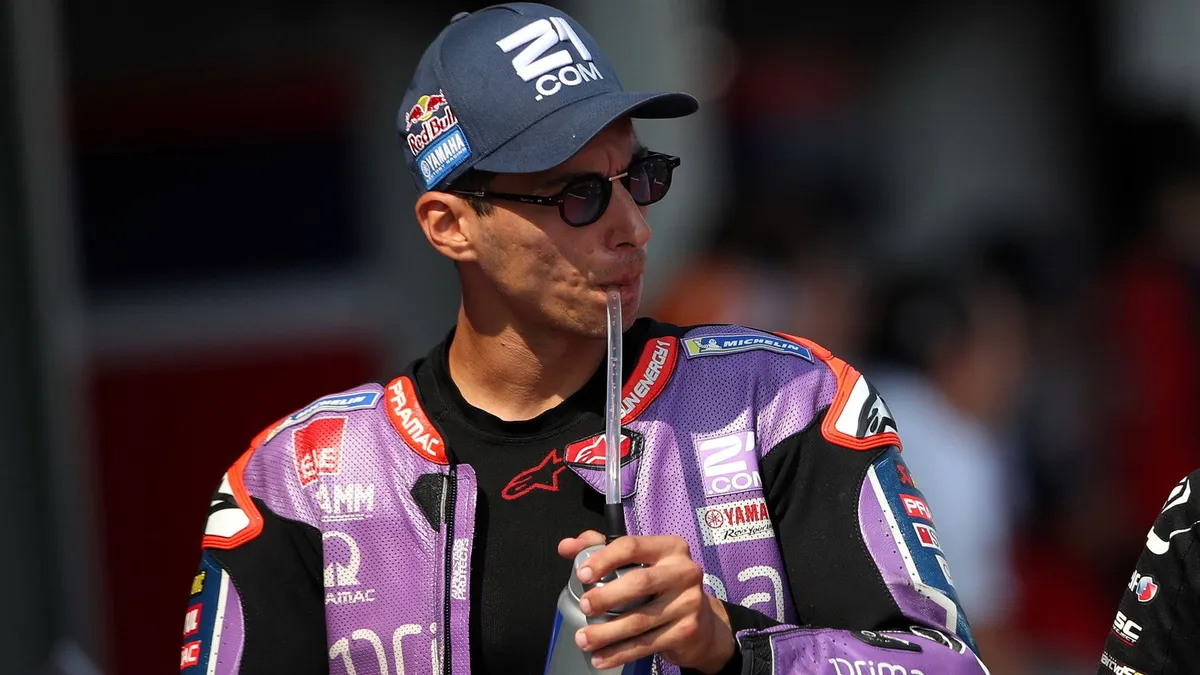
Although the technology will be banned from next season because all manufacturers now use similar systems, most MotoGP riders believe the devices themselves are not the main reason behind the increasing number of opening-corner accidents.
“At the end of the day, the first corner after the start is dangerous with any bike,” championship leader Marco Bezzecchi explained.
“MotoGP is much quicker than Moto2 or Moto3, so the braking is extremely difficult. But I don’t think it’s because of the devices. Everybody on the grid has made mistakes and it’s simply part of racing.”
Catalan Grand Prix winner Fabio Di Giannantonio also argued that the biggest issue comes from the unpredictable nature of Turn 1 braking during starts. According to the Italian rider, competitors never have a consistent braking reference because entry speed changes depending on the launch off the line.
“During a normal lap you brake at the same point every time. But at the start, everything changes depending on whether you arrive faster or slower,” Di Giannantonio said.
“It’s actually easier to brake from 360 km/h every lap with the same reference point than arriving once at 300 km/h without really knowing where to stop the bike.”
Di Giannantonio admitted shortening the distance between the grid and Turn 1 — as proposed for Catalunya — could help reduce the risk slightly. However, he believes opening-lap incidents will never completely disappear because of the aggressive nature of MotoGP starts.
Meanwhile, Pecco Bagnaia, who was directly involved in Zarco’s Catalunya crash, explained that ride-height devices only become more complicated at specific circuits such as Le Mans, Silverstone, and Phillip Island due to the lighter braking zones into Turn 1.
“Without the devices, the bikes would actually wheelie much more on the straights,” Bagnaia said.
“It’s not the devices increasing injuries. The reality is we now start twice every weekend and every rider wants to gain as many positions as possible immediately because overtaking has become more difficult.”
The riders’ comments underline that the root cause of modern MotoGP Turn 1 incidents is far more complex than simply the use of start devices. The combination of modern aerodynamics, front tyre pressure sensitivity, sprint race formats, and increasingly aggressive opening laps has created an environment where the start phase of grand prix racing is becoming progressively more critical and unpredictable.
Baca Juga
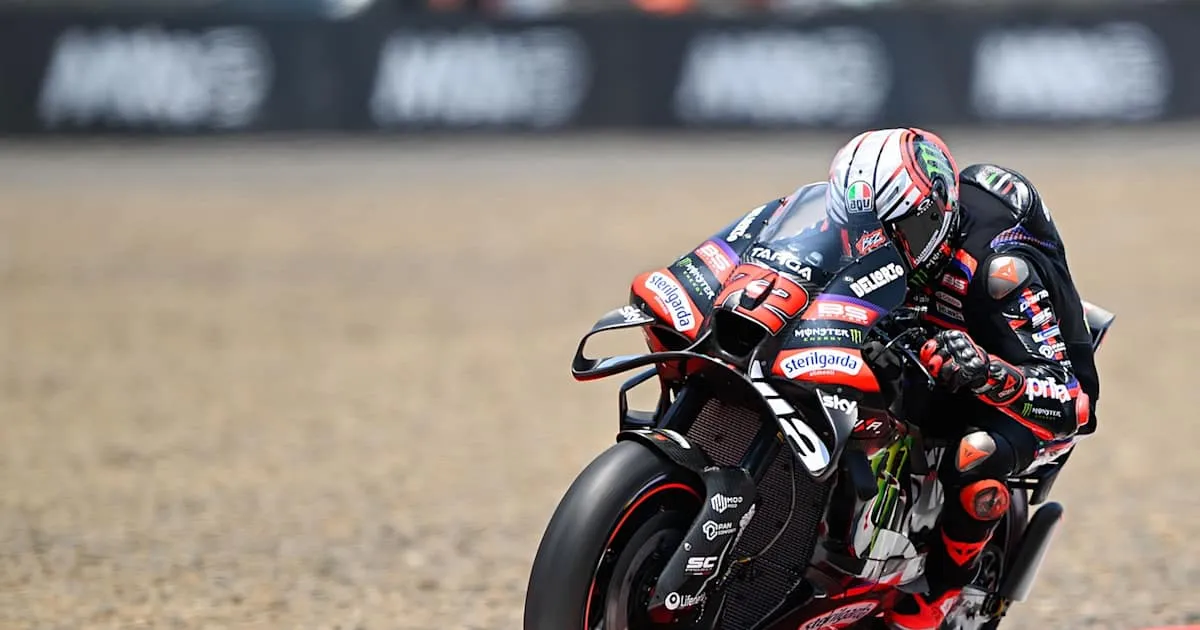
Simak analisis lengkap warm-up MotoGP Mandalika 2026, di mana Bezzecchi tercepat, Martin kecelakaan, dan Aleix Espargaro mundur. Baca selengkapnya di sini!
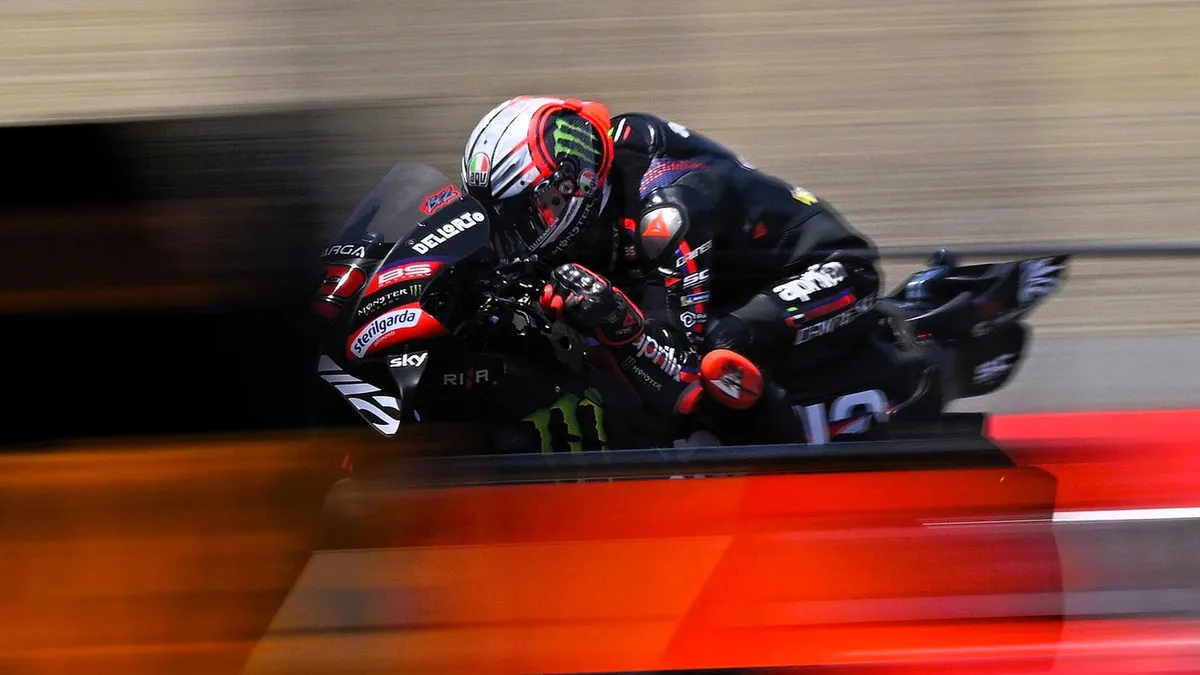
Marco Bezzecchi tercepat di warm-up MotoGP Mandalika diwarnai insiden Jorge Martin crash dan ketegangan. Baca analisis mendalam di sini!
Simak hasil warm-up MotoGP Indonesia 2026 di Mandalika di mana Marco Bezzecchi jadi yang tercepat. Baca analisis lengkap dan update poin di sini!
 Lanjutkan dengan Google
Diskusi & Komentar (0)
Mari Bergabung dalam Diskusi!
Masuk dengan mudah untuk mulai memberikan komentar, membalas, dan berinteraksi dengan pembaca lainnya.
Komentar Terbaru
Belum ada komentar. Jadilah yang pertama!