








Lewis Hamilton claimed British Grand Prix Sprint pole in a technical context that went beyond pure single-lap speed. The SQ3 comparison with Kimi Antonelli showed that Ferrari’s Silverstone advantage was not only about power, but also aerodynamic efficiency and energy management.
The competitive picture between Ferrari and Mercedes that emerged from the Austrian Grand Prix only told part of the story. The Red Bull Ring places greater emphasis on power unit output and mechanical traction, meaning the aerodynamic qualities of the SF-26 were not fully exposed at that venue.
Silverstone created a different challenge. Engine power still mattered, but aerodynamic efficiency, car balance and the ability to sustain speed through fast corners became decisive. In that environment, the relationship between drag, downforce and electrical energy use became far more significant.
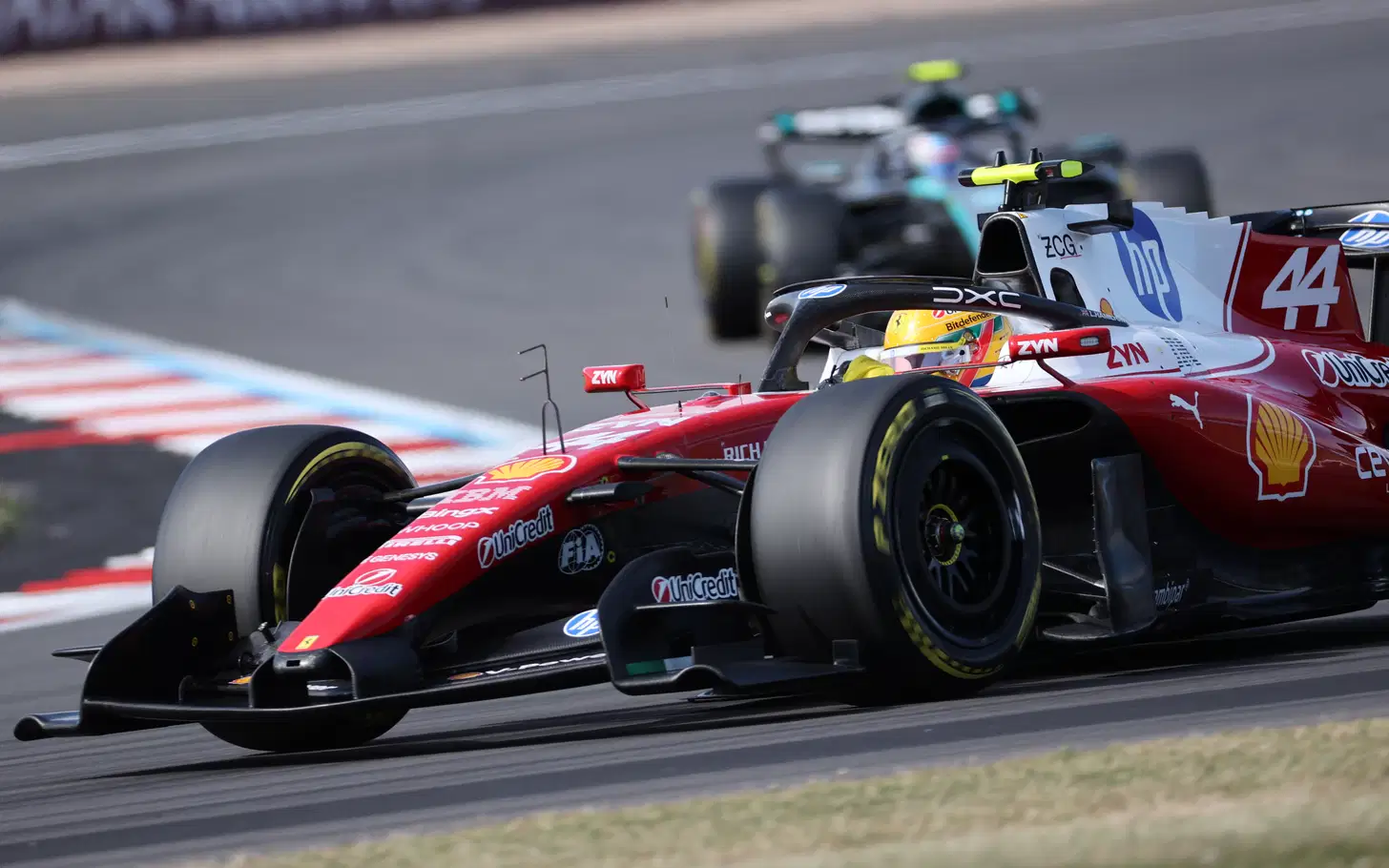
Data from Hamilton’s pole lap showed Ferrari carrying higher speed on the straight following the Maggotts, Becketts and Chapel sequence. In that section, the SF-26 was faster than Antonelli’s W17 and significantly stronger than George Russell’s car.
The key factor was clipping, the phase in which the MGU-K is no longer delivering full electrical power because the system needs to recover battery energy. The W17 was understood to spend almost two extra seconds per lap in clipping compared with Ferrari, indicating that Mercedes was consuming a greater share of its electrical energy across the lap.
That does not mean the Mercedes battery recharges more slowly under identical conditions. The more precise point is that the car was using energy more heavily to sustain performance, creating a longer recovery window and reducing deployment effectiveness in the areas where clipping is most costly.
The SF-26’s aerodynamic efficiency gave Ferrari a wider performance benefit. With lower drag for a comparable downforce level, the car required less energy to maintain speed, allowing Hamilton to reach the high-speed straights with more battery charge available.
The advantage shows that a modern power unit cannot be assessed separately from the aerodynamic characteristics of the car around it. Peak engine output remains important, but global efficiency is becoming a competitive variable that can change how energy is used, recovered and converted into lap time.
That context also matters when assessing Ferrari’s position after the introduction of the ADUO concept. Even if Mercedes still appears to hold an advantage in raw power output, the SF-26’s aerodynamic package can offset part of that deficit on circuits that reward efficiency, balance and high-speed stability.
Hamilton’s Sprint pole is the clearest example so far of how car efficiency can become a performance weapon. If Ferrari can preserve this characteristic at upcoming fast circuits, Mercedes will face pressure not only from engine development but also from a rival package that manages energy more efficiently through aerodynamic performance.
Baca Juga
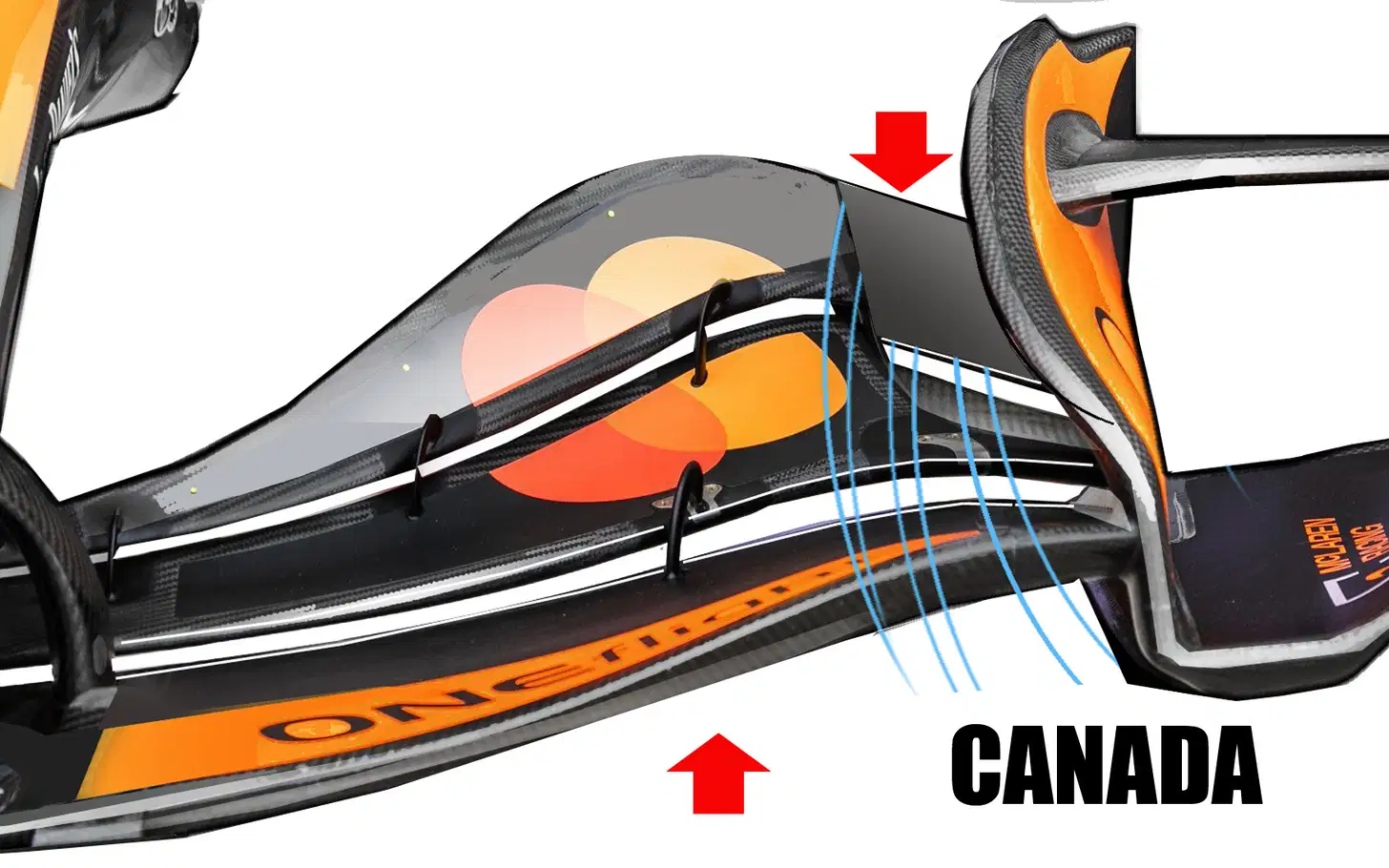
Mercedes dan McLaren membawa paket upgrade besar ke GP Kanada, memicu duel teknis yang bisa menentukan arah musim F1 2026.
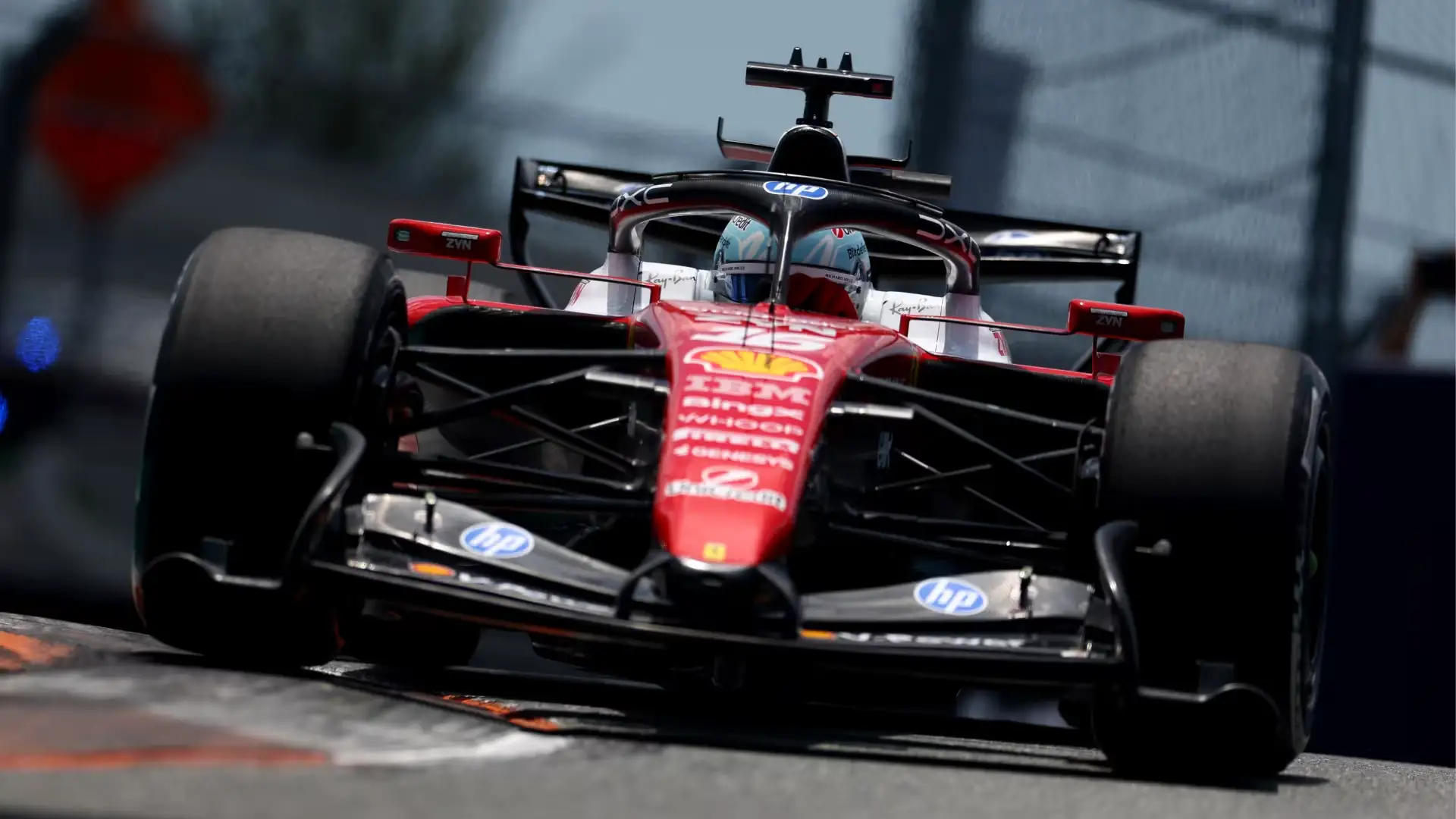
Ferrari membawa upgrade besar SF-26 dari depan hingga belakang mobil dan mulai mengancam McLaren serta Red Bull di Formula 1 2026.
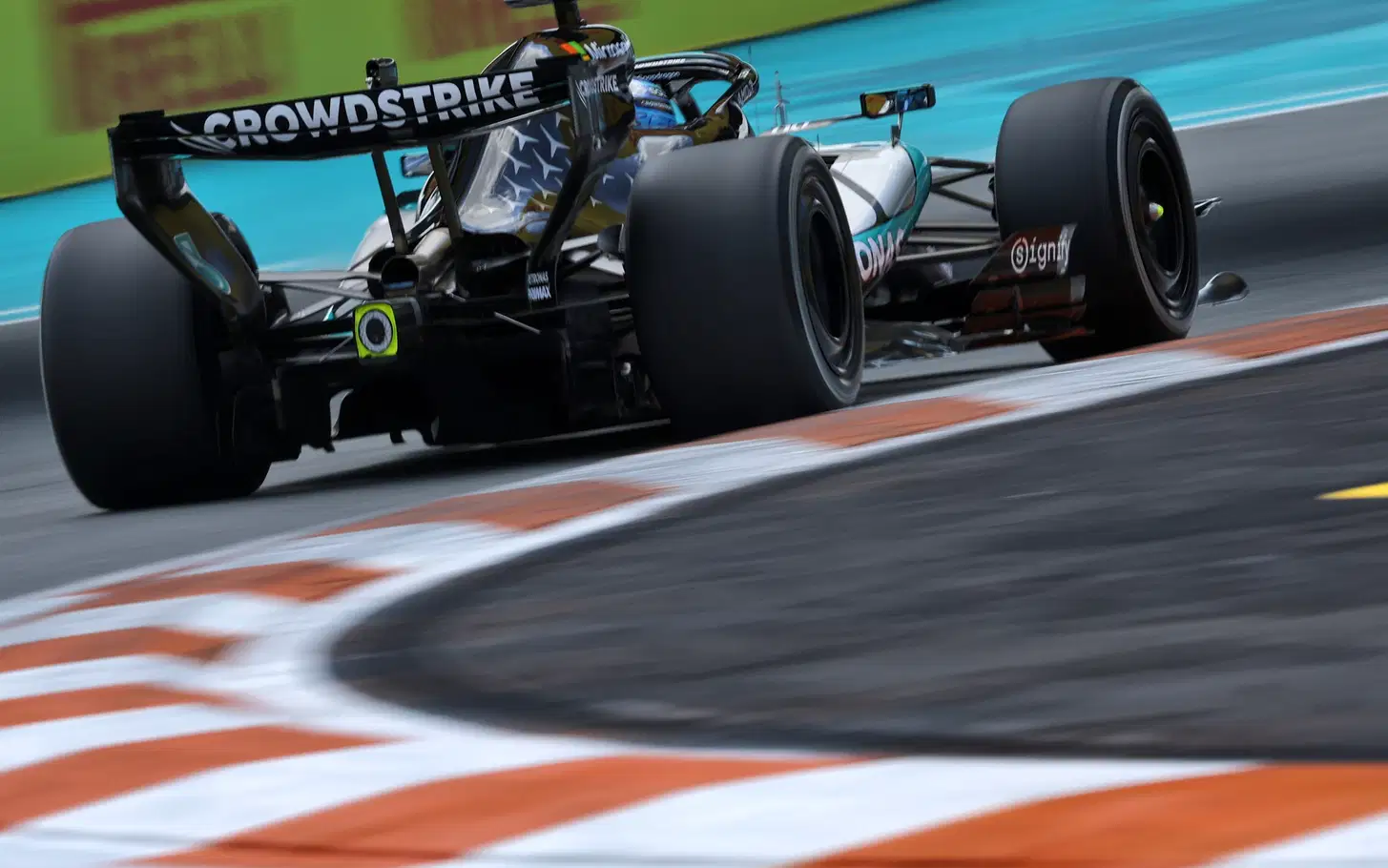
Mercedes menghadapi ujian besar di GP Kanada 2026 setelah regulasi energy management FIA berpotensi mengubah keseimbangan Formula 1.
 Lanjutkan dengan Google
Diskusi & Komentar (0)
Mari Bergabung dalam Diskusi!
Masuk dengan mudah untuk mulai memberikan komentar, membalas, dan berinteraksi dengan pembaca lainnya.
Komentar Terbaru
Belum ada komentar. Jadilah yang pertama!