








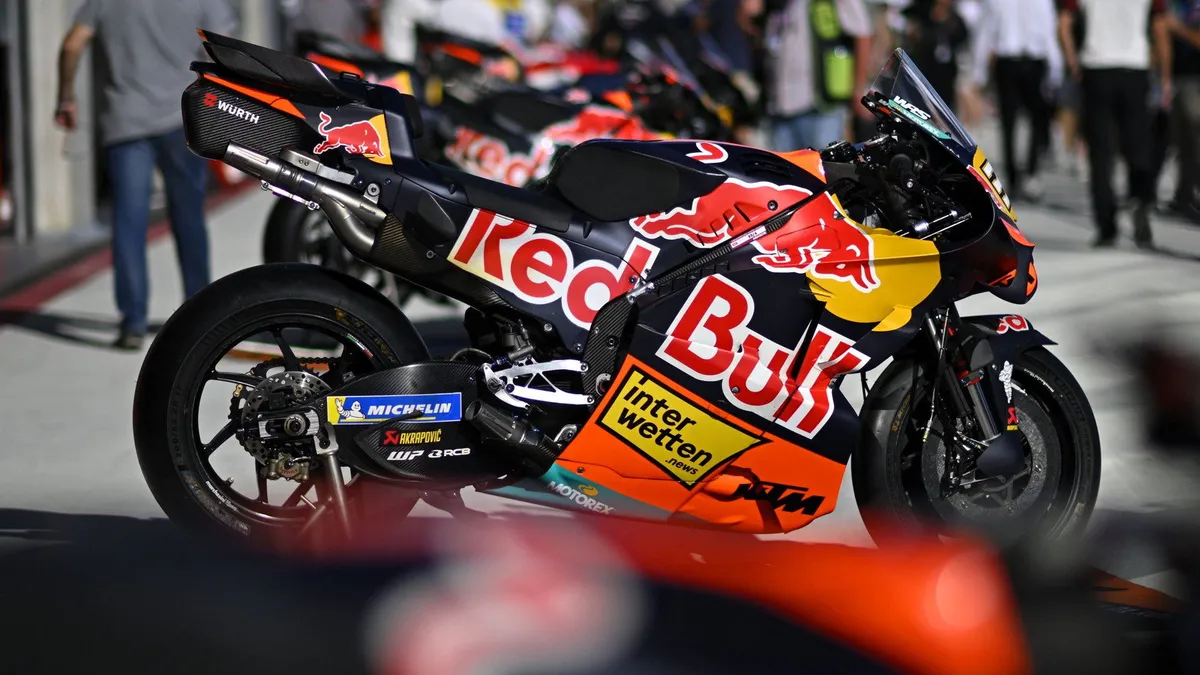
KTM endured one of the toughest technical crises in its MotoGP history after seven RC16 engines failed due to a hidden manufacturing defect throughout the 2026 season. KTM Motorsport Director Pit Beirer described the period as the "most horrible time" in the Austrian manufacturer's MotoGP project. The failures emerged just as KTM was recovering from company-wide financial troubles, adding immense pressure on the team.
MotoGP engine specifications had been frozen since the start of last season, meaning no design changes were permitted. Yet the 'same' engines suddenly began failing repeatedly. KTM eventually traced the root cause to a quality-control fault in a high-stress component supplied externally. However, KTM could not simply replace the affected parts because the sealed engines could only be opened with permission from its MotoGP rivals, who were naturally suspicious.
Beirer explained that the problem was extremely difficult to understand because there was no step back. "We lost complete control and could not react with a faulty part in the engine, having sealed engines," he said. "With these high-revving engines, when one engine breaks, it feels like, 'Okay, can happen.' But then another one, and then you bring a replacement and that thing is breaking again. You don't understand and you don't know where to start."
The most visible incident occurred when Pedro Acosta lost power while leading in Catalunya, triggering a huge accident when he was struck from behind by Alex Marquez. However, Beirer revealed that incident was caused by a separate ECU issue. "What happened to Pedro in Barcelona happened also in this moment when we had already problems. An ECU just switched off, no signal for one moment, and then back in the paddock the bike was running fine," he explained. KTM received support from Magneti Marelli to diagnose the ECU problem.
While the ECU issue didn't break any engines, the undiagnosed internal fault caused multiple failures at the following round in Mugello. "We realised we had the engine problem in Mugello. We broke an engine in the morning, changed it, and the replacement broke again. That's when we knew something was seriously wrong," Beirer added. KTM had to work hard to convince its rivals that opening the engine seals was necessary for repairs, not for performance gains.
The crisis arrived right after KTM was hit by internal financial problems that disrupted team operations. "This year, I thought we go back to a normality, then this engine issue almost killed us," Beirer said. "Beside our other financial problem at home, this was for me the most horrible time in this whole MotoGP project." Nevertheless, he remains optimistic that KTM can return to competitive form, especially after seeing Acosta show pace again in Aragon.
The consecutive engine failures served as a costly lesson for KTM about the importance of quality control on external supplier components, particularly in the era of sealed engines that limit technical freedom. With engine specifications frozen, even a small mistake can have a massive impact on the entire season. KTM is now focused on ensuring such issues do not recur, while maintaining the positive momentum that was lost mid-season.
Baca Juga

Johann Zarco dihukum turun tiga posisi grid di MotoGP San Marino setelah menghalangi Marco Bezzecchi di kualifikasi. Simak detail insiden dan dampaknya.

Toprak Razgatlioglu mengaku motornya terasa seperti 'motor rental' saat pakai ban soft di MotoGP Misano. Simak penyebab dan dampaknya bagi Pramac.

Marco Bezzecchi pecahkan rekor lintasan Misano dan raih pole MotoGP San Marino 2026. Marc Marquez kedua, Aldeguer lengkapi barisan depan.
 Lanjutkan dengan Google
Diskusi & Komentar (0)
Mari Bergabung dalam Diskusi!
Masuk dengan mudah untuk mulai memberikan komentar, membalas, dan berinteraksi dengan pembaca lainnya.
Komentar Terbaru
Belum ada komentar. Jadilah yang pertama!