






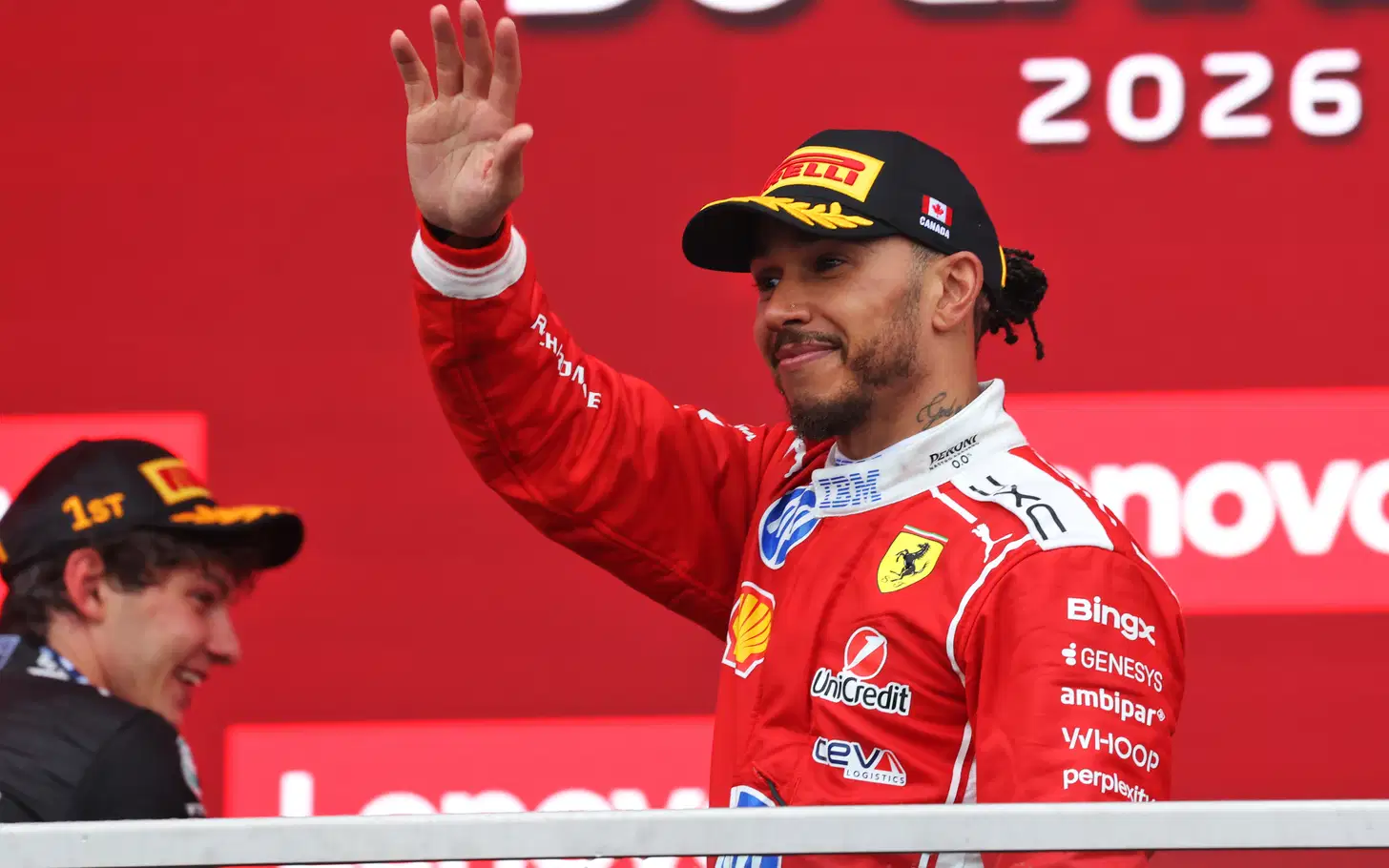

Lewis Hamilton achieved his strongest performance to date as a Ferrari driver by finishing second at the Canadian Grand Prix. This result follows a deliberate decision by the seven-time champion to abandon the use of the team's Maranello-based simulator during his race preparations, a move he believes provided a more precise setup for the Montreal circuit.
The shift in approach began following the Miami GP, where Hamilton concluded that the simulator's data had steered him toward an incorrect setup path for the race. His conviction was further reinforced after skipping the simulator prior to the Chinese GP, which resulted in a third-place finish. The podium in Canada served as the final validation that a manual, instinct-driven approach was more effective than relying on virtual projections.
From a technical standpoint, Hamilton highlighted a critical lack of correlation between the simulator's output and the actual on-track behavior of the car. He noted that while test drivers provide essential data, only he and Charles Leclerc experience the real-world dynamics of the vehicle. This discrepancy often leads to a "virtual ideal" setup that fails to translate into optimal performance when faced with actual track temperatures and surface grip.
Despite rejecting the simulator for pre-race preparation, Hamilton remains open to using the tool for post-weekend correlation. He intends to use the simulator to analyze data from completed races to identify where the car is lacking and how to refine the chassis. This approach ensures that the team continues to develop the car's overall performance while keeping the specific race-day setup based on the driver's physical feedback.
Hamilton attributed this preference to his "old school" nature, stating that he relies more on his intuition and the physical feel of the car than on digital models. He revealed that for nearly all of his Formula 1 championships, with the exception of 2008, he did not utilize the simulator as a primary preparation tool. This indicates a belief that for elite drivers, the sensory experience of the car is more valuable than simulated data.
The correlation between this strategic choice and his results in Canada is evident in the stability of his race pace. By avoiding the misleading data from the simulator, Hamilton was able to find a more balanced setup, allowing for a more consistent rhythm throughout the Grand Prix. This second-place finish not only marks a personal milestone with the Scuderia but also strengthens his position in the competitive hierarchy of the grid.
This approach also impacts the internal development dynamics at Ferrari. By prioritizing direct driver feedback over virtual simulation, Hamilton is encouraging the team to be more critical of their data-driven models. This synergy between veteran instinct and modern engineering is expected to accelerate the car's development, potentially positioning the team to be more competitive in the upcoming rounds of the championship.
Baca Juga
Simak analisis lengkap teguran keras Jack Miller terhadap pembalap yang mangkir dari aturan promosi MotoGP 2026. Baca selengkapnya di sini!
Simak analisis mendalam Ramon Forcada mengenai alasan Pirelli terpaksa mempertahankan aturan penalti tekanan ban MotoGP 2027. Baca selengkapnya di sini!
Maria Herrera siap kunci gelar juara dunia WorldWCR 2024 di Jerez. Simak analisis lengkap, perjuangan atasi cedera, dan jadwal penentuan di sini.
 Lanjutkan dengan Google
Diskusi & Komentar (0)
Mari Bergabung dalam Diskusi!
Masuk dengan mudah untuk mulai memberikan komentar, membalas, dan berinteraksi dengan pembaca lainnya.
Komentar Terbaru
Belum ada komentar. Jadilah yang pertama!