







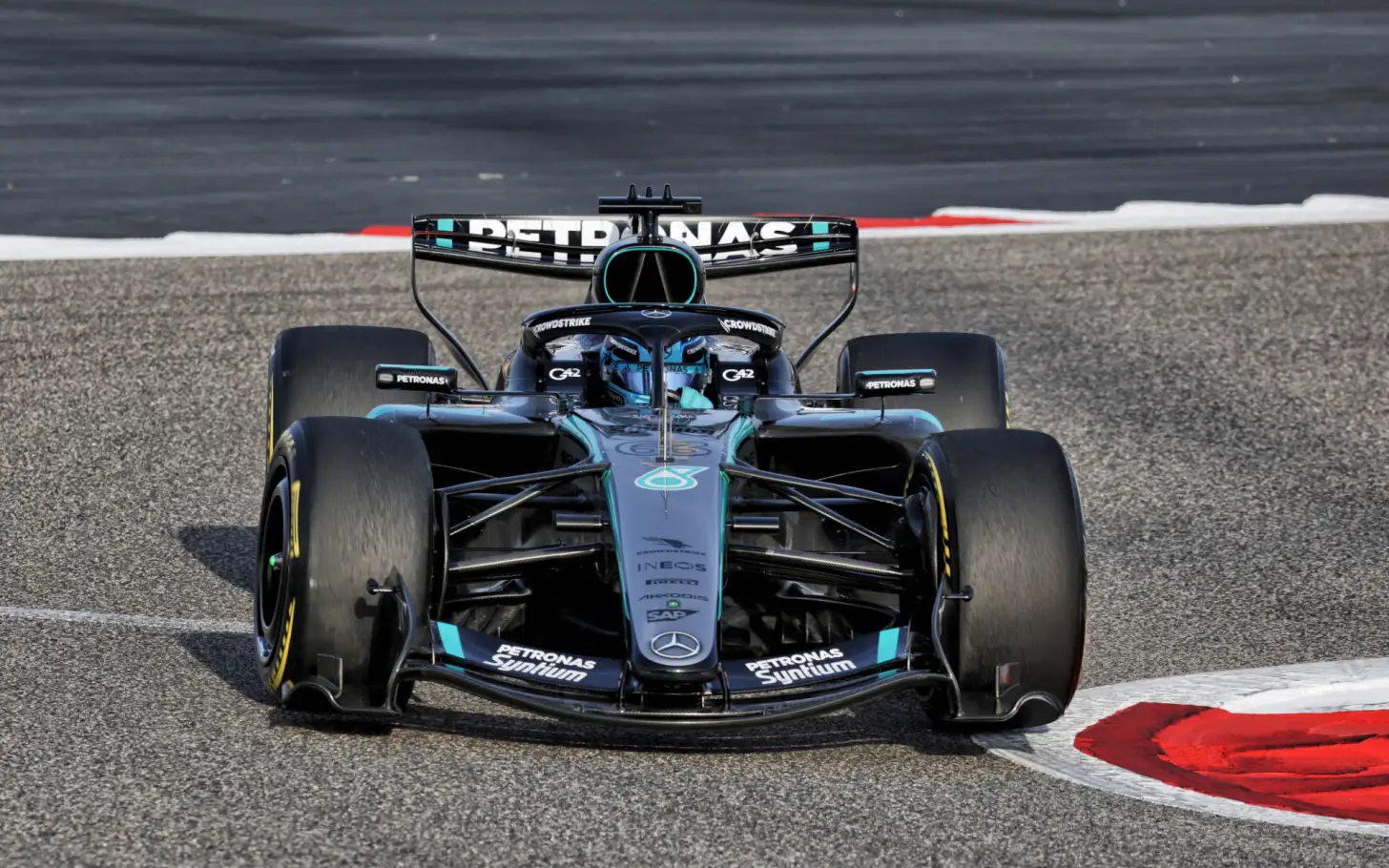

Formula 1, Sportrik Media - George Russell has described an “quite annoying” characteristic of the 2026 Formula 1 cars, pointing to the enforced use of lower gears in corners as a consequence of the new power unit energy demands.
Under the revised regulations, drivers must harvest energy more aggressively. To keep the turbo spinning and maintain higher engine revs for battery charging, they are now selecting significantly lower gears through corners. While this approach maximises electrical deployment potential, it compromises rear stability under braking.
Russell explained that the current generation of cars was not fundamentally designed to be driven in this manner, despite the clear performance benefits once the full 350kW output is deployed.
“One challenge we’re facing is using very low gears in the corners,” Russell told media, including RacingNews365.
“In Bahrain, for example, Turn 1 used to be a third-gear corner with the previous generation. Now we have to use first gear to keep the revs high and the turbo spinning.”
The Mercedes driver admitted that the technique feels counterintuitive, even if the performance gains justify the method.
“It’s the one thing that’s quite annoying and not very intuitive. But you can’t argue with the amount of power when you get the full 350kW. It’s going to progress a huge amount.”
To illustrate the awkwardness of the approach, Russell offered an everyday analogy.
“Imagine you’re driving to the supermarket and you reach a roundabout. Normally, you’d go around it in third gear. But someone next to you tells you to put it in first gear. Everything starts revving loudly — and you wouldn’t normally drive to the supermarket in first gear at a sensible speed.”
He stressed that the cars are aerodynamically and mechanically optimised for higher gear usage through medium-speed corners, but the turbo and hybrid requirements override that logic.
“The car is designed to go around that corner in third gear. But because of the turbo, the boost and everything else, you’ve got to keep the engine revs very high, which means taking first gear.”
Although the torque delivery does not necessarily destabilise the car completely, Russell said the sensation can feel unnatural.
“Sometimes it feels like a bit of a handbrake when you’re having to go down the gears.”
As teams continue refining their understanding of the 2026 power unit integration, Russell’s comments highlight the broader adaptation challenge facing drivers — balancing mechanical grip, energy harvesting and turbo management in a car that demands a fundamentally different driving rhythm compared to previous generations.
Read Also
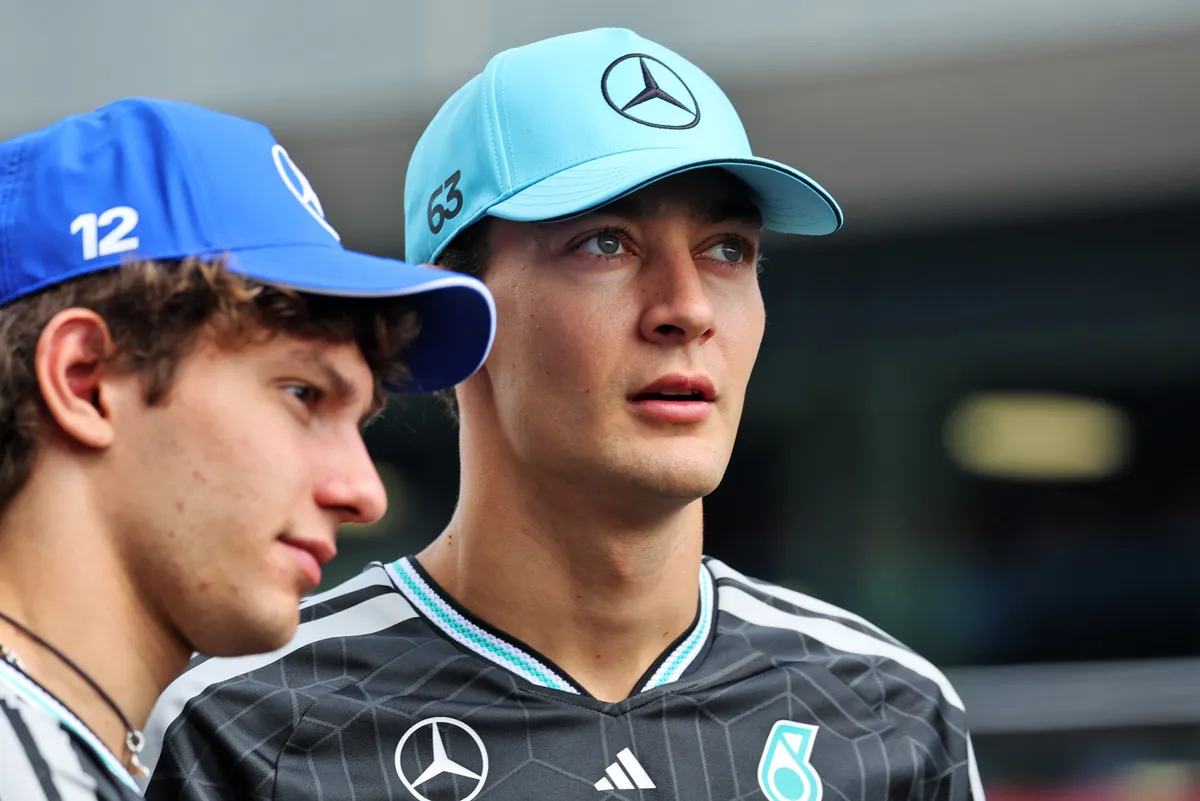
George Russell menghadapi rekor sejarah F1 yang amat berat untuk mengejar ketertinggalan poin dari Kimi Antonelli di sisa musim.

Liam Lawson menyesali keputusannya tidak bertarung lebih keras melawan Oscar Piastri setelah mengamankan finis posisi ketujuh di GP Sepang.
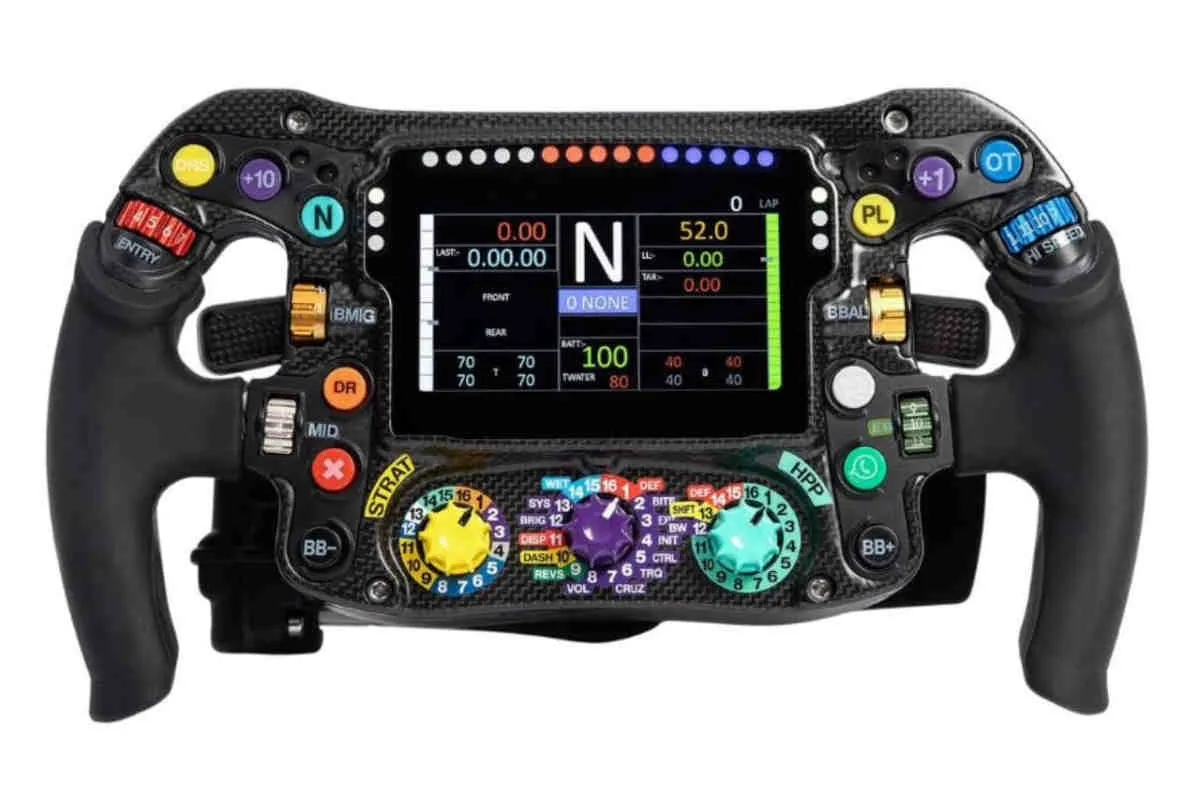
Krisis software F1 di Sepang paksa Hamilton restart mobil seperti modem. Verstappen sebut mirip Lego akibat glitch sistem elektrik.
 Continue with Google
Discussion (0)
Join the Discussion!
Sign in easily to start commenting, replying, and interacting with other readers.
Latest Comments
No comments yet. Be the first!