







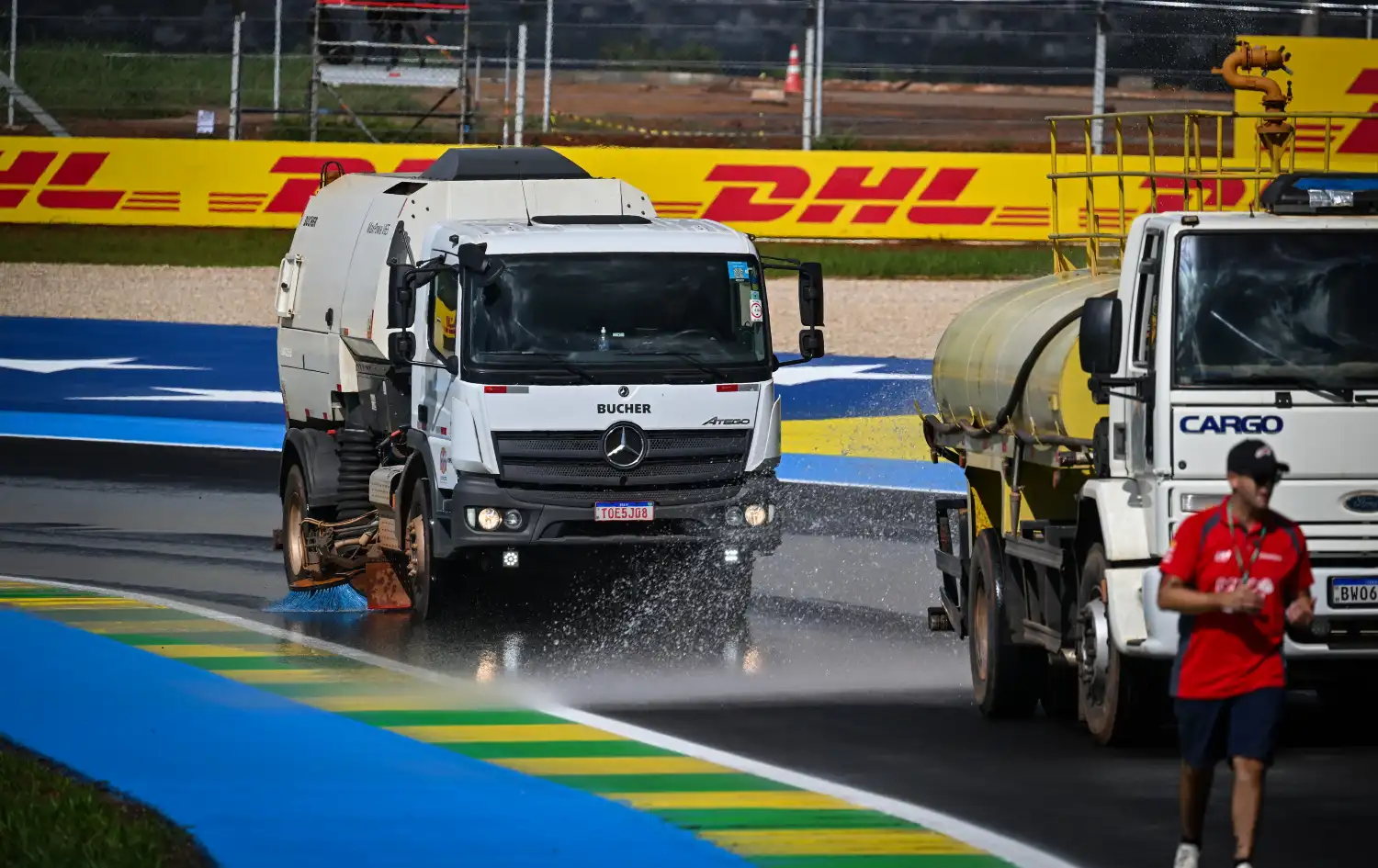

MotoGP, Sportrik Media - The 2026 Brazil MotoGP at Goiania experienced a disrupted start on Friday after heavy rainfall forced delays to opening practice sessions, prompting schedule revisions by organisers and the governing body FIM.
Track conditions were deemed unsuitable for running early in the day, with standing water and damp sections affecting multiple corners. The situation compounded earlier challenges following flooding earlier in the week and ongoing clean-up operations at the newly prepared circuit.
MotoGP Safety officials confirmed that several areas of the track required further work before it could be declared safe for riders. Surface inspection and drainage checks were prioritised before opening the pit lane.
“At the moment we are still working on a couple of corners around the track. Conditions are improving, and we hope to confirm soon when we can open pit lane,” a MotoGP safety representative stated.
As a result of the delay, Friday’s timetable was significantly revised, with adjusted start times and shortened sessions. The updated schedule in Western Indonesia Time (WIB, UTC+7) is as follows:
Friday, March 21, 2026 (WIB):
- 20:00 WIB – Moto3 Free Practice 1
- 21:00 – 21:50 WIB – Moto2 Free Practice 1
- 22:05 – 23:05 WIB – MotoGP Free Practice 1
Saturday early morning, March 22, 2026 (WIB):
- 00:15 – 00:50 WIB – Moto3 Practice
- 01:05 – 01:55 WIB – Moto2 Practice
- 02:00 – 03:00 WIB – MotoGP Practice
The revised timetable also removes the extended MotoGP practice session that had originally been planned to compensate for the lack of prior data at Goiania. The afternoon session now returns to the standard one-hour format, reducing the available track time for teams and riders.
This limitation presents a significant challenge, as the Goiania circuit has not hosted a modern MotoGP event, leaving teams reliant on Friday sessions to establish baseline setups. Reduced running time limits the ability to evaluate tyre performance, refine electronic settings, and optimise chassis balance.
Wet conditions could also influence the competitive order. Teams that have struggled in dry conditions, such as Yamaha, may benefit from the reduced performance gaps typically seen in wet sessions. Meanwhile, rookies such as Toprak Razgatlioglu and home rider Diogo Moreira could take advantage of the unpredictable conditions to secure direct progression to Qualifying 2.
From a technical perspective, wet track conditions shift the focus toward traction control, tyre temperature management, and braking stability. These factors tend to reduce the performance differential between machines, increasing the potential for unexpected results.
With a compressed schedule and evolving track conditions, the Brazil MotoGP weekend enters a critical phase from the outset. Attention now turns to how effectively teams and riders can adapt within limited track time before progressing to qualifying and race conditions.
Baca Juga
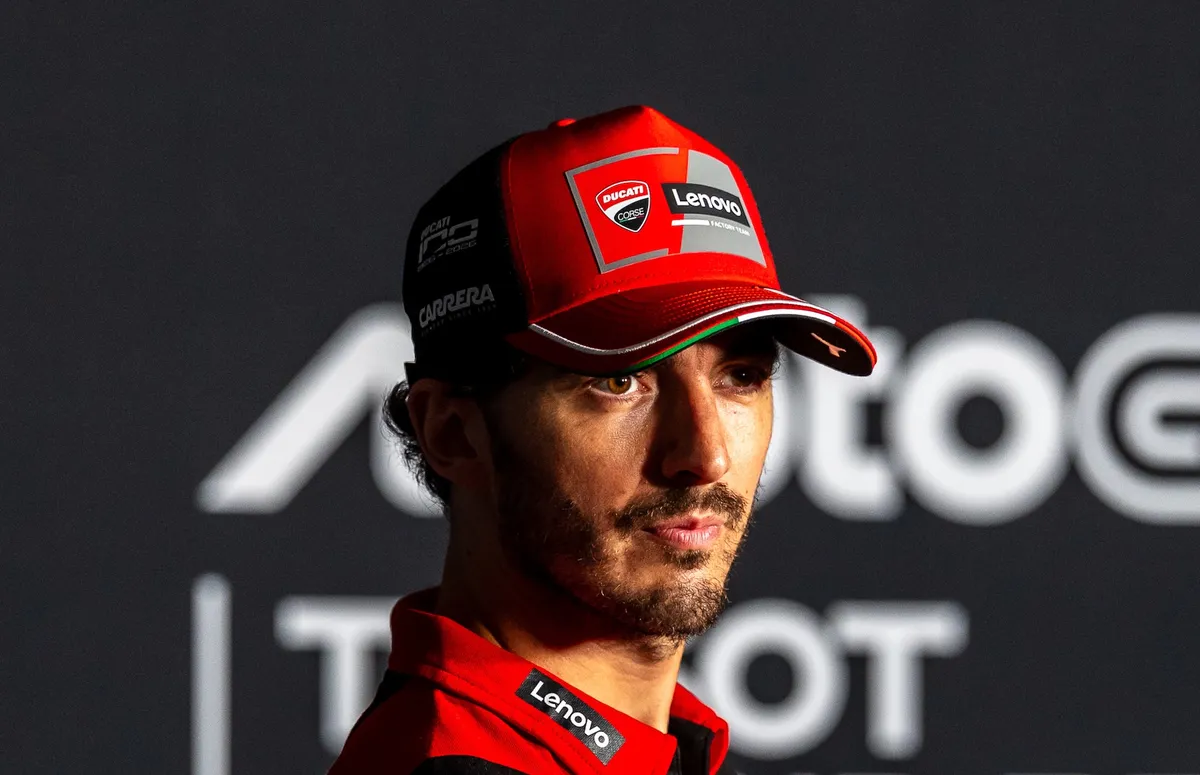
Francesco Bagnaia marah besar usai DAZN menyiarkan obrolan pribadinya dengan Fabio Di Giannantonio. Ia sebut tindakan itu tidak hormat dan minta maaf telah diterima.
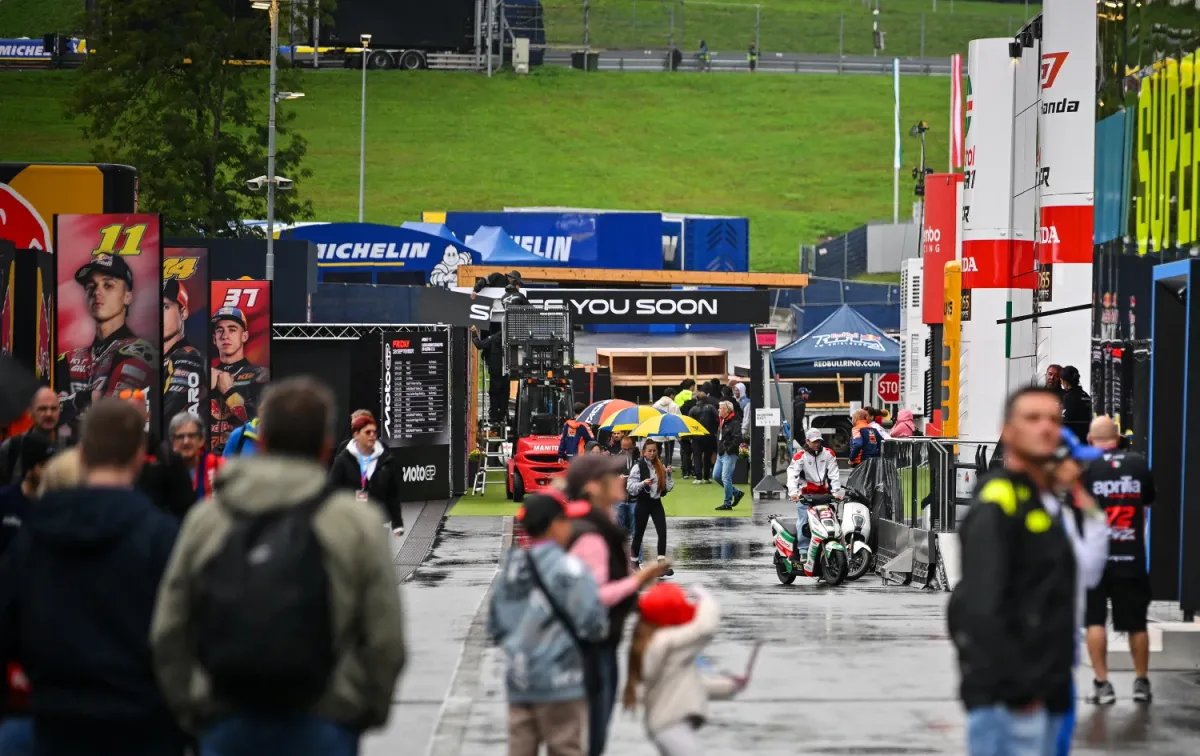
Hujan deras guyur Red Bull Ring jelang MotoGP Austria 2026. Marquez dan Martin sama-sama siap tempur di trek basah, saksikan persaingan sengit.
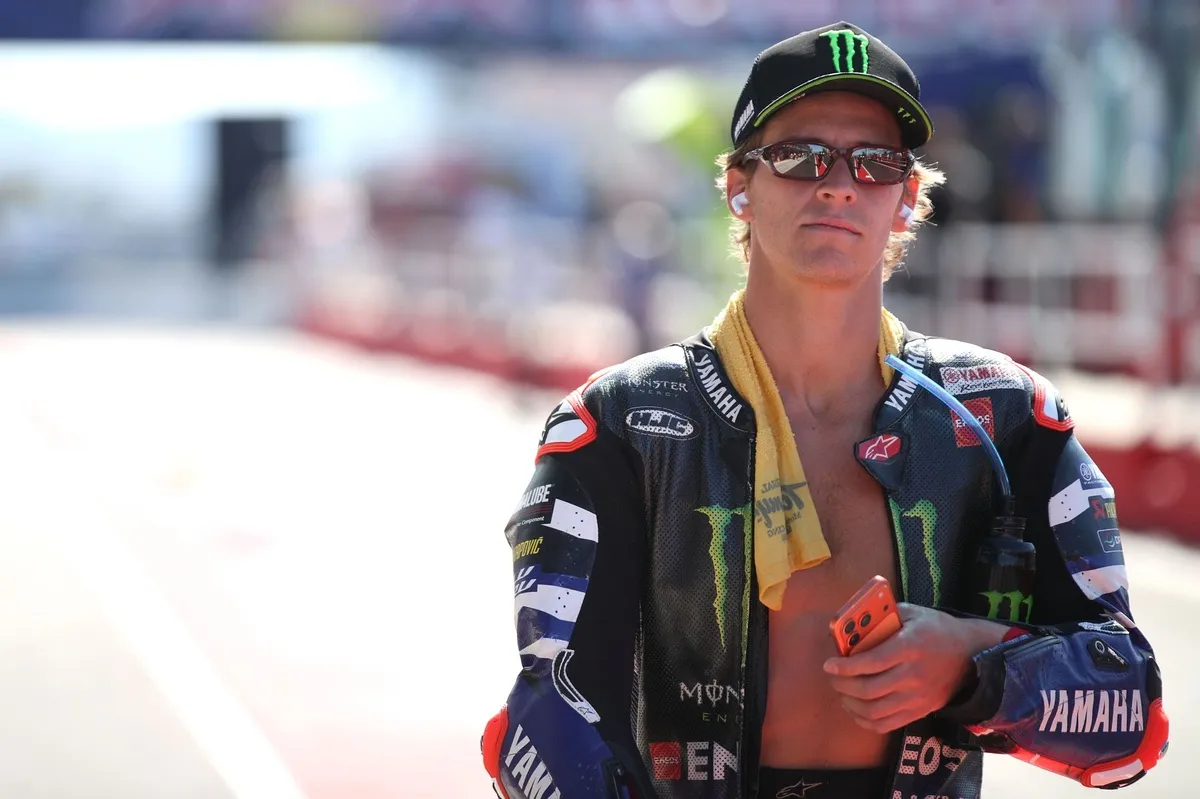
Fabio Quartararo menegaskan situasinya dengan Francesco Bagnaia tidak sama. Pembalap Yamaha itu mengaku akan murka jika berada di posisi Bagnaia yang tengah dilanda krisis performa bersama Ducati.
 Lanjutkan dengan Google
Diskusi & Komentar (0)
Mari Bergabung dalam Diskusi!
Masuk dengan mudah untuk mulai memberikan komentar, membalas, dan berinteraksi dengan pembaca lainnya.
Komentar Terbaru
Belum ada komentar. Jadilah yang pertama!