







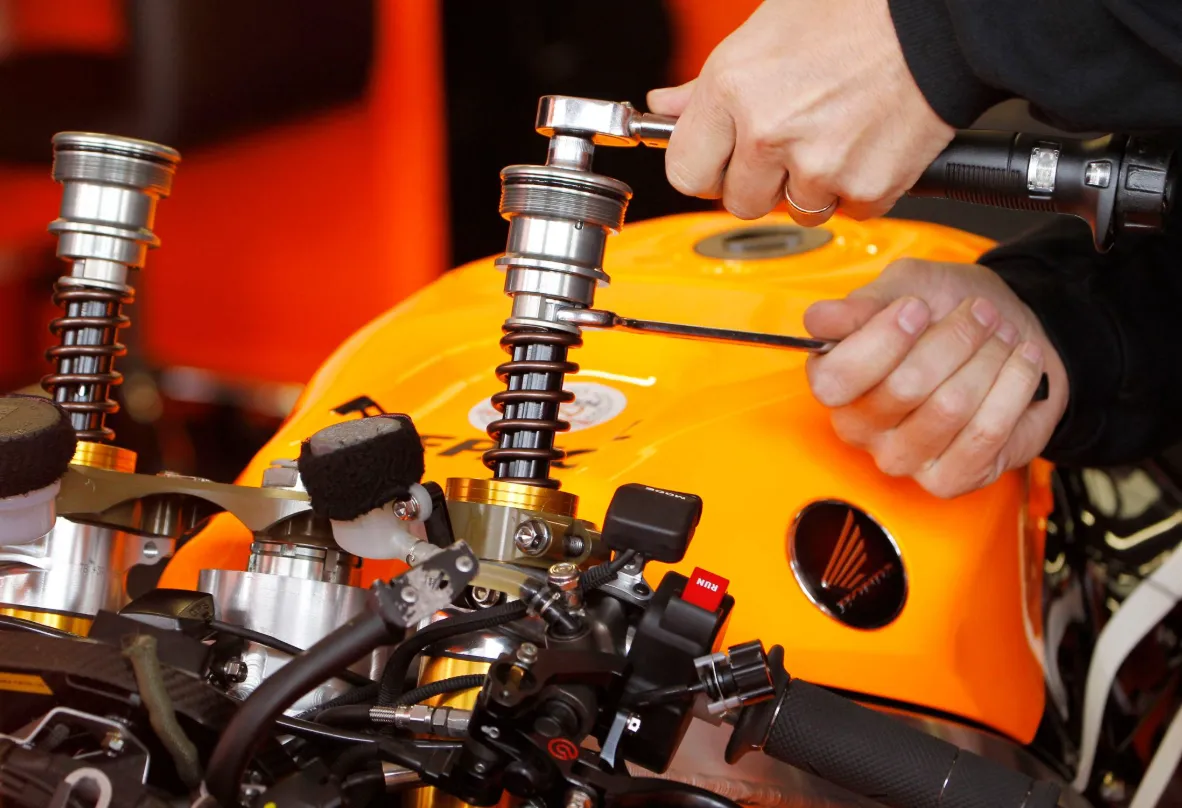

Suspension setup often becomes a nightmare for many motorcycle owners. In fact, understanding how preload, compression, and rebound work can completely transform your bike's cornering character. Sportrik Media has compiled a practical guide from Motosan.es to help you adjust your motorcycle suspension yourself for better stability and comfort.
Manufacturers like Ducati usually provide basic instructions in the owner's manual. However, many don't realize that suspension isn't just about comfort. Suspension determines braking stability, cornering precision, and the tires' ability to stay in contact with the asphalt. In other words, suspension is the bridge between bike and track.
A common mistake is thinking suspension must be as stiff as possible. Actually, the goal is to make the forks and shock absorber work in a controlled manner, keeping the bike balanced in various conditions. So, where to start? The answer is with SAG, or the amount of suspension travel used under load.

Start with SAG, the Foundation of Everything
SAG is divided into two types: static (only the bike's weight) and dynamic (with a fully geared rider). Measuring SAG helps you know if the suspension is working in the correct range. Preload adjusts this initial position. Remember, increasing preload does not make the spring stiffer; it changes its working position, thus affecting the available compression and rebound travel.
If you have to crank the preload to the max or min to achieve ideal SAG, the problem might be the spring itself, not the settings. This often happens on modified bikes or those used with extra load.
Compression and Rebound: Two Sides of the Same Coin
Once the correct working position is set, it's time to adjust the hydraulics. Compression controls the speed at which the suspension compresses, for example during hard braking or over bumps. Meanwhile, rebound controls the speed at which the suspension extends back to its original position. Both must be balanced. Too much compression makes the bike feel harsh on bumpy roads, while too slow rebound means the suspension isn't ready for the next corner. Conversely, if the hydraulics are too loose, the bike will feel unstable.
Interestingly, many think suspension should be rigid. In fact, suspension should move at the right speed. That's the art: not anti-movement, but anti-shock.
This guide is just the basics. For deeper understanding, you could study track characteristics, riding style, and weather conditions. However, by mastering SAG, compression, and rebound, you're already a step ahead of most road riders.
Baca Juga

Italia segera legalkan motor menyalip kemacetan dan jalur darurat mulai 2028 dengan aturan keselamatan baru. Baca analisis mendalam di sini.

Ducati Spanyol dan Portugal dinobatkan sebagai distributor terbaik dunia 2026. Baca analisis mendalam mengenai rekor penjualan dan inovasinya di sini.

Simak kisah lengkap pernikahan bintang MXGP Tim Gajser di Kroasia dan persiapannya menyambut musim balap baru. Baca artikel eksklusif kami di sini!
 Lanjutkan dengan Google
Diskusi & Komentar (0)
Mari Bergabung dalam Diskusi!
Masuk dengan mudah untuk mulai memberikan komentar, membalas, dan berinteraksi dengan pembaca lainnya.
Komentar Terbaru
Belum ada komentar. Jadilah yang pertama!